The agricultural sector faces mounting pressures from climate instability, regulatory changes, and buyer demands. Yet the central question remains: can artificial intelligence function within the constraints of biological systems rather than attempting to override them?
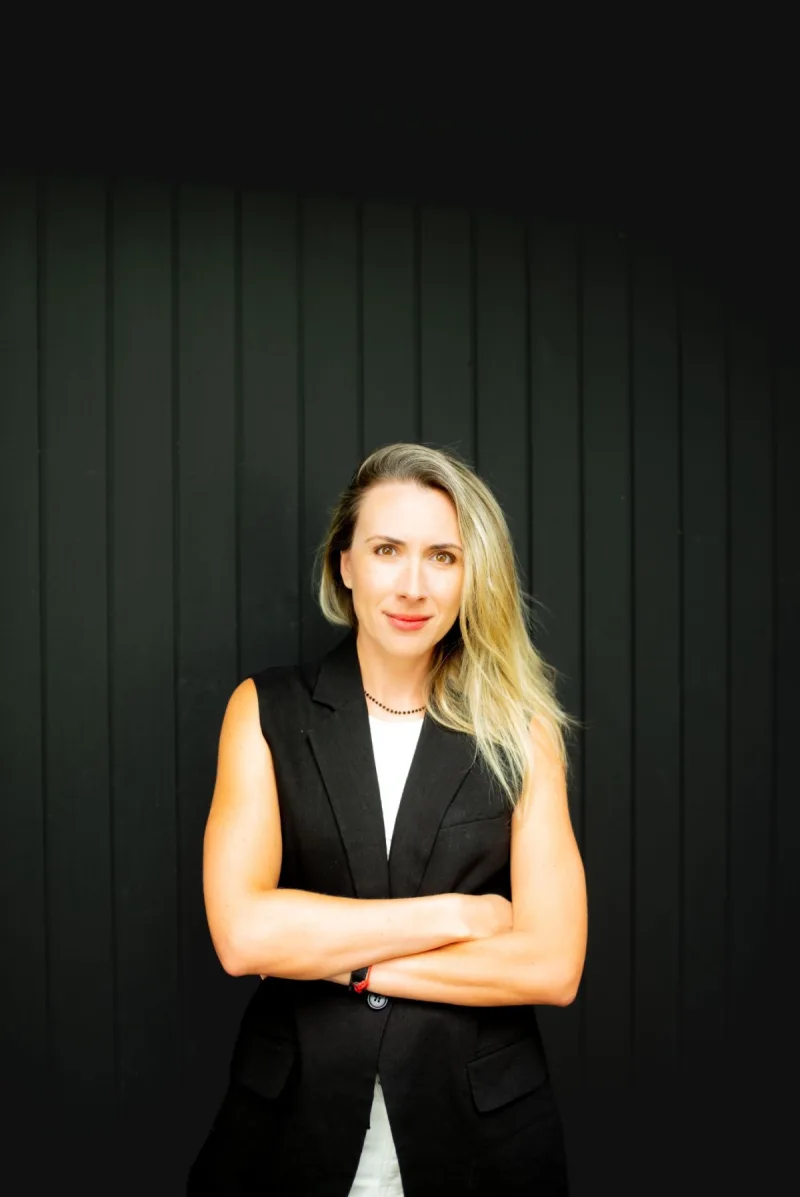
Greenda, established in 2024 and based in Munich, has developed a data and decision platform designed for farmer cooperatives. The platform transforms scattered field observations into structured, timely guidance that remains independent and actionable. In conversation, Sabrina Pittroff, the company's Chief Scientific Officer and environmental microbiologist, discusses why agricultural data should serve those who produce it, why human expertise must remain central to AI-driven choices, and why emerging AgriTech solutions should strengthen rather than dominate natural systems.
The path to founding Greenda
Pittroff describes her journey away from traditional academic research toward building a commercial solution. "I never quite fit the 'publish or perish' mold," she explains. "At university, I had the privilege of working on curiosity-driven projects – the kind of work that lets you sit with a mechanism long enough to actually understand it. I loved that part. What pulled me toward entrepreneurship was the gap that came after: you can write a paper pointing clearly toward an application and still have no guarantee anyone picks it up."
The frustration with the pace of academic translation led her to entrepreneurship as a means of moving from description to implementation. Yet she recognised that building a commercial enterprise demanded capabilities beyond scientific expertise. "The harder part is what sits between research and a real product. You need scientific integrity and the ability to develop, communicate, and sell. That is exactly where Chadi [Chadi Nemr is Greenda's CEO] came in."
Agriculture drew her attention precisely because of its biological foundation. "I'm drawn to it because underneath every business model, every regulation, every market dynamic, there is biology – and biology has the final say. You can build around it, but you can't override it." She sees opportunity in working with rather than against natural systems: "What I find hopeful is that biology has already designed most of the solutions we're trying to invent. Most of our work, honestly, is getting out of our own way and showing data to support or advocate for a healthy and active ecosystem."
Who owns farm data today?
When asked about data ownership and benefit distribution in farming, Pittroff offers a sobering assessment. Much farm knowledge exists in unstructured forms—paper records, informal spreadsheets, and the accumulated experience of farmers and agronomists themselves. "Walk through any field with a good agronomist and you'll see decades of pattern recognition no software has ever captured."
The digitised fraction of farm data—the portion that has been formally recorded—tends to flow upward through supply chains rather than returning to the farmers who generated it. "Farmers have historically been the last in a long chain of consequences – last to capture margin, last to set terms, last to access their own information." Pittroff views this imbalance as unsustainable and a focus of her work. Greenda operates on the principle that farmers should benefit from the insights their land produces, beginning with the simple act of bringing fragmented data into one organised system where patterns become visible.
Solving real problems for cooperatives
Cooperatives do not purchase technology for its own sake; they invest in tools that deliver measurable outcomes. For farming coops, these outcomes include retaining member farmers, maintaining orchard health over time, and meeting increasingly stringent buyer standards.
Pittroff identifies a challenge coops rarely articulate directly: a single technician cannot physically oversee hundreds of member farms, and experienced agronomists often spend substantial time on administrative tasks rather than field-level decisions. "Greenda is designed for exactly this reality: it takes the data that already exists across the cooperative and represents it in a way that makes sense — so every farmer benefits from the same quality of data package, and the technicians who are already doing great work become a force multiplier for the entire membership."
Timing represents another critical lever. Pest management decisions require numerous data points, and the window for action varies by intervention type. Chemical treatments sometimes tolerate delayed response, but biological controls and gentler methods demand precision. "The window is narrow, and missing it is the difference between the product working or not." Cooperatives need every member farmer—not just priority accounts—to have access to the visibility and confidence necessary to select appropriate tools at the right moment.
Independence in pest management advice
Pest management guidance in agriculture frequently comes from technicians whose compensation depends partly on product sales. Pittroff notes that farmers often value this arrangement: "many of them like this arrangement. They have a trusted advisor who already knows which product to recommend, who has built a relationship with them over years, and who simplifies a genuinely complex decision down to a single action." These professionals typically possess strong expertise and maintain genuine relationships with farmers.
The structural problem lies in the boundaries of such advice. "Their advice is bound by the products they sell. A more progressive or alternative option and sometimes one that would serve the farmer better long-term, sits outside that scope and so doesn't get recommended. It is the limits of the business model."
Ensuring independent advice
Greenda maintains independence through multiple mechanisms. First, structurally: the company operates as a data and decision platform, not as a chemical supplier, biological producer, or certification authority. "Our business is the data and decision layer, which means our incentives are aligned with the people whose livelihoods depend on getting those decisions right – farmers and coops."
Methodologically, Greenda captures data at field level to ensure granularity and verifiability. The platform uses AI and machine learning to identify patterns across large datasets and extended timeframes—insights difficult for individuals to detect. Crucially, humans remain central to decision-making. "Agronomists and farmers see the underlying data, see the pattern, and decide what to do. They can interrogate a recommendation, push back on it, or override it entirely – and we expect them to. Trust comes from being legible, not from being authoritative."
Greenda positions itself as a partner to farmers and agronomists rather than a replacement. "Our role is to make their existing expertise scale, to give them visibility they didn't have before, and to feed real feedback from the field back into the product." The company also acknowledges the limits of external knowledge. In Spain, where Greenda is beginning operations, the agricultural sector has distinct rhythms, politics, and trust-building practices. Having people embedded within the industry—not as a marketing tactic but out of necessity—allows the company to perceive what outsiders cannot.
Learning from Spanish agriculture
Pittroff's visits to Spanish farmer organisations revealed the sector's diversity. "The variety of solutions and setups across Spain is striking. No two technicians are alike. No two coops are alike." This heterogeneity demands that tools serve variation rather than impose uniformity.
She also observed that professionals working with biological systems cannot afford oversimplification. "We keep asking them to give us one answer, one rule, one clean simplification we can design a tool around. But when there are a thousand variables in play, it will always depend." Embracing complexity rather than fighting it becomes essential. "Biology is not simple. Biology is complex, and building a tool that incorporates that complexity is our challenge, and it is our mission."
Advice for aspiring entrepreneurs
For those considering entrepreneurship, particularly those with scientific or research training, Pittroff offers candid guidance. "Nobody knows how to do it all. That has been a major blocker for a lot of people – and it has been a blocker for me." The skills required to build a company differ from those of a subject matter expert, and attempting to master both simultaneously is counterproductive.
"Working alongside people whose skill sets complement yours, and recognising that and assembling the right team, is the entrepreneur's real skill." She emphasises the importance of clear vision, investor communication, and team alignment. "You need to see clearly where you're going, communicate it to investors, and build a team that believes in it too. Once that's in place, you need to balance the budget against the dream."
Ultimately, comprehensive knowledge is unnecessary. "You don't need to know everything. You need a vision rooted in realistic science, and then you need to be a leader."
Source: EU-Startups