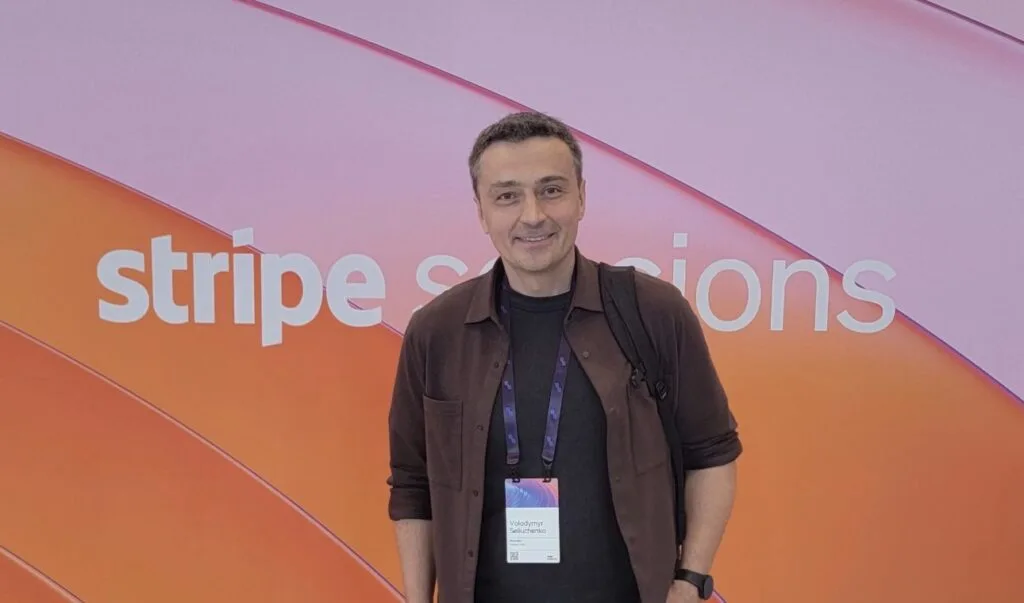
Volodymyr Seliuchenko's pitch for Robutler centers on a collaborative model where software development becomes communal rather than siloed: creators publish applications, others enhance and adapt them, and all contributors earn revenue shares whenever their work—whether original or modified—sees active use. ZAS Ventures, a US-headquartered fund focused on Ukrainian-founded startups, has deployed $400,000 across its two funds as Robutler's inaugural institutional investment.
The platform now operates with a public library containing professional-caliber applications across documents, presentations, design, video, engineering, whiteboards, project management, music, and games—all featuring real-time collaboration capabilities. Access to every application remains free. The revenue model operates differently: when users engage with any app, whether it originated from a single creator or emerged through multiple iterations of remixing, compensation flows to all contributors involved in its development.
Think of Robutler as the YouTube of software. Here every app is free to use, and Robutler pays the makers whose apps get used, along with the makers they remixed from.
Volodymyr Seliuchenko
Infrastructure as the core differentiator
While the consumer-accessible application marketplace represents Robutler's public face, the deeper technical foundation captured ZAS Ventures' attention. The company has constructed the Web of Agents, an infrastructure layer enabling applications and AI agents to discover one another and work together using natural language, with integrations spanning external assistants and coding agents such as Claude and Codex.
Robutler has submitted three patent applications addressing agent discovery mechanisms, trust evaluation systems, and the attribution framework underpinning creator compensation. The startup has also released research on arXiv titled TrustFlow and developed two open protocols—Agent OAuth and UAMP—designed to handle identity verification and inter-agent communication across organizational boundaries.
Most AI companies are building a better tool. Volodymyr is building the place tools come from. We wrote the first check into Robutler because of the layer underneath the apps: discovery, trust and payments between agents. That is the piece the whole agentic internet needs, and almost nobody is building.
Andrew Zinchuk, Founder and Managing Partner of ZAS Ventures
Ukrainian talent building global infrastructure
ZAS Ventures operates across pre-seed and seed stages, backing artificial intelligence, software-as-a-service, and robotics ventures founded by Ukrainians regardless of geographic headquarters. Robutler itself maintains its base in Los Gatos, California rather than Ukraine. Since its 2023 launch, the fund has supported over 25 companies through two separate funds and received recognition as Investor of the Year 2025 from the Ukrainian Startup Fund. The organization has publicly committed to backing 30 Ukrainian-founded unicorns by 2034.
For ZAS, Robutler exemplifies a pattern the firm has emphasized: Ukrainian engineering expertise increasingly concentrates on constructing foundational infrastructure addressing category-level challenges rather than narrowly focused solutions, often from technology hubs like Silicon Valley rather than exclusively from within Ukraine. This trajectory mirrors developments observed in companies such as Osavul, which has built disinformation-detection capabilities for worldwide audiences, alongside other Ukrainian-founded enterprises scaling internationally.
The emphasis on infrastructure layers as defensible products rather than consumer-facing tools reflects broader currents in the European AI landscape. Similar reasoning appears in discussions around companies like Orq.ai, where founder Sohrab Hosseini articulates a comparable thesis: governance and infrastructure components represent the genuine competitive advantage, not the end-user interface.
Robutler launched in 2025 and is accessible at robutler.ai.
Source: Startup Reporter