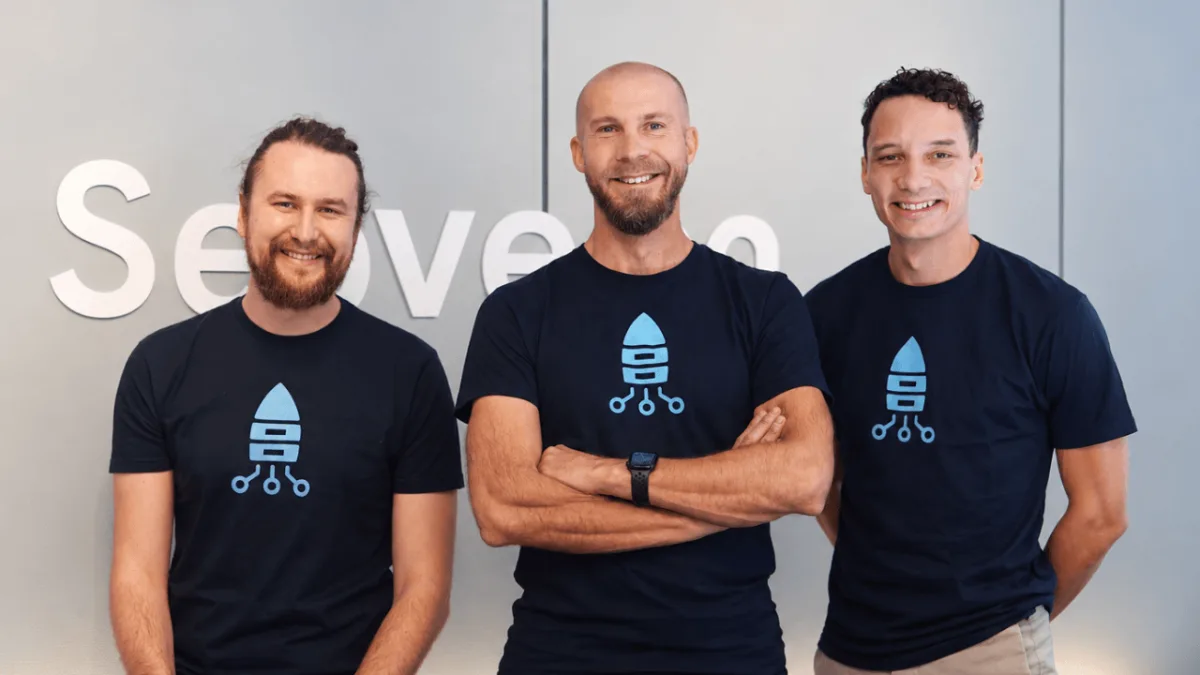
While developer-tool vendors compete to embed their own AI coding agents, Serverpod is charting a different course. The Stockholm-based startup unveiled App Studio in public beta, a full-stack development environment that intentionally excludes built-in AI capabilities. Instead, Serverpod addresses what comes after the initial prototype: the infrastructure needed to transform vibe-coded experiments into reliable, scalable software.
AI-powered coding agents have dramatically lowered the barrier to turning ideas into working prototypes. Tools like Antigravity, Claude Code, Codex, and Cursor can generate code across virtually any technology stack. Yet this capability has exposed a new bottleneck. The complexity surrounding deployment, databases, security, mobile platforms, and production infrastructure remains firmly in specialist territory. As Viktor Lidholt, Serverpod's founder and a former Google engineer, explained: "Generating code is only one part of building software."
"The harder questions begin when people want others to depend on what they have created. It needs to run reliably, work across platforms, connect to a real backend, and remain maintainable. Those are the problems we want to solve."
Viktor Lidholt, founder of Serverpod
Building the infrastructure around AI
Serverpod, an open-source backend framework built in Dart for the Flutter ecosystem since 2023, has now released App Studio as a downloadable development environment. The tool bundles everything required to create and deploy full-stack applications without wrestling with complex setup procedures. Developers retain ownership of their code and can target mobile, desktop, and web platforms.
The latest Serverpod release introduces stateful hot reload across the entire stack. This feature allows AI agents or developers to modify the application, server, generated APIs, and database schema while the project continues running, with feedback arriving in milliseconds. Flutter currently accounts for approximately 30 per cent of new App Store releases, and Serverpod powers production systems at startups, app studios, banks, medical organizations, and government agencies.
Accompanying App Studio is Serverpod Cloud, a hosted deployment service that eliminates friction between local development and production. A single command can deploy a backend and web application, with the platform handling infrastructure concerns including databases, load balancing, domains, secrets, caching, and file storage.
https://www.youtube.com/embed/dsf2nGaeUZk?si=bK2Fi-m4cI9eCLSQ
From vibe coders to software developers
Lidholt describes App Studio's target audience not by experience level, but by intent: people who want to build something real using AI. Seasoned developers can use the tool to skip hours of setup when experimenting with Flutter and Serverpod. The larger constituency, however, comprises individuals entering software development through AI for the first time.
"We want them to start with professional tools and code from day one, even if they do not yet consider themselves developers," Lidholt said. Craig Labenz, Developer Relations Engineer at Google's Flutter team, emphasized the importance of this transition: "The next generation of developer tools needs to help those projects grow beyond the initial experiment. Having readable, understandable, and predictable code gives AI a much stronger foundation to work from, making it easier to follow existing patterns and generate good software reliably. AI is bringing an entirely new group of people into software development."
Bring your own AI agent
App Studio's deliberate absence of embedded AI reflects a strategic choice: developers can switch between different coding agents without changing their underlying project files. Lidholt personally alternates between Claude Code and Cursor depending on the task at hand.
"The agents work on the same files, so you can close one tool and open the project with another."
Viktor Lidholt
The industry lacks a unified standard for configuring agent skills and MCP servers, introducing some friction when switching tools. Multiple configurations can coexist without conflict, however, and App Studio automates this setup. "It's unfortunate that the industry couldn't unite around a standard, but at least it's possible to have multiple configurations that won't interfere with each other. App Studio actually sets it up for you, so that's another small obstacle you won't need to overcome," Lidholt noted. Serverpod has not ruled out future partnerships with AI agent developers.
From prototype to production
Vibe-coded applications frequently encounter serious problems when scaling from single-user demonstrations to real-world traffic. Many AI tools prioritize visual output over robust, scalable architecture, resulting in security vulnerabilities, missing access controls, unoptimized databases, and error handling that silently masks bugs.
"These types of issues can lead to expensive infrastructure bills and apps that get hacked or break down in production."
Viktor Lidholt
App Studio streamlines setup and iteration, but cannot replace human judgment. Applications handling sensitive data, complex permissions, or regulatory compliance should still involve experienced software engineers. Publishing to Apple's App Store or Google Play remains a manual process, though Lidholt indicated this is a future priority.
Avoiding the next generation of vendor lock-in
App Studio offers two dimensions of portability. Serverpod operates as an open-source framework deployable anywhere—GCP, AWS, or private servers—eliminating lock-in at the infrastructure level. Developers can abandon App Studio at any time and continue in a standard development environment without losing their work.
"It's a standard Flutter and Serverpod project. You can, of course, also replace Serverpod entirely, but that is a normal backend migration rather than a one-click switch. The important part is that the code and data are yours. Nothing is hidden within a platform that prevents you from leaving."
Viktor Lidholt
Both App Studio and the Serverpod framework are free and open source, mirroring Flutter's licensing model. Serverpod Cloud represents the company's primary revenue stream. Developers pay only when choosing to host their web app, backend, and database on Serverpod's infrastructure. Pricing begins at $5 per month for a complete stack, competitive with self-hosting while eliminating the need for DevOps expertise.
Why the AI giants haven't built this
Nothing technically prevents OpenAI, Anthropic, or Cursor from constructing similar infrastructure. Lidholt argues, however, that assembling the full stack represents a substantial engineering undertaking. Serverpod spans the client, server, APIs, database, development workflow, and deployment pipeline. Additionally, AI models have limited training data in specialized areas such as hot reload, offline-first synchronization, and advanced code analysis.
"So, even for a large company, building something like Serverpod takes time," Lidholt observed. The broader conversation around vibe coding often centers on whether non-technical individuals can build applications. For Lidholt, the more consequential question concerns what happens if those applications succeed.
"Can another developer understand it? Can you change AI agents? Will it scale? Is your data locked in? At Serverpod, we think software should be able to outlive the prompt and even App Studio itself. That's the larger idea behind what we are building."
Viktor Lidholt
Source: Tech.eu