Building without waiting
Pietro Maria Piazza, Alessandro Nesci, Davide Santucci, and Matteo Angiolillo are four teenagers from Forlì, Italy who decided not to postpone their ambitions until after graduation. Their project, Blue Proton Initiative, aims to create an AI-powered system for livestock monitoring that can identify individual animals and spot health problems in real time, directly in the field. At 17 years old and only four months into the work, they are already pushing the Arduino® UNO™ Q board to its limits.
The team identified a genuine gap in agricultural technology. Most livestock monitoring still relies on manual observation—slow, inconsistent, and prone to missing critical details. "None of us wanted to wait," the team explains. "The tools, the knowledge, and the resources needed to tackle real problems are accessible today, and we saw no reason to postpone."
Their vision is a system using computer vision and custom-trained neural networks to track animals and their behavior patterns. Such continuous, automated monitoring running quietly in the background would genuinely serve working farms. "In farming, catching something late can mean real losses. An automated system that runs in the background without needing constant attention is genuinely useful in that context."
Division of labor among four makers
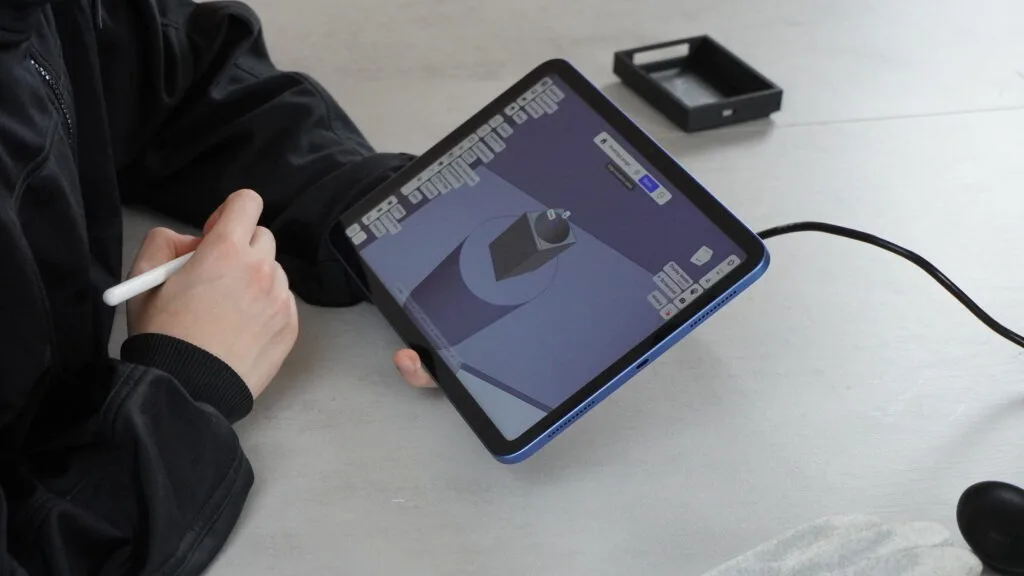
Each team member has claimed a specific domain. Pietro oversees software engineering, Matteo builds the backend in C, Davide manages CAD design and the physical enclosure, and Alessandro leads neural network development and YOLO model training—the mechanism enabling the system to detect and count animals automatically.
The neural network models are being built entirely in-house. The team recognizes that dataset diversity is crucial: varying lighting, animal movement, weather patterns, and environments all feed into a more robust model for real-world deployment. According to Alessandro, "with enough diverse images covering a wide range of real-world scenarios, the model learns to generalize."
The UNO Q sits at the core of their architecture. The entire system fits inside a custom 3D-printed housing tailored to their specific needs, keeping the design compact and field-ready. The team writes and deploys code directly through the Linux terminal—no graphical IDE, no App Lab. Just the board, a text editor, and repeated cycles of testing and refinement.
Why UNO Q became the foundation
Blue Proton's choice of hardware was not made in isolation. The team had previously worked with the UNO and Arduino® Nano™ on other projects—a robotic arm, a model rocket—but they quickly recognized that UNO Q offered something distinctly different.
"The ability to run Linux on a compact, affordable board was a turning point for us. That combination – processing power, lightweight form factor, and low cost – made it a natural fit for a project like ours, where the hardware needs to operate in the field, potentially in remote environments, without being bulky or expensive to deploy."
Running AI inference locally, without relying on continuous server connectivity, is essential for agricultural use. The UNO Q makes edge AI practical within the constraints of a student budget and field deployment scenarios.
The team is straightforward about the board's limitations: "RAM and CPU are the main bottlenecks – running a system like ours on a board with those constraints requires every component to be as lean as possible." Their solution involves relentless optimization. "There is no shortcut to it – it just takes time and a lot of patience."
The team notes that they began work before the Arduino® VENTUNO™ Q board became available, which would have provided additional processing headroom for their application.
The point is the building itself
Four months into the project, Blue Proton has delivered a working cattle-counting system and a clear technical path toward adding health monitoring capabilities. Their perspective on the work is notably grounded. "We are still working on it. We are 17, we have a math test tomorrow, and we are working on something that could maybe become our job one day – or maybe not. We don't have a commercial product ready, and we are not going to pretend we have a five-year plan. But we are going to keep building, keep learning, and see where it goes. That is enough for now."
For other students considering similar projects, their message is direct: "If you have an idea, chase it. Do not wait until you feel ready, because that moment will never come. You figure it out as you go, and that is kind of the point."
Those interested in following Blue Proton's development can track their progress on their website and Instagram account, where they are documenting the build process through video.
Source: Arduino Blog