Estonia's technology sector is undergoing a notable transformation, with cybersecurity and defence emerging as growth drivers while a new generation of founders operates with smaller teams and tighter budgets. The shift is evident in TopTech 2026, an independent ranking of the country's 30 most valuable technology companies compiled by M&A advisory firm Prudentia Tallinn and Siena Secondary Fund.
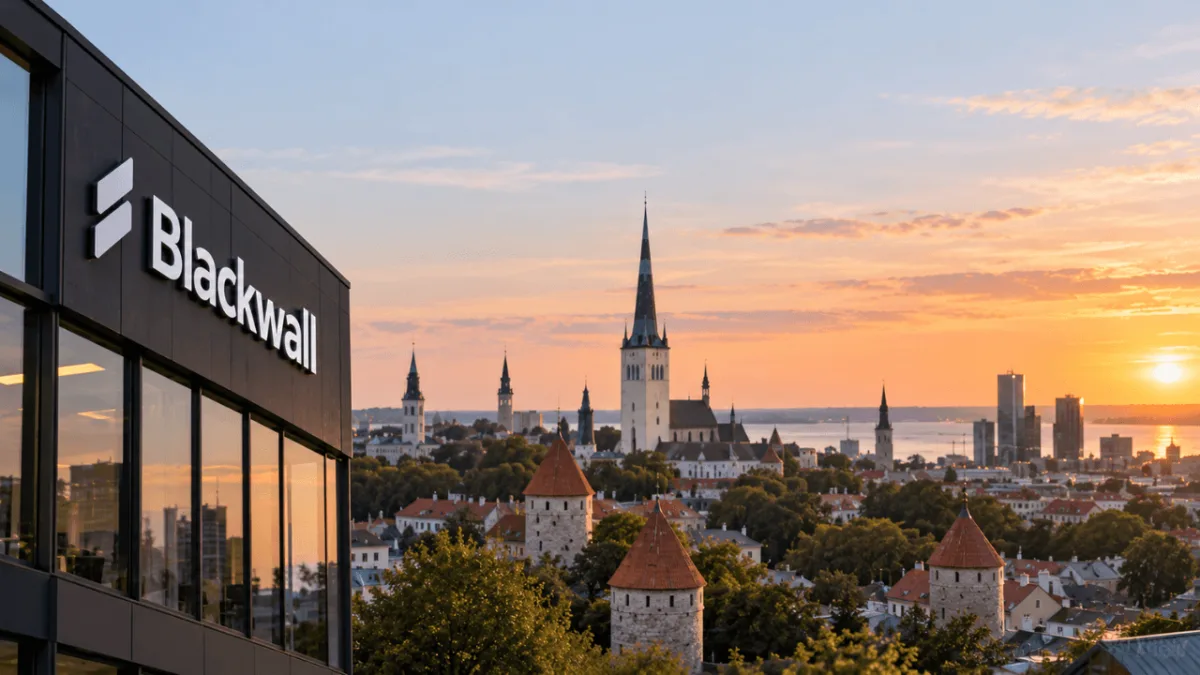
Blackwall, a cybersecurity infrastructure provider, has claimed the spotlight by reaching a €1 billion valuation and securing fifth place in the rankings. The company's GateKeeper solution blocks malicious traffic before it reaches customer applications. Its ascent from ninth place last year represents a 368 per cent jump in valuation, from approximately €221 million to €1.03 billion, earning it TopTech's special award for the year's biggest riser.
Wise remains Estonia's most valuable technology company at €10.98 billion, trailed by Bolt at €7.09 billion and Veriff at €1.8 billion. These three firms dominate the rankings, with the top five companies controlling 84.6 per cent of the combined value across the entire list.
Rando Rannus, General Partner at Siena Secondary Fund and TopTech co-author, attributes Blackwall's valuation to strong revenue growth and market comparables. He explains: "Blackwall has grown its revenue very strongly, and valuations across its cybersecurity peer group are high. Together, those two factors are what support the higher valuation. Our figure is an implied valuation: we apply a revenue-based multiple benchmarked against listed cybersecurity companies and peers that have raised funding in the past 12 months. So it reflects real revenue, priced at the level the market currently pays for comparable businesses. We expect the €1B+ valuation to be confirmed soon by an independent party, through Blackwall's new funding round."
Concentration at the top masks healthier dynamics below
The combined valuation of Estonia's top 30 technology companies declined slightly to €26.4 billion from €27.7 billion year-on-year. However, this headline figure obscures a more nuanced picture. Wise and Bolt together shed approximately 15 per cent of their combined value, a loss that outweighs gains registered elsewhere in the rankings.
Rannus notes that beneath the largest firms, the ecosystem shows robust health: "Wise and Bolt lost around 15 per cent of their combined value, and that alone outweighs the growth everywhere else in the table." Defence, cybersecurity and artificial intelligence companies are expanding, often with substantially less capital than their predecessors required.
Defence technology emerges as the largest sector by company count
Defence technology now represents the largest sector in TopTech by number of companies, with seven firms boasting a combined value of €1.07 billion. The sector includes Frankenburg Technologies, Threod, Milrem, DefSecIntel, Hevi Optronics, KrattWorks and Ark Robotics.
Frankenburg Technologies saw its valuation climb 89 per cent to €283 million, while Threod rose 45 per cent to €245 million and Milrem increased 27 per cent to €177 million. DefSecIntel bucked the trend with a 47 per cent decline to around €101 million.
Tõnis Voitka, co-founder and CEO of KrattWorks, attributes his company's growth to sustained focus on defence drones since 2018. He observes: "In this sector you have to show up. Anyone can build a cool prototype. Getting it into series production is where most companies stall."
KrattWorks distinguishes itself through vertical integration, controlling its entire technology stack including cameras, radios, autopilot systems and ground control software. Voitka explains the competitive advantage: "We design them ourselves. When a customer needs a specific frequency band or encryption standard, we build it. We don't call a supplier or wait for a re-export licence."
The company's manufacturing model allows it to assemble systems anywhere in allied Europe, including within customer nations—a capability that Voitka describes as essential for governments unable to source from outside the continent: "For a government that cannot buy from outside Europe, that is not a feature. It is what makes the purchase possible."
KrattWorks has concentrated its efforts on the DART target drone family, which replicates Russian Shahed-type drones used in the Ukraine conflict, including engine acoustics. The system now serves 30 paying customers, encompassing defence ministries from eight NATO countries: Canada, Denmark, Estonia, France, Germany, the Netherlands, Norway and Sweden. The company also holds a seven-year, €15 million contract with the Estonian Defence Forces.
Voitka identifies focus as a critical challenge as KrattWorks scales toward 100 employees: "As we grow towards 100 people, the challenge is making sure everyone understands the bigger picture. As we say at KrattWorks, we don't just build drones. We build force multipliers. One infantry unit with our systems can do the work of a mortar battery. Five operators instead of fifty. If a product doesn't do that, we shouldn't be building it."
The company's workforce composition shapes product development. Voitka notes: "More than half of our team are veterans who still serve as reservists in the Estonian Defence Forces, some with combat experience from Afghanistan and Ukraine. They know the difference between a demo and the field."
B2B SaaS declines while fintech and software advance
The four companies classified as B2B SaaS experienced a combined valuation drop of 32.4 per cent. Pipedrive led the decline, with Toggl falling 37 per cent, though Scoro managed a 5 per cent gain. In fintech, Wallester surged 46 per cent to reach €139 million. Software development firms Nortal and Helmes posted modest growth of 7.4 per cent and 1.4 per cent respectively.
A generation building with AI as the default
Rannus highlights a fundamental shift in founder mindset among those now in their twenties, who have never built companies in an AI-free environment. Rather than asking how many employees they need, these founders ask how few. New hires arrive only when artificial intelligence tools reach their limits—a departure from the growth-at-all-costs mentality of 2021.
Early evidence suggests Estonian companies are achieving with five to fifteen people and a couple of million euros what previously required fifty employees and tens of millions. Rannus points to Zobi, which already appears on the TopTech list, and Creem, which expanded from a single founder to fifteen employees and millions in recurring revenue within two years.
Rannus observes: "The clearest evidence is at the young end: Zobi has already made the TopTech list, and Creem went from one person to fifteen and to millions of euros in recurring revenue in two years. None of them will match Wise or Bolt tomorrow, but together with the defence companies – seven of them now in the TOP 30 – they are how that concentration starts to thin out."
The ecosystem benefits from mentorship and capital provided by Estonia's established founders, who share scaling expertise and often fund the next generation's initial rounds. A structural advantage emerges when companies achieve sustainable business models before requiring substantial capital: founders retain larger equity stakes, investors navigate simpler cap tables, and the ecosystem matures.
Rannus elaborates on this dynamic: "When every euro takes you further, founders keep larger stakes, investors get a simpler cap table, and the ecosystem gets more mature companies in the years ahead. Their first employees and angels, in turn, become the next ones to put their money back into circulation. Estonia's startup DNA is intact: substance, resilience and a refusal to give up."
Secondary markets could accelerate capital recycling, according to Rannus. Much value in the TopTech rankings remains illiquid, with early employees, angels and initial investors potentially waiting a decade or longer for exits. Secondaries enable earlier liquidity events that often flow back into emerging founders. Rannus notes: "Much of the value in this table still sits on paper, and early employees, angels and first investors can wait a decade or more for an exit. Secondaries let part of that money move earlier – and in Estonia, money that moves tends to go straight back into the next generation of founders."
Methodology
TopTech ranks fast-growing technology companies with at least one Estonian founder or registration in Estonia, provided they maintain headquarters in the country or employ at least 20 per cent of their workforce there. Valuations prioritise market capitalisation, recent funding rounds, acquisitions and published investor valuations. When these are unavailable, TopTech estimates equity value using revenue multiples derived from comparable companies. Older valuations may be carried forward for up to two years, after which companies lacking sufficient financial data are no longer valued.
Source: Tech.eu