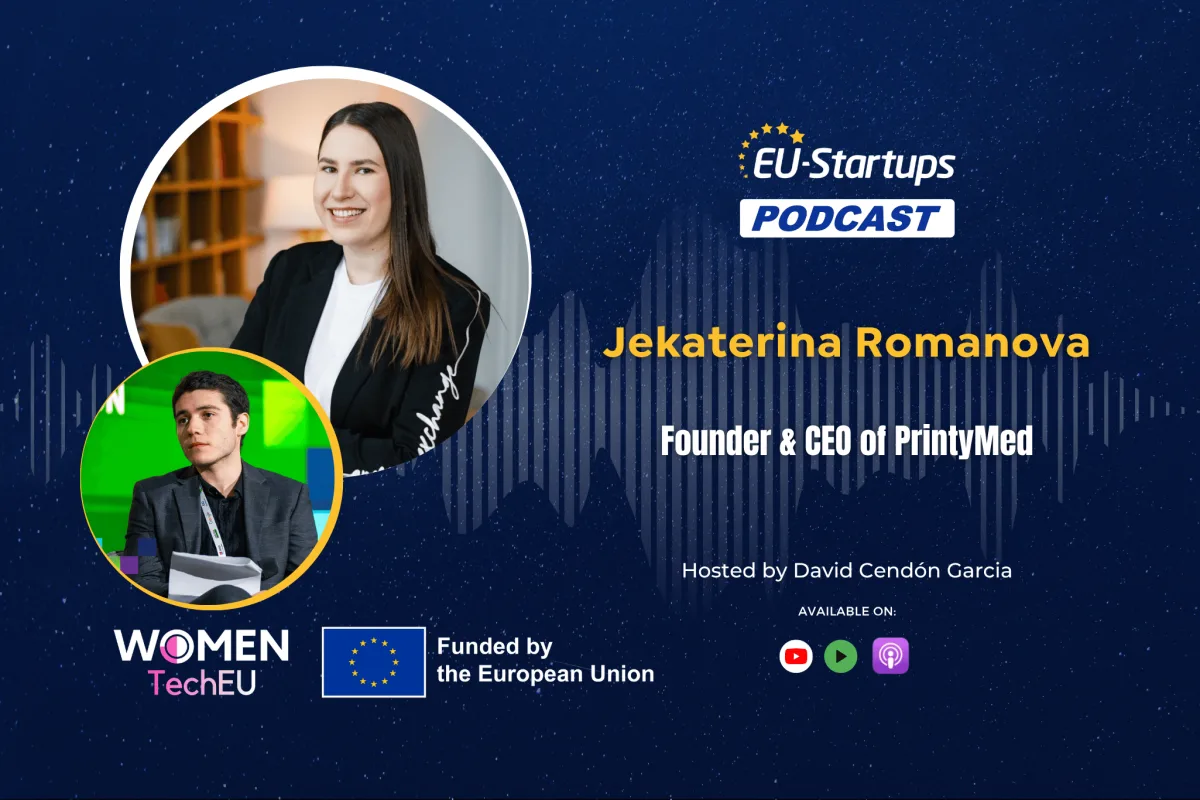
In a conversation supported by the Women TechEU initiative, Jekaterina Romanova, co-founder and chief executive of PrintyMed, explores her company's work on spider-silk-inspired materials and the broader landscape for deep-tech startups across the continent. The Women TechEU scheme is an EU-backed programme designed to back female founders steering deep-tech ventures throughout Europe, with a commitment to broadening participation in sectors and regions where women remain underrepresented.
The programme operates on the principle that diversity drives innovation, and aims to equip women in deep tech with enhanced access to capital, mentorship, training, expert advice, networking connections, and pathways toward additional EIC support. From 2026 through 2028, the implementing consortium will conduct four separate funding rounds, ultimately backing 160 companies. Selected participants will each receive €75k in non-dilutive grants alongside comprehensive support services.
From Banking to Biotech
Romanova's trajectory into biotechnology defies convention. Her background spans economics and banking before she ventured into entrepreneurship at 18 with a posture-correction apparel business. A subsequent venture focused on three-dimensional bone-graft printing gave her grounding in medical compliance, capital raising, and bringing products to market.
At PrintyMed, Romanova oversees funding acquisition, investor relations, commercial partnerships, and strategic direction, while the company's scientific and medical staff manage laboratory operations. The underlying technology—biomimetic spider silk—originated from research at the Latvian Institute of Organic Synthesis and mimics the mechanisms through which spiders naturally manufacture silk fibres.
From Lab to Market
PrintyMed's vision encompasses supporting synthetic organs and biological scaffolding systems. The company has constructed a prototype artificial heart valve and is investigating applications in synthetic nerve tissue, advanced wound care, and tissue regeneration.
The immediate commercial pathway centres on producing membranes for organ-on-a-chip platforms—systems that enable pharmaceutical firms and research institutions to evaluate drug candidates while curtailing reliance on animal models. Pilot deployments are underway, though clinical products destined for patients remain years away from regulatory approval.
Funding and European Support
PrintyMed has accumulated roughly €2 million through grant funding, encompassing €75k via Women TechEU and approximately €700,000 from the European Innovation Council programme. These resources have bolstered the company's capabilities in regulatory compliance, patent strategy, manufacturing scale-up, and investor engagement.
Global Expansion and Regulatory Reform
The company is cultivating partnerships in Saudi Arabia, where state-sponsored biotech initiatives, collaborative research opportunities, and streamlined certification frameworks present avenues for scaling internationally.
Romanova contends that Europe's medical-device regulatory framework can impede technological progress and advocates for controlled experimental testing zones to accelerate development. She also points to spider silk's commercial prospects in cosmetics and skincare, citing preliminary discussions with Chanel regarding a regenerative cosmetic glove product.
Key Takeaways
- Romanova's grounding in economics, banking, and prior medical-device ventures informs her business-centred perspective on biotechnology.
- Biomimetic spider silk presents diverse applications spanning tissue regeneration, organ replacement, wound management, and pharmaceutical research.
- PrintyMed's near-term commercial strategy prioritises organ-on-chip membranes for drug-testing applications.
- European grant programmes have proven instrumental in advancing PrintyMed's scientific work, regulatory expertise, and manufacturing capabilities.
- Saudi Arabia represents a strategic market for research collaboration, certification pathways, and international scaling.
- Streamlined regulatory mechanisms are essential for fostering medical innovation while upholding safety standards across Europe.
Source: EU-Startups