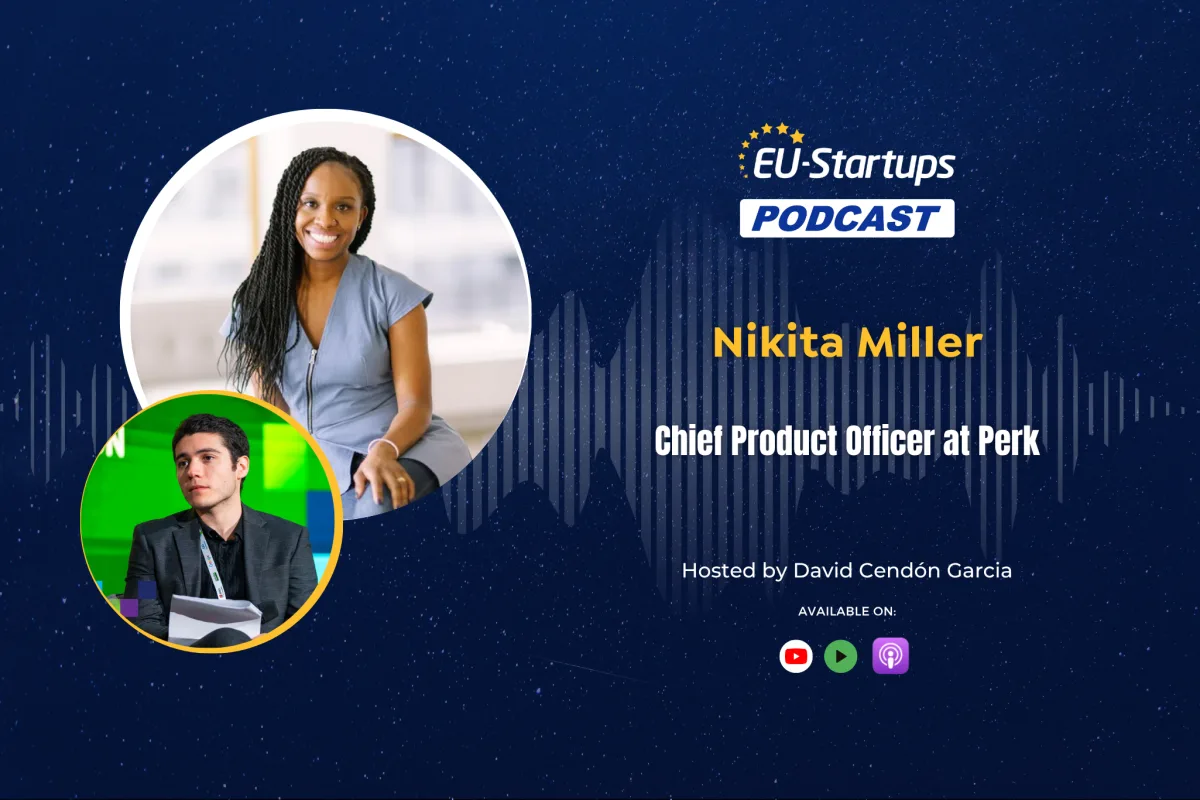
Perk, the Barcelona-based company formerly operating under the name TravelPerk, has undergone a significant transformation into an AI-driven travel and spend management platform. Nikita Miller, who took on the role of Chief Product Officer in September 2025, sat down to discuss the company's evolution, its strategic focus on automating workplace inefficiencies, and its plans for international growth.
Miller arrived at Perk during a critical phase of expansion. The company had recently completed its rebrand and was moving beyond its original travel focus to encompass spend and expense management through acquisitions like Yokoy, while simultaneously strengthening its foothold in the United States market.
Central to Perk's product direction is what Miller identifies as the problem of "shadow work"—the invisible, repetitive labour that employees undertake when managing travel and corporate spending. These tasks span from matching receipts with invoices and selecting accommodation to coordinating meetings and complying with travel guidelines. Perk's mission centres on reducing this administrative overhead through automation.
Miller reframes the conversation around artificial intelligence away from the common concern about job displacement. Rather than asking whether AI will eliminate roles, she contends that organisations should consider how technology enables workers to redirect their efforts toward more strategic and creative pursuits. While systems can handle invoice matching, data compilation and routine processes, humans retain responsibility for complex reasoning, strategic choices and determining organisational direction.
The discussion extends to how AI reshapes organisational design and recruitment patterns. Miller pushes back against the notion that AI-powered companies necessarily operate with smaller workforces. In reality, she argues, these technologies often generate novel job categories and heighten demand for specialised expertise. Positions requiring systems-level thinking have grown particularly valuable as organisations deploy interconnected AI systems that span multiple business functions.
Perk itself is advancing toward an agent-based architecture. The platform now integrates travel, spending, invoicing and event management into a unified system, allowing users to access information across previously separate tools. The company is simultaneously investing in customised experiences, leveraging historical travel and spending patterns to deliver tailored suggestions for individual users while providing finance leaders and operational staff with enhanced oversight of compliance, authorisations and expenditure.
Miller addresses Perk's international expansion strategy, particularly its entry into North America. She contends that navigating the complexities of multiple European markets has equipped the company to tackle the US market, where business travel practices and financial product expectations diverge from European norms. Rather than simply replicating its European model, Perk has assembled regional teams and adopted a market-specific approach.
A €300 million credit facility secured recently is fuelling this broader growth trajectory. Miller indicates the capital is being allocated toward artificial intelligence advancement, product innovation, spend management capabilities, invoicing systems, corporate payment solutions and exploration of emerging opportunities targeting both individual workers and finance departments.
Beyond Perk's immediate strategy, Miller reflects on distinctions between European and American startup environments. Drawing on her extensive experience building businesses in the United States, she identifies robust entrepreneurial drive across both regions and notes that Europe is generating an expanding roster of major technology enterprises. She maintains that fundamental entrepreneurial qualities—determination, perseverance and the capacity to navigate obstacles—transcend geography.
Looking ahead, Miller articulates Perk's vision of establishing a "100-year company." The objective transcends becoming a larger travel services provider; instead, the company seeks to construct an enduring enterprise that systematically removes unnecessary administrative tasks and empowers workers to dedicate more time to substantive, value-generating activities.
Key Points
- Perk's transition from TravelPerk into an AI-driven travel and spend management ecosystem, broadening its scope to encompass expenses, invoicing, events and corporate financial services.
- The concept of "shadow work" and Perk's commitment to automating routine activities including receipt matching, travel arrangement, authorisation workflows and expense tracking.
- Miller's perspective that the relevant question regarding AI centres not on workforce replacement, but on enabling employees to concentrate on strategic thinking, creative problem-solving and value-creating responsibilities.
- Perk's expanding deployment of AI and customisation to enhance travel recommendations for users while granting finance executives and administrators deeper insight into governance, authorisations, data reporting and organisational spending patterns.
- The company's vision for worldwide growth, with particular emphasis on the US market, alongside its aspiration to establish a durable "100-year company" dedicated to streamlining administrative complexity in organisations.
Source: EU-Startups