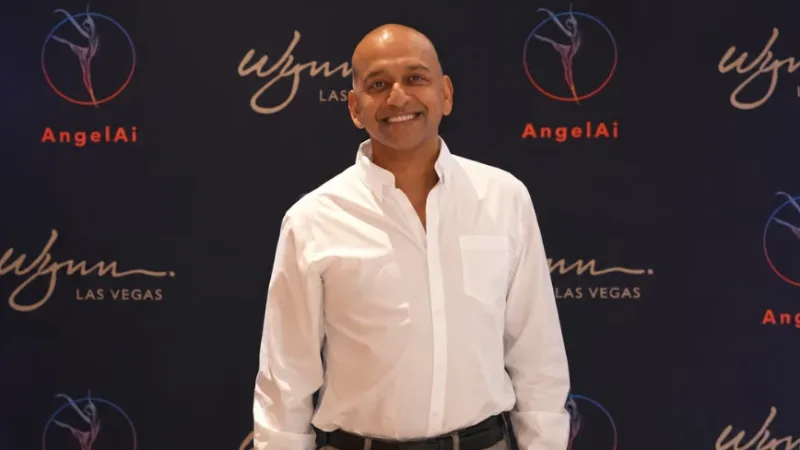
Many founders, particularly those with technical backgrounds, experience discomfort with self-promotion. Yet in an era where AI generates content at scale, personal reputation has emerged as genuine competitive advantage. We sat down with Oliver Yonchev, a brand strategist who has worked with Amazon, Apple, and Coca-Cola, to discuss why this mindset must shift.
The paradox facing founders today is stark: broadcasting a message has never been simpler, but establishing a brand with real substance has become harder. Across Central and Eastern Europe especially, the prevailing instinct remains to allow products to demonstrate their own merit. This restraint, however, can prove costly when competing on a global scale.
Yonchev, now co-founder of the London-listed AI firm Potentially and an investor in early-stage companies via cocreatd, maintains that treating the founder's brand as a core business asset is non-negotiable. This September, he will appear at The Bulgarian Edit in London to discuss brand construction and the obstacles smaller nations face in shaping international perception.
Moving Past Discomfort With Self-Advocacy
For product builders, particularly those trained in engineering, the notion of cultivating a personal brand often registers as uncomfortable. "This idea feels a little self-indulgent," Yonchev acknowledges. "Company builders want to focus on engineering; they don't like this idea of 'I have to self-promote'." Yet the AI age has rewritten the calculus: reputation now carries more weight than the content itself.
His counsel is direct: founders must move past this resistance. "Your personal brand is effectively your reputation at scale." A robust founder brand unlocks opportunities—attracting talent, securing investment—that would otherwise remain inaccessible.
"Your future success is predicated on how many great people you can convince to join you on your mission. If you have a strong personal brand, those doors open for you," Yonchev explains.
The goal is not mass popularity or influencer status. Some of the most influential personal brands belong to specialists commanding deep respect within their field, even if unknown to the broader public. Ultimately, Yonchev insists, founders must become their own strongest advocates.
If you're not going to be your biggest champion, who is?
Oliver Yonchev
The Skills That Matter When Execution Gets Automated
As automation absorbs execution-focused work, the market will reward a fundamentally different skill set. The genuine edge lies in what machines cannot do. "Most work is going to move away from executional work to judgment-based work," he predicts.
This transformed environment requires distinctly human capabilities:
- Good taste: Recognizing quality and steering AI outputs toward excellence.
- Critical thought: Questioning AI-generated responses, testing assumptions, and resisting expedient solutions.
- Systems thinking: Managing intricate processes that blend human expertise with AI tools.
- Sales: The enduring capacity to understand people and persuade, essential for fundraising and recruitment.
Yonchev makes an unexpected case for one classical discipline: copywriting. When large language models flood the landscape with generic, formulaic prose, distinctive writing becomes a differentiator.
"There's a certain phonetic rhythm to LLMs," he observes. "They lack soul. They lack personality. I'm a big believer in the craft of writing that will help you stand out."
National Brands and Collective Responsibility
Brand-building principles extend beyond individuals and corporations to entire nations. Yet countries confront formidable obstacles: entrenched cultural patterns and inherited perceptions. For a nation like Bulgaria, reshaping the global narrative demands coordinated action across society.
Yonchev, reconnecting with his Bulgarian heritage after two decades abroad, offers a sharp observation. "A lot of Bulgarians are quite self-deprecating about Bulgaria," he says. "In every interaction, it's quite common to laugh about the past or joke… but ultimately that compounds if every touchpoint is propagating negative narratives."
He contends that business leaders and public figures bear responsibility for transcending these patterns. Constructing a compelling national brand requires unified effort: amplifying successful companies and individuals on the world stage while establishing clear messaging about national identity. This represents a long-term commitment, yet one essential for CEE-based founders seeking global capital and visibility.
Events like The Bulgarian Edit, convening Bulgarian entrepreneurs, investors, and professionals in London on September 24, embody this collective approach. For Yonchev, the gathering offers a platform to share insights, strengthen community ties, and explore partnership opportunities. "A lot can be achieved by a small group of people with a shared mission," he emphasizes. "That's how you punch above your weight on the world stage."
For CEE founders building international recognition, Yonchev's closing advice draws inspiration from American entrepreneurial culture. Success demands being "consistently unapologetic about self-promotion," he concludes. "You have to say the same thing over and over, and over again to anyone who will listen."
Source: The Recursive — Events tag