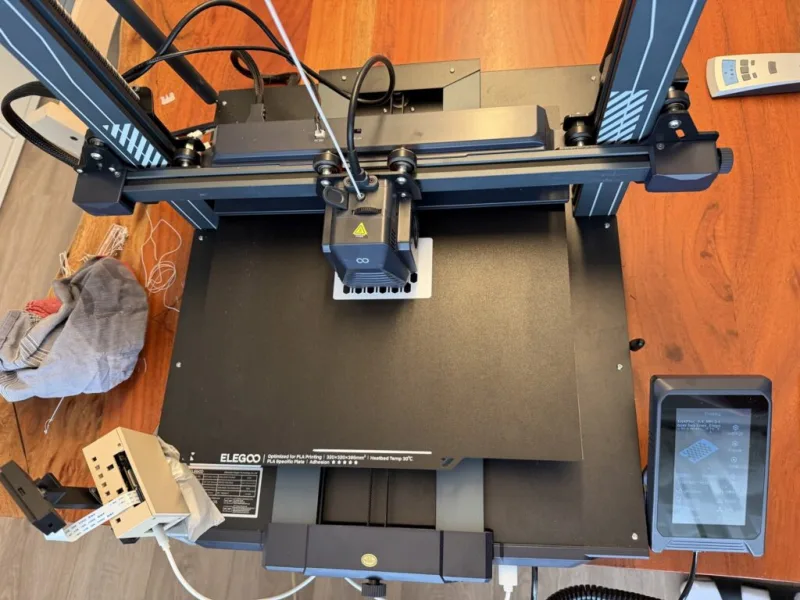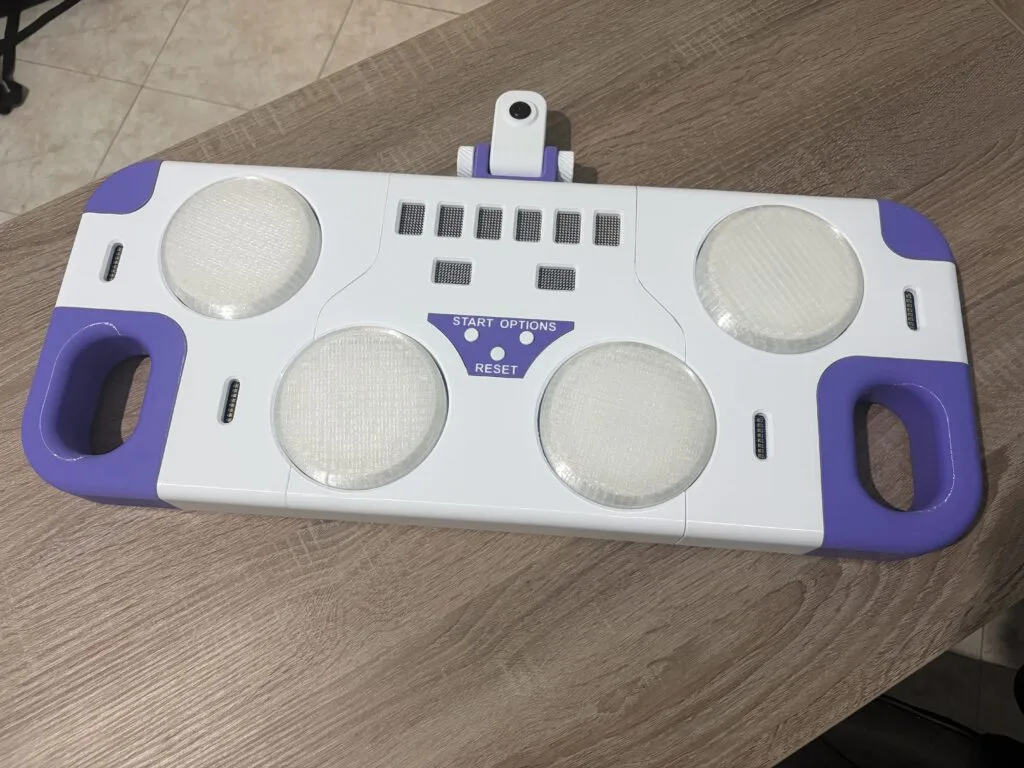
Merging creative thinking with capable hardware and sensor modules yields surprising results. Arduino community contributor LucaDilo demonstrates this by building a reaction game that goes beyond passive button-pressing—the machine actively senses when someone approaches and prompts them to engage.
Building with dual processing power
The Reflexes Machine relies on the Arduino UNO Q board paired with 12 Arduino Modulino nodes to create a fully functional arcade experience. A USB camera identifies the player's face and launches the countdown sequence automatically. Four lit arcade buttons provide the tactile feedback players expect, while eight Modulino LED Matrix displays combine to present a live timer. The UNO Q handles audio effects through its Linux integration, showcasing how hardware and software integration enables richer interactive experiences.
The UNO Q's architecture—combining Linux-based computing with real-time microcontroller functions on a single board—powers this dual capability. Computer vision algorithms manage the recognition layer that detects when someone is ready to play, whereas the connected physical components deliver the responsive, tactile arcade experience. The Modulino ecosystem contributes further flexibility: LED Matrix modules form the display, Modulino Pixels generate visual feedback, and a Modulino Thermo module rounds out the sensor array. Since these modules communicate via the I2C bus, multiple instances of the same component can operate together, with address utilities enabling management of several Modulino units on a shared connection.
From components to finished product
A basic reaction game involves straightforward mechanics: identify a player, start timing, activate lights, emit sounds, and register button presses. The Reflexes Machine transforms these elementary functions into something that feels like a polished, complete interactive installation. This shift from components to cohesive product happens because the modular building blocks—sensors and actuators that snap together—let creators concentrate on what matters most: their vision.
The same foundational design can serve multiple purposes. A reaction game framework becomes an arcade cabinet, an art installation, a fitness training device, an educational tool, or the foundation for an entirely novel concept. The accessibility and compatibility of these platforms enable creators to focus on innovation rather than wrestling with technical barriers.
Getting started
The full Reflexes Machine tutorial is available on Arduino Project Hub, alongside numerous other projects built with the UNO Q. The board itself is purchasable through the Arduino Store or through authorized distributors including DigiKey, Farnell, Mouser, Newark, RS Components, Robu.in, and many others worldwide.
Makers with their own creations are encouraged to share them with the community, inspiring others to push further with these tools.
Source: Arduino Blog