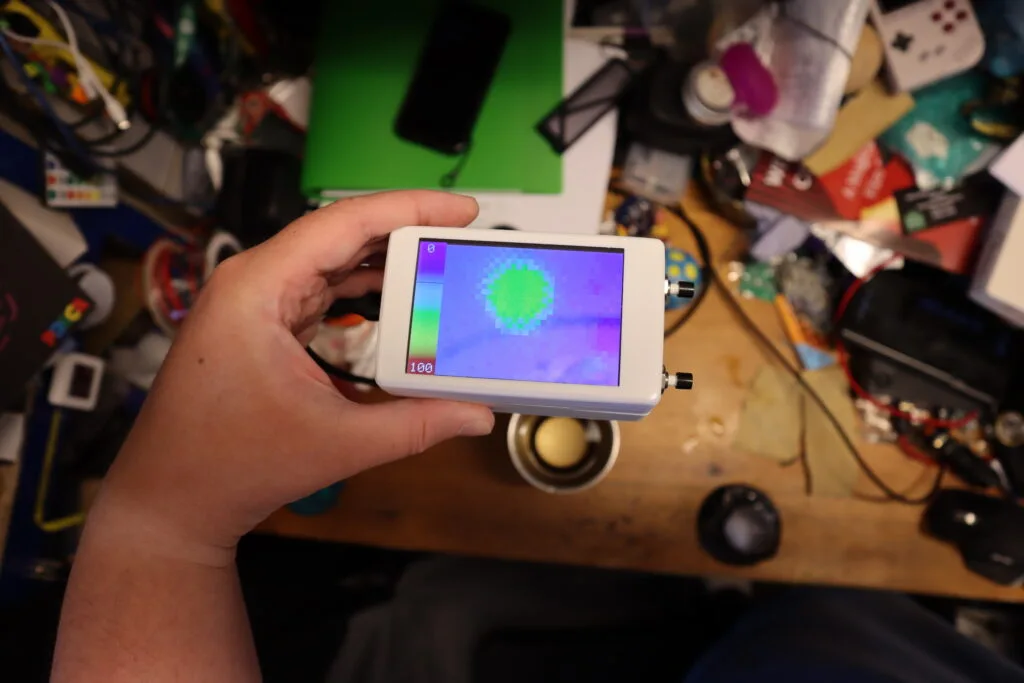
Thermal imaging opens up a hidden dimension of the physical world—one where temperature becomes visible. Beyond the novelty of seeing heat signatures, these cameras serve genuine practical purposes: identifying HVAC failures, spotting overheating components on circuit boards, and countless other applications where detecting thermal patterns matters. Katie Dumont of element14 Presents decided to build her own, leveraging an Arduino UNO R4 Minima as the brain of a compact, handheld thermal camera.
Sensor and Processing
At the heart of Dumont's design sits the Seeed Studio MLX90640 thermal imaging sensor. This component detects infrared radiation through an array of thermopiles—tiny heat-sensitive elements arranged in a 32×24 grid that forms the raw resolution of the captured thermal image. The sensor communicates its readings via I2C protocol, a standard interface that allowed Dumont to wire it directly to her microcontroller.
The UNO R4 Minima handles the heavy lifting: it retrieves data from the MLX90640 across the I2C bus and transforms that raw sensor stream into a displayable image.
Interface and Enclosure
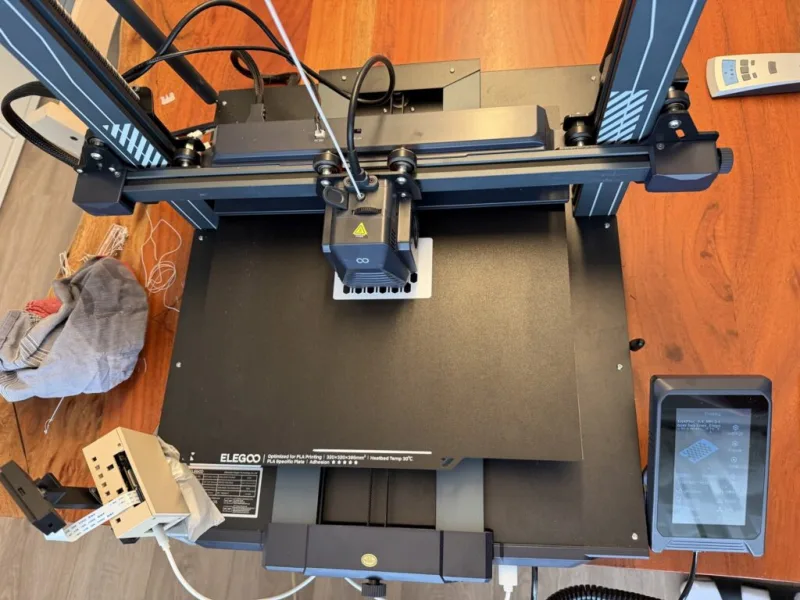
Dumont invested considerable effort in crafting the user experience. A DFRobot Fermion TFT capacitive touchscreen serves as the display, allowing intuitive interaction with the thermal data. Physical buttons supplement the touchscreen, providing quick access to settings adjustments—particularly useful for tweaking the temperature range on the fly. All these components nestle into a custom enclosure that Dumont designed using FreeCAD and fabricated through 3D printing.
The finished device functions equally well as a professional diagnostic tool and as a window into the infrared world, letting Dumont explore thermal patterns wherever curiosity leads.
Source: Arduino Blog