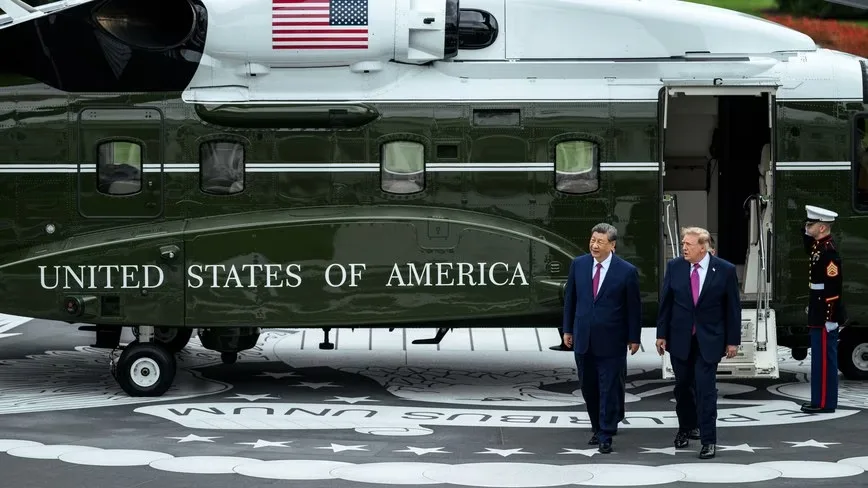
A bilateral engagement structure on what Washington and Beijing are calling "super intelligence" has been established following Xi Jinping's state visit to the United States. The White House unveiled the arrangement through a fact sheet, confirming that both nations will participate in ongoing discussions about the technology and its implications. Rather than using the conventional term artificial intelligence, the two countries have opted for the alternative designation.
According to the White House statement, "The two countries established the U.S.-China Super Intelligence (SI) Dialogue to exchange views on risks and benefits related to SI." The first follow-up session under this framework is scheduled for November 2026. In addition to the dialogue mechanism, the two sides have created a separate channel through which they can communicate about incidents related to the technology, though the fact sheet does not specify what would qualify as an incident.
A channel for incidents
Treasury Secretary Scott Bessent prioritized the establishment of the incident communication channel during preparatory discussions with Chinese counterparts ahead of the summit, according to reporting by Axios. During those negotiations, the American delegation put forward a proposal for an alert mechanism designed to flag incidents that pose national security risks.
President Trump has demonstrated a preference for the terminology "super intelligence," having employed it during his recent address to the United Nations. However, Michael Kratsios, who leads the White House Office of Science and Technology Policy, cautioned that the dialogue carries certain boundaries. He stated that "The United States is committed to diplomacy and dialogue on super intelligence. But international dialogue cannot be allowed to drift toward global governance." Kratsios further emphasized American opposition to any effort to establish "a globalist scheme of control" over the technology, and noted that the US has also urged the G20 to refrain from imposing governance structures on artificial intelligence.
Trade and coal
Beyond the intelligence-focused agreements, the fact sheet addresses commercial matters between the two nations. Both countries have consented to reduce tariffs on $30 billion worth of goods classified as non-sensitive, with the reduction applying in both directions. China has committed to purchasing no less than 10 million tonnes of American coal during 2027 and again in 2028. Negotiations regarding rare earths and other critical mineral supplies remain ongoing. Xi's visit concluded with the trade agreement extended through January.
Source: The Next Web