Researchers working at the world's most selective AI conference have increasingly shifted their base to China, according to new research from Carnegie China, a division of the Carnegie Endowment for International Peace. The shift marks a significant realignment in where the field's leading minds are concentrated. Three years ago, the picture looked entirely different, with American institutions commanding a clear advantage.
Methodology behind the numbers
Damien Ma and Binyi Yang, the study's authors, examined scholars whose work appeared at NeurIPS 2025, widely regarded as the field's most competitive venue. They characterize these accepted researchers as the "Navy Seals" of artificial intelligence. Their dataset encompassed 25,677 authors distributed across 5,823 papers. The team reconstructed detailed career trajectories for more than 10,000 of these individuals, tracing their educational backgrounds through to their present positions.
Information came from OpenReview, the submission platform NeurIPS relies on, where researchers document their own professional histories. According to the authors, AI-powered coding systems assisted in processing the extensive dataset, with human verification applied to validate the findings.
Domestic retention strengthens China's position
China has become the primary generator of elite AI researchers globally. Among the cohort studied, 57% earned their initial degrees in China during 2025, compared to 46% in 2022.
A growing proportion of these researchers are choosing to remain and build careers within China itself. The study attributes this trend to expanding employment opportunities within China's AI sector. Immigration barriers also play a role: stricter American visa policies, particularly affecting Chinese students pursuing advanced degrees in scientific fields, have made relocation less feasible.
The United States continues to attract international researchers, however. Among those now employed in America, the proportion holding Chinese undergraduate credentials increased by four percentage points.
University and employer rankings shift
Peking University and Tsinghua University now occupy the top two positions as employers of these elite researchers, with South Korea's KAIST claiming third place. Google, which held the leading position in 2022, has fallen from the top spot. The National University of Singapore and Nanyang Technological University have both entered the top 20 rankings.
European institutions have experienced a notable decline in their standing. ETH Zurich and the University of Oxford have disappeared from the top rankings entirely. The continent retains 60% of its homegrown talent, substantially lower than the 89% retention rate the US achieves.
Policy and incentives reshape the landscape
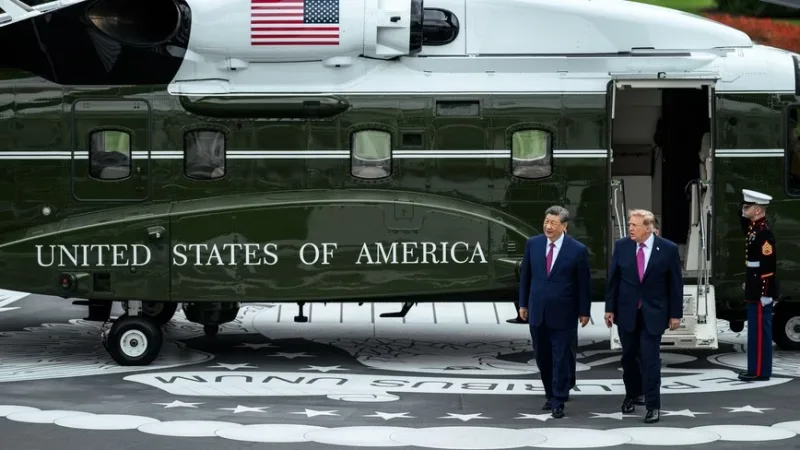
The Trump administration has announced plans to impose a $103,265 fee on newly issued H-1B visas. Meanwhile, Chinese AI and semiconductor companies are deploying equity grants as a retention tool for their engineering workforce. Recent diplomatic exchanges have also touched on the topic: Xi Jinping conveyed to Donald Trump last week that both nations could collaborate on preventing misuse of AI technology.
Source: The Next Web