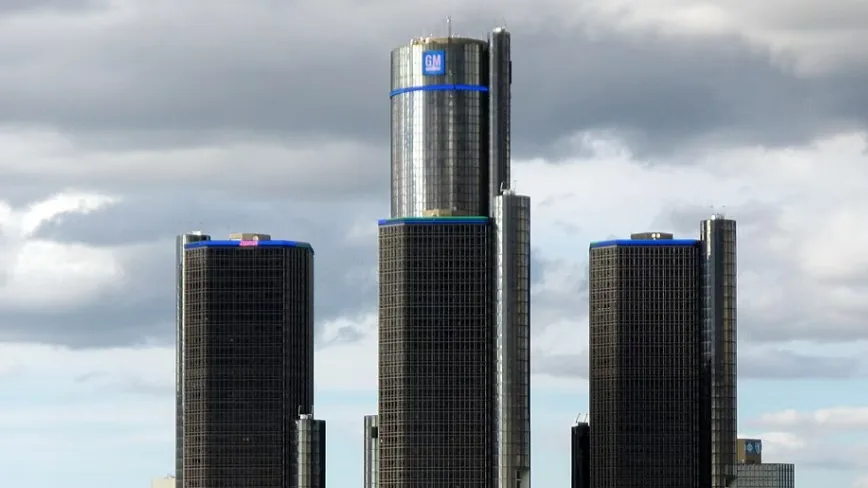
A joint venture between General Motors and LG Energy Solution will transform the Spring Hill facility in Tennessee into the first large-scale producer of prismatic lithium manganese-rich cells, or LMR. Construction begins this year and reaches completion by 2028, marking the first time either company has publicly identified a location for this particular chemistry.
The new cells require substantially less cobalt and nickel than GM's existing designs, replacing those materials with manganese instead. According to GM's claims, the chemistry delivers 33% greater energy density compared to the best lithium iron phosphate alternatives while maintaining cost parity. The automaker plans to deploy these cells in full-size pickup trucks and large sport utility vehicles capable of exceeding 400 miles of range, with production vehicles arriving in 2028.
This $1 billion investment builds upon earlier commitments totaling $2.3 billion in 2021 and an additional $275 million in 2022. GM had previously allocated $900 million toward the technology, establishing a pilot production line in Warren, Michigan that manufactures 2,500 cells daily. The Spring Hill facility will serve as the primary volume production site, while the existing location already produces lithium iron phosphate cells for stationary energy storage applications.
Kurt Kelty, who leads GM's battery division, stated in June that "lithium iron phosphate may never earn its way into GM's portfolio at all," according to electrive. This comment underscores the company's strategic commitment to the denser manganese-based alternative.
European automakers are charting a different course. Volkswagen recently divested 49% of its Spanish battery operation to Gotion, positioning the Valencia facility to manufacture lithium iron phosphate cells. Meanwhile, Stellantis and CATL are constructing a 50 GWh lithium iron phosphate production complex in Zaragoza.
The divergence reflects fundamentally different market assumptions. European manufacturers prioritize affordability over energy density, reasoning that the smaller vehicles produced on the continent require less demanding battery performance. GM's strategy assumes that dense cells can be manufactured economically, justifying investment in the more complex chemistry.
Research conducted by LG Energy Solution addresses one concern about manganese cells: durability. Testing demonstrated that the cells retained 92.2% of their capacity after 883 charge cycles. However, this finding does not resolve questions about manganese sourcing.
The European Commission has identified battery-grade manganese as a critical supply vulnerability. The bloc depends entirely on imports, with extraction reliance at 96% and processing reliance at 66%. Demand is projected to reach 74,000 tonnes by 2030.
Manganese qualifies as a strategic raw material under the Critical Raw Materials Act. Substituting manganese for cobalt would eliminate one European dependency while simultaneously creating another. The shift illustrates the complex trade-offs inherent in battery supply chain localization.
GM's execution timeline has faced obstacles. The company's Ohio cell manufacturing facility remained idle for seven months before restarting in August, having been shuttered when the U.S. tax credit framework changed. The Spring Hill project is scheduled for completion in 2028, coinciding with the planned arrival of the first vehicles equipped with the new cells. To date, no European manufacturer has announced plans for manganese-rich cell production.
Source: The Next Web