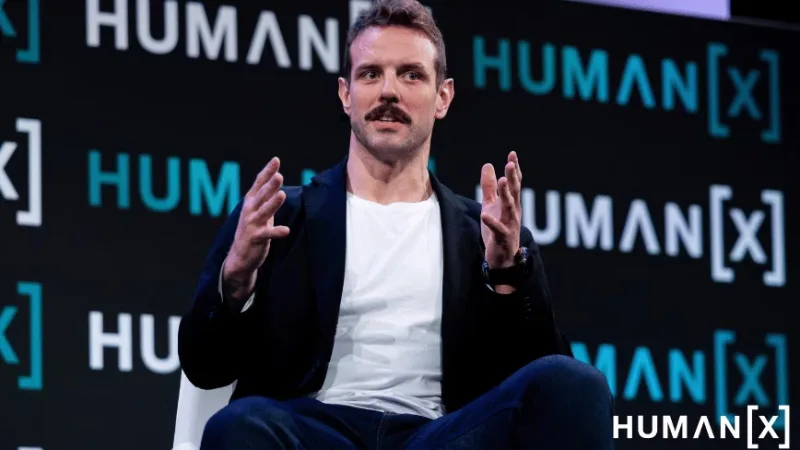
Booking.com's chief business officer James Waters acknowledged at HumanX in Amsterdam that his company constructed AI orchestrations and other systems it now considers a misstep. Frontier model developers subsequently released equivalent functionality, making the internal development effort regrettable in retrospect. Alongside Waters, Susan Jones, chief digital officer at Diageo, shared how early AI initiatives stumbled when applied atop legacy workflows.
"AI isn't going to take your job. Somebody who embraces it and learns faster than you might. AI is not going to take away your customers. A company that uses it more smartly than you do might," Waters said.
The pace of development in frontier models and agent technology outpaced expectations from two or three years prior, Waters explained. Given what Booking.com knows today, the organization would opt to procure such capabilities from vendors rather than engineer them internally, allowing the team to concentrate on customer challenges and proprietary datasets. The panel, moderated by Bloomberg's Amsterdam bureau chief Dasha Afanasieva, examined the economics of large-scale AI deployment.
89% want AI, 6% trust it
Booking.com's own research found that 89% of respondents expressed interest in using AI for travel research, yet merely 6% indicated confidence in AI making booking decisions. Large language models rank among the fastest-expanding travel research instruments, though users have not yet embraced them for actual bookings, Waters noted. Travel carries substantial stakes—financial, temporal and emotional—suggesting it will rank among the final sectors to transition toward agentic commerce. When two hotel chains integrated ChatGPT in July, they prevented payment transactions within the platform. Google Maps' Ask Maps agent, which went live in August, began offering hotel reservations.
Waters drew a parallel to autonomous vehicles: a single crash removes all self-driving cars from operation, whereas human drivers crash frequently without triggering such restrictions. For Booking.com, an equivalent failure would mean irrelevant search results or pricing errors. The company constructs its AI offerings incrementally, beginning with specific, high-intent queries and advancing toward broader discovery experiences. Deploying an LLM on the homepage presents no technical barrier, but integrating it meaningfully remains the genuine challenge.
A pencil, not a cost cut
Diageo's most extensively deployed system is a content creation suite operational across every nation and brand in its portfolio, according to Jones. Global brand divisions produce foundational content, which regional instantiations of the platform then customize for local audiences. Diageo operates more than 200 brands.
Marketing teams initially worried the technology would generate higher volumes of content rather than superior quality, Jones explained. Diageo frames its content tool, Pencil, as an instrument for unlocking creative potential rather than as a mechanism for producing more output at lower cost. The platform incorporates regulatory safeguards, and human marketers retain final approval authority over all outputs.
"It's a very apt name because it's like giving somebody a pencil to be creative with," Jones said.
Two sprints off the backlog
For Waters, the fundamental shift centers on human behavior. Employees naturally gravitate toward the easiest path forward and question what benefits them personally, meaning any new tool must surpass the convenience of existing workflows. Booking.com instructed its product and engineering divisions to pause backlog work for two development cycles to investigate how AI could reshape their operations.
A dedicated team of specialists manages the tools, documentation, training and assistance infrastructure, Waters explained. One critical performance metric tracks the proportion of generative AI implementations delivered independently of this central team. Readings that are excessively high signal the core team is not advancing innovation; readings that are too low indicate the broader organization has not absorbed the necessary skills.
Jones emphasized that Diageo distributes tools to the individuals executing the work itself. A multidisciplinary marketing committee examines regulatory and ethical considerations. The group also maintains visibility into every agent and tool under development, enabling Diageo to identify high-potential initiatives and expand them. Fabian Hedin, co-founder of Lovable, noted during HumanX that employees at large enterprises frequently discover tools independently.
No ROI number, and no sleep lost
Establishing a definitive return on investment for AI remains elusive, and Booking.com operates without one, Waters stated. As a digitally native enterprise, the company can quantify precisely what any product modification costs and generates. For other domains, leadership establishes acceptable spending limits. Tallying lines of code produced by AI yields little insight, he argued, since code volume and problem resolution are not proportional.
Geopolitical tensions influence travel demand in particular regions and periods, Waters noted, whereas the AI transition will continue regardless. Booking.com monitors its AI expenditures but maintains composure about the investment.
Jones recounted that Diageo's initial pilots layered AI atop existing operations without success. Organizations must first modernize their processes and data infrastructure, she emphasized, before implementing AI solutions.
"It's not really about the technology at all. It's about the people and the processes," Jones said.
Source: The Next Web