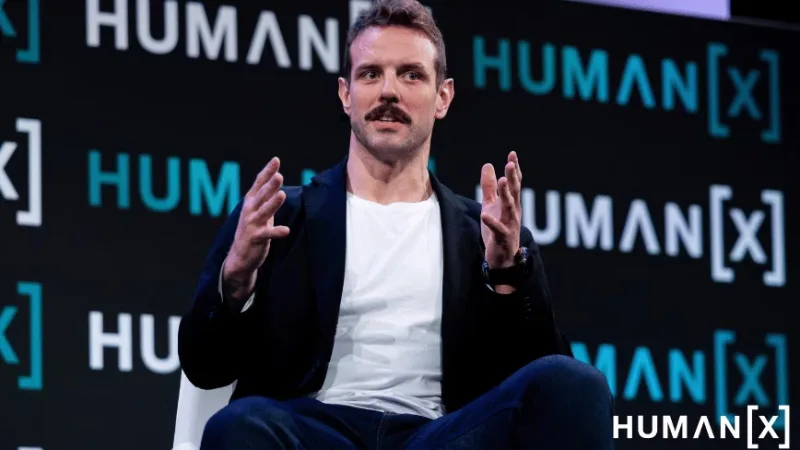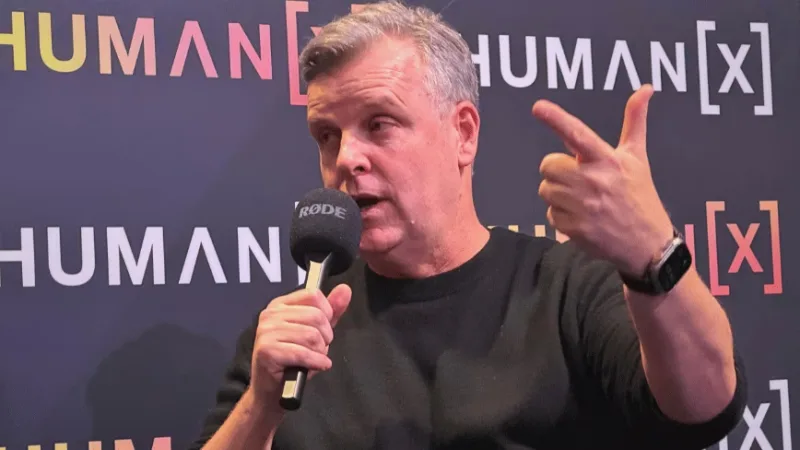
During remarks at HumanX in Amsterdam, Kareem Ayoub, vice president of AI technical strategy at Google DeepMind, outlined a framework for managing artificial intelligence deployment in enterprise settings. Speaking with Bloomberg's Tom Mackenzie on Wednesday, Ayoub suggested that the core challenge in AI governance stems from a mismatch: capabilities grow exponentially while oversight mechanisms advance linearly.
To illustrate his point, Ayoub referenced the financial sector's experience with algorithmic trading in the late 1980s and early 1990s. Banks at that time developed methods to contain trading algorithms within predetermined boundaries that remained auditable and enforceable. This historical precedent, he argued, offers a model for contemporary AI governance.
You may not be able to fully govern the system itself, but you can build a deterministic governance perimeter around it
Kareem Ayoub
Ayoub identified three interconnected dimensions requiring attention: determining what role AI should occupy in research and development workflows, establishing appropriate levels of system transparency, and clarifying accountability structures. Google's Frontier Safety Framework, which establishes capability thresholds alongside corresponding risk mitigation strategies, represents one approach to addressing these concerns.
Mackenzie raised the contrasting perspectives of other AI leaders. Anthropic's Dario Amodei has advocated for deliberately slowing frontier development, while Demis Hassabis has proposed an industry-regulated model inspired by FINRA, the regulatory body overseeing US securities brokers. Ayoub acknowledged that effective guardrails will require collaboration extending beyond technology companies alone.
Frontier capabilities versus practical deployment
A significant disconnect exists between what cutting-edge AI systems can accomplish and how organizations actually deploy them, according to Ayoub. At the frontier, these systems accelerate pharmaceutical research, enable translation of historical documents, and facilitate detection of gravitational waves. Yet within corporate environments, implementation typically focuses on routine tasks such as email composition and message summarization.
The transition from model-centric to agent-centric product design accelerated around the end of 2025, Ayoub noted. An agent architecture combines a foundational model with memory systems, integrated tools, and internet connectivity, enabling the system to navigate extended, sequential workflows. Software engineering has emerged as the domain yielding the strongest returns from this approach so far.
Ayoub identified four shared characteristics among the most successful organizations he advises. They construct secure testing environments rapidly rather than delaying deployment for lengthy infrastructure projects. They avoid betting against continued model advancement. They establish metrics aligned with their actual objectives. And their leadership teams actively use the technology themselves rather than delegating its exploration to others.
The best businesses ask: will what I'm building be ten times better if the underlying model is ten times better?
Kareem Ayoub
Conversely, organizations stumble when they create incentive structures that discourage transparency about AI adoption, or when executives engage with tools only superficially. As the expense of computational intelligence decreases, Ayoub expressed hope that organizations will redirect resources toward validating outputs rather than simply generating greater volumes of them.
Organizational dynamics at DeepMind
Mackenzie concluded the conversation by asking about the working environment at DeepMind, referencing departures of researchers throughout the year and Hassabis's transition to the chairman position. In August, Google consolidated AI leadership under Koray Kavukcuoglu, relocating the function to California.
Ayoub offered limited additional commentary beyond existing public reporting. He characterized artificial general intelligence as Hassabis's personal mission, recalling remarks Hassabis made at Google I/O suggesting that retrospectively, the current era will likely be recognized as merely "the foothills of the singularity". Ayoub also highlighted the momentum surrounding the Gemini initiative, which Kavukcuoglu oversees.
DeepMind established the DeepMind Institute this month as a venue for exploring AGI-related questions. Several former DeepMind researchers have launched independent ventures, including Emulate, a startup focused on world-model development.
The future is no longer a forecasting challenge. It becomes a design problem
Kareem Ayoub
Source: The Next Web