The traditional pitch for consumer VPNs was straightforward: pick a location, establish an encrypted tunnel, and send your data through it. For years, this framing held up well enough. Speed, server availability, and pricing formed the basis of how people evaluated these services.
That narrative no longer captures the full picture.
Today's connectivity landscape looks nothing like it did when VPNs entered the mainstream. A single user might work on home broadband in the morning, switch to a corporate network at midday, and tether to their phone by evening. Smartphones seamlessly hop between Wi-Fi and mobile data without user intervention. International travel introduces hotel networks, airport connections, roaming charges, and increasingly, eSIM options.
The underlying network constantly shifts. Yet users expect their connection to remain secure, functional, and largely transparent throughout these transitions.
Connectivity has become the harder problem
This reality reshapes what VPN users actually need. Privacy protection remains important, but the practical challenge has evolved. The question is no longer whether a secure tunnel can be created, but whether that tunnel stays reliable when the network environment changes.
This shift explains why protocol selection—once a concern mainly for technical users—is gaining prominence. WireGuard has gained traction largely due to its streamlined architecture and performance focus. Yet different protocols behave differently under varying network conditions, creating space for alternatives when the standard option proves less practical.
The goal is not to burden users with daily protocol comparisons. Ideally, they should never need to think about such details. Offering multiple connection methods simply gives the software greater flexibility to adjust as circumstances change.
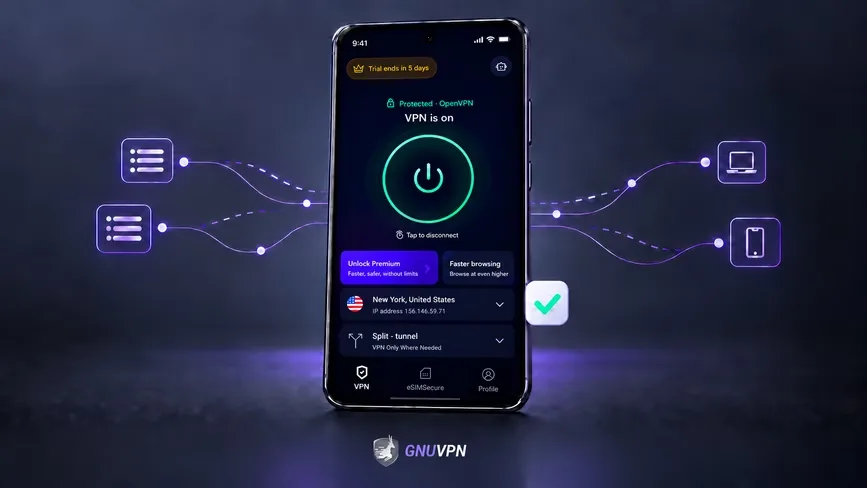
GnuVPN illustrates this strategy. The service provides multiple connection options: WireGuard, OpenVPN, SoftEther, and AmneziaWG. WireGuard serves as the default for everyday use, while alternatives kick in when network conditions become challenging.
The same principle extends beyond protocol selection. A service meant to operate quietly in the background of daily internet activity must function across the actual devices people use.
GnuVPN's download page currently supports Windows, macOS, iOS, Android, Ubuntu, and Debian. On Android, the app reaches beyond Google Play to Huawei AppGallery and Xiaomi GetApps. This breadth matters not as a checklist item but as recognition of how fragmented personal computing has become: one person might use Windows for work, Android for travel, and Linux on another machine.
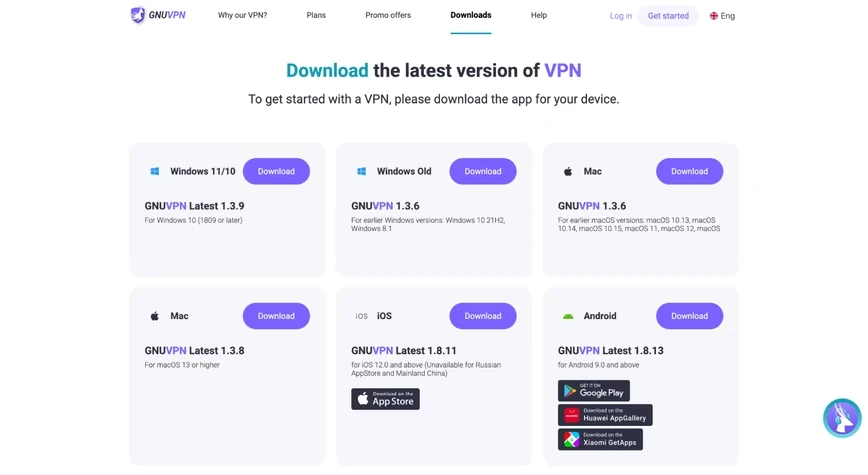
Cross-platform availability thus becomes part of the same connectivity challenge. The tool must remain accessible as users move between devices, not merely between networks.
When privacy tools meet connectivity tools
The more significant transformation begins even earlier in the user journey.
A conventional VPN assumes the user is already connected. It secures an existing connection. An eSIM solves a different problem: getting a device onto a mobile network initially.
In theory, these are distinct functions. For someone arriving in a foreign country, the distinction feels academic. The real need is straightforward: establish internet access without excessive roaming costs, then protect that connection with privacy measures.
This explains why the convergence of VPN services and travel connectivity deserves attention. GnuVPN now offers eSIMSecure plans that bundle mobile data with VPN access, combining network access and privacy protection in a single product rather than as separate transactions.
Market trends support this combination. The GSMA Intelligence 2025 Global Consumer Survey found that 12% of consumers who travelled internationally in the previous year used an eSIM abroad. More than 70% of those users obtained their travel eSIM from a mobile operator.
This does not suggest every VPN provider will become an eSIM vendor, nor that these products are interchangeable. Rather, it indicates something simpler: the boundary between connectivity tools and privacy tools is becoming more permeable.
For VPN companies, this reshapes competitive dynamics. Server count and speed benchmarks still matter, but so do seamless operation across devices, performance across different network types, and intuitive everyday usability.
The VPN is becoming less visible
None of this suggests VPNs are transforming into universal connectivity solutions.
They cannot amplify weak mobile signals, bypass every restrictive network filter, substitute for endpoint security, or prevent websites from identifying logged-in users. Additional protocols do not overcome these limitations, and eSIM integration does not turn mobile connectivity itself into a privacy measure.
What is shifting is the scope of the user experience a VPN is expected to manage.
The original consumer VPN experience was intentionally prominent: launch the app, select a country, click Connect. The emerging expectation is that the service should continue functioning as users transition between devices and networks, requiring minimal conscious thought about underlying mechanics.
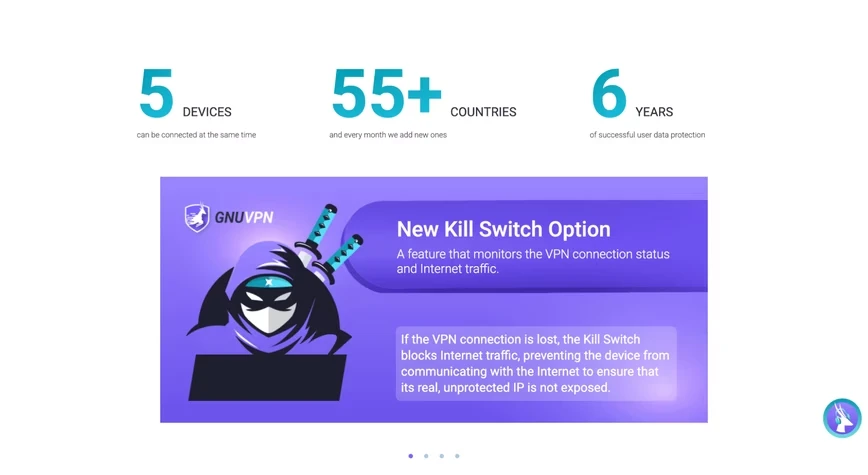
Protocol flexibility, extensive platform coverage, and travel connectivity features together signal a broader evolution. They are increasingly viewed as components of a unified product experience rather than isolated technical capabilities.
This may offer a clearer lens for understanding the VPN category's trajectory. Future development is likely to focus less on introducing flashy new features and more on integrating protected connectivity into the natural flow of how people connect to the internet.
Source: The Next Web