The path to pitching in front of 250+ investors at How to Web's Spotlight competition begins with a single application. Thousands of founders submit their cases each year, but only 20 will secure a spot on the conference stage in Bucharest this October. The challenge is distilling a company's potential into a limited format—one that must convince evaluators that the problem is real, the solution works, the market exists, and the team can execute.
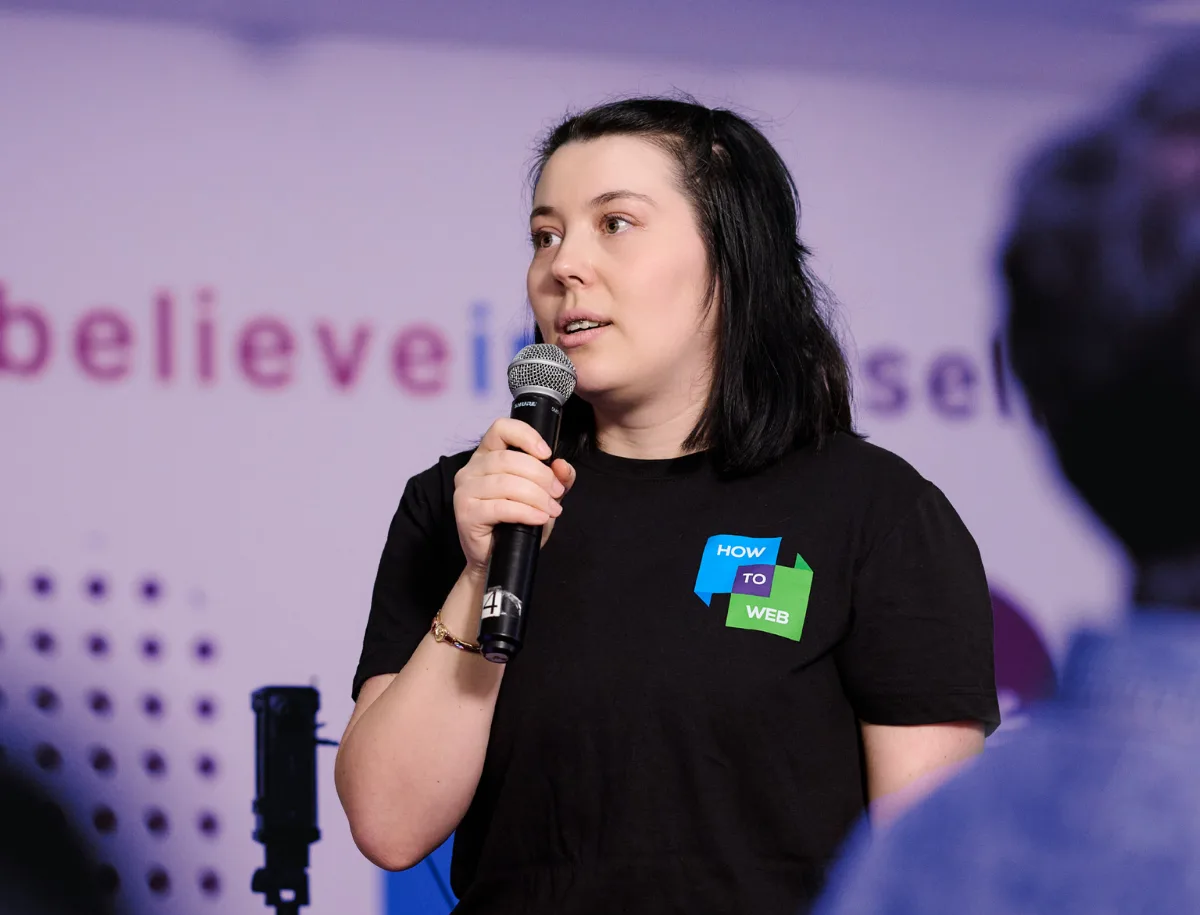
Carmelina Lungu, Startup Relationship Manager at How to Web, works on the selection side of this equation. She sees applications that inspire confidence and others that obscure promising businesses beneath unclear messaging. We asked her what the strongest candidates have in common, where founders typically stumble, and what happens after the pitch.
The Three Pillars of a Winning Application
Over successive years of reviewing submissions, How to Web has identified three consistent markers of strong applications. The first concerns the scale and relevance of the problem itself. Evaluators want to know whether the addressable market is substantial—whether it spans a city, a region, or the globe—and whether the problem founders are solving feels urgent enough to drive adoption and growth.
The second marker is the founding team's quality and depth. Early-stage companies often lack the traction metrics that later-stage businesses can point to, so the focus shifts to whether founders inspire confidence in their ability to solve the problem. This means assessing their technical expertise, industry knowledge, and whether their skills complement one another. According to Lungu, "When I look at the winners of the 2024 and 2025 editions, both combined an ambitious vision and innovative technology with well-constructed founding teams. The founders had complementary skills, with responsibilities distributed across areas such as technology and sales. That gave investors confidence that the team could execute the plans it was presenting."
The third pillar is clarity of reasoning. Evaluators want to trace the logic that led founders to their solution. What evidence convinced them this was the right approach? How did they arrive at their product design? The strongest applications show this thinking process transparently.
Distinguishing a Weak Pitch from a Weak Business
Not every company that struggles to present itself is fundamentally flawed. The selection team digs deeper than the application itself. They examine founder backgrounds, previous work, industry credentials, and technical expertise. They look for evidence that the team has a genuine connection to the problem they are addressing.
Conversations throughout the year—at Demo Nights and other events—provide additional context. Founders who truly understand their business can articulate risks as clearly as opportunities. A founder aware of what could derail the company often signals deeper market knowledge than one who only emphasizes upside.
Where Founders Lose Credibility
Competition analysis is a frequent weak point. Some founders underestimate existing alternatives or claim to have no real competitors. This often signals incomplete market understanding. Concrete numbers—current revenue, customer counts, user bases, and realistic projections—make a substantial difference. The figures need not be impressive, but they should demonstrate that founders grasp their business and industry.
Ambition becomes believable when grounded in a clear picture of the current position, market dynamics, and the specific steps required to advance.
The Clarity Problem
Company descriptions can either illuminate or obscure. Some founders pack in every detail, even information disconnected from their current stage or immediate goals. Others appear to have lifted text from old presentations without tailoring it to the application questions. Founding stories can matter, but essential details sometimes vanish into lengthy narratives about the journey rather than the present state.
An application functions like a pitch: limited space, limited attention. Conciseness often signals that a founder knows exactly what their company does. Excess information can suggest the opposite.
Cutting Through the AI Noise
With so many startups now labeling themselves as AI companies, distinguishing genuine innovation from rebranded products requires technical scrutiny. The How to Web team examines which tools a startup uses, what has been built in-house, and how original or defensible the underlying technology truly is. When necessary, applications are reviewed by colleagues with stronger technical expertise.
Commercial questions matter equally. Will the market adopt the solution? Could a larger competitor quickly replicate or neutralize the advantage? Is there real scaling potential? How distinctive is the technology? The assessment depends on the company and sector, but the goal remains constant: understanding whether the technology creates a credible edge in the market the startup is targeting.
What to Emphasize in a Pitch
When founders have only minutes to present, certain elements deserve priority. The problem and solution must be stated clearly, along with the specific features or capabilities that set the product apart. Founders should also outline the road ahead: financial plans, hiring needs, expansion targets, and if raising capital, the amount sought, its intended use, and the development period it will support.
The team warrants dedicated time as well. Even thirty seconds to one minute can establish important context about founder backgrounds and expertise. Investors need to know that the full team possesses the capabilities required to deliver on the proposal. A strong pitch provides enough clarity for the audience to understand the company and enough intrigue to warrant a follow-up conversation.
Beyond the Competition Stage
For the 20 selected startups, winning the final competition is just one possible outcome. Each company receives exhibition booth space—ten startups on the first conference day, ten on the second—to demonstrate their product and engage directly with potential customers, partners, and investors.
After the pitch competition, founders receive one hour of one-to-one mentoring from investors and experienced operators. Because this follows the pitch, conversations can address both the business and its presentation with specificity.
Startups also gain access to the conference matchmaking system. How to Web shares startup information with investors and provides startups with the investor list in advance, enabling both sides to arrange relevant meetings rather than hunting for contacts during the event.
Dedicated sessions on fundraising and sales—including live pitch-deck analysis—benefit all founders, even when the discussion focuses on another company's material. The conference also brings together businesses from across Central and Eastern Europe at various stages, from pre-seed to mature. This compressed learning environment allows founders to compare experiences and access insights that are difficult to find elsewhere. Sometimes the most valuable advice comes from another founder working in a different sector or at a later stage.
Eligibility and Deadlines
Spotlight applications are open to early-stage Eastern European startups less than five years old that have raised under €700,000 and already have a launched product with some traction. Founders can apply for Spotlight and Dealflow through the same startup application form. The deadline for Spotlight applications is September 11. How to Web Conference takes place October 6-8 in Bucharest, with five finalists advancing to the main conference stage.
Source: The Recursive — Events tag