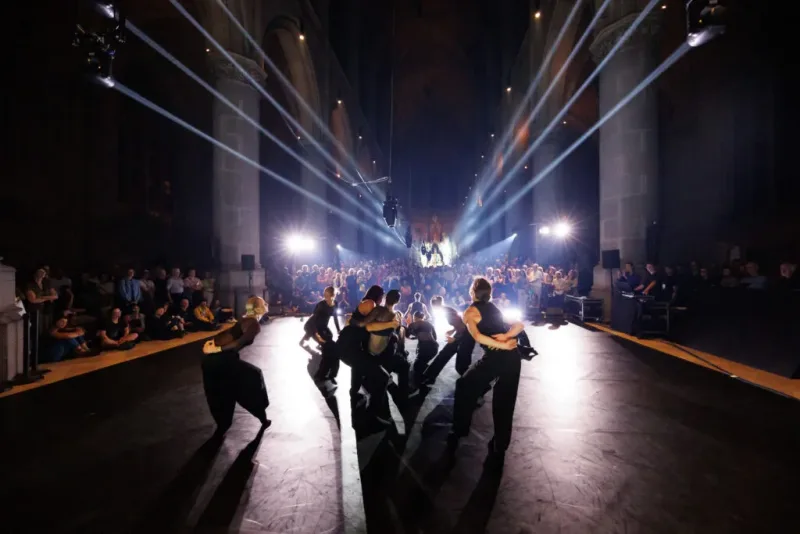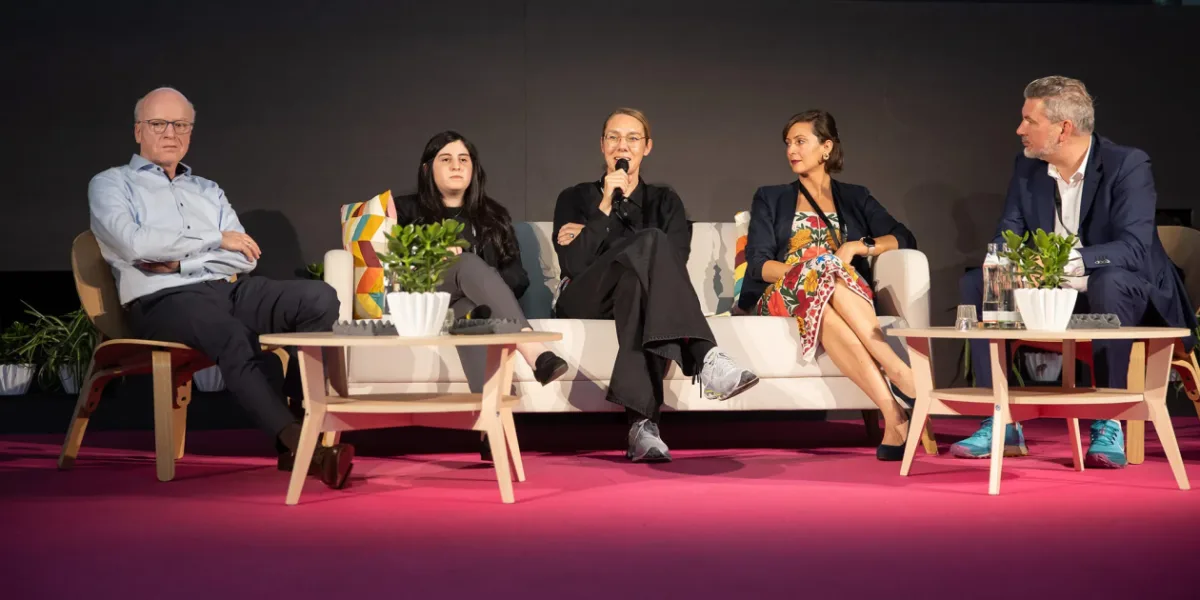
Ars Electronica's 2026 festival will host a series of conferences exploring a central theme: who determines the future we inhabit? Running from September 9 to 13, the programme addresses pressing contemporary challenges—from Europe's digital autonomy to artificial intelligence access—within frameworks of open dialogue on technology's role in society.
Standing Up to Escalation in the Digital Realm
Opening on Wednesday, September 9, "Negotiating Reality – Conflict Culture, AI, and Democracy in the Digital Public Sphere" examines what drives the digital public sphere: algorithmic systems, false narratives, and psychological influence patterns. Political scientist Ivan Krastev will launch proceedings with analysis of democracy amid digital fragmentation. Isabel Linzer, Jon Roozenbeek, and Alexander Sängerlaub will explore how platforms and content creators shape political conversation. Gustav Gressel and Jessikka Aro will investigate disinformation's deployment as a political instrument. Christina Schwaha and Stefan Rathmanner from the Austria Press Agency will share their fact-checking experience. The day concludes with strategies for building digital spaces conducive to genuine exchange.
Europe's Future: Power, Machines, and Work
Thursday's "Contested Futures – Europe Negotiating Power, Machine, Labor" advances a core argument: technology choices are inherently political, and Europe's trajectory remains unwritten. Francesca Bria and José Luis de Vicente will open by examining Europe's digital independence as global tech giants dominate. Their focus spans processing capacity, data infrastructure, and AI systems. Tommaso Calarco will address Europe's standing in quantum innovation alongside technology ambassador Martin Rauchbauer. Installation artist Simon Denny delivers a keynote on defense technology's visual language and political messaging. Filmmaker Hito Steyerl presents "Mechanical Kurds," her STARTS Prize 2026-winning work.
The conference's second segment turns to labour embedded in AI systems. Julia Kloiber and Victoria De Napoli examine hidden and precarious work sustaining these technologies. Artist and environmental technologist Tega Brain then proposes alternatives grounded in minimal computing, ecological awareness, and non-growth-dependent systems.
A third thematic strand considers planetary dimensions. Eyal Weizman, Nils Gilman, and Agnes Meyer-Brandis investigate ecological boundaries and governance frameworks. Electronic artist Rafael Lozano-Hemmer closes the day with a performance lecture.
Artificial Intelligence as a Tool in Times of Crisis
On Friday, September 11, "AI for Social Impact – Negotiating Humanity in Times of Crisis" asks how artificial intelligence can advance human welfare in regions facing conflict, displacement, poverty, or health disparities. Developed with NGO CARE Austria, the day opens with Andrea Barschdorf-Hager, CARE Austria's Executive Director, and Gerfried Stocker, Ars Electronica's Artistic Director, connecting humanitarian action, creative practice, technology, and problem-solving.
Filmmaker and STARTS Award recipient Hito Steyerl delivers the substantive keynote. Apollo Gabazira, leading CARE Uganda, draws connections between CARE's postwar Austrian assistance and contemporary crises, questioning how visibility, information, and global focus determine AI systems' recognition patterns. AI entrepreneur Archana Prasad and Jerry Tuan, CEO of CARE USA, join Barschdorf-Hager in identifying whose perspectives remain absent from AI's future development.
A centrepiece involves showcasing winners of the AI for Social Impact Awards. Eniola Benson, HelpMum's founder, and fellow laureates demonstrate AI's current applications in schooling, farming, and medicine. Data researcher Milagros Miceli and Vivian Thabet, CARE Egypt's CEO, also participate. The programme concludes with collective reflection on what responsible, fair, and human-focused artificial intelligence entails.
Tech-Bro-Topia – Whose Future Is Being Shaped?
Also Friday, the Linz Institute of Technology presents "Tech-Bro-Topia – A Dystopian Shift of Politics, Economics, and Culture," examining visions of tomorrow held by technology sector leaders and their societal and environmental consequences. Programmer Aya Jaff opens with scrutiny of emerging tech elites and their accumulation of influence and wealth. Philosopher and AI researcher Rainer Mühlhoff discusses AI's ideological dimensions, authority, and disparity with journalist Sarah Kriesche. Media scholar Alison Winch investigates Silicon Valley's hierarchies. Documentary filmmaker and author Douglas Rushkoff traces how early digital utopianism transformed into contemporary billionaire ambitions. Speakers reconvene for final roundtable exchange.
Old and new patterns – Patterns of Dehumanization
Saturday's "Patterns of Dehumanization" investigates how systems strip people of humanity and what artistic, cultural, and organisational responses might counter such mechanisms. Participants bring distinct viewpoints: Emilie Moatti from political journalism, Emmanuel Witzthum and Zuhdi Najeeb from a shared Israeli-Palestinian cultural initiative in Jerusalem, Daphna Horenczyk from performance art, Yehuda Cohen from literature, and Luc Bernard from digital game creation.
Water as a Social Issue
Sunday, September 13, brings "Negotiating with Water," treating a resource whose importance transcends ecology: water sustains life, functions as collective property, forms essential infrastructure, and increasingly fuels geopolitical tension. Aimée Craft opens from an Indigenous standpoint on water and human obligation. International law specialist Stefano Burchi outlines water's legal transformation—from commodity to state asset to shared human inheritance. Legal scholar Radha D'Souza examines intersections of law, technology, and colonial legacies.
"Negotiating Reality" receives support through fAIr media, co-funded by the European Union's Creative Europe scheme (grant 101147977). "Contested Futures" is shaped alongside CARE Austria with backing from CC Real. "Negotiating With Water" forms part of STARTS Aqua Motion, co-funded by the EU's STARTS initiative under DG CNECT (grant LC-03568055).
Source: Ars Electronica