While product engineering has leapt forward through AI assistance, the advertising industry has lagged behind. Major platforms including Google, Meta, and TikTok are rolling out their own agentic systems, yet much hands-on performance marketing still depends on manual labour. Teams cobble together data from ChatGPT, analytics tools, and various AI applications, but humans remain the connective tissue—gathering insights, investigating results, shuttling decisions between systems, and implementing changes by hand. Individual tasks may accelerate, but the overall workflow still needs human orchestration.
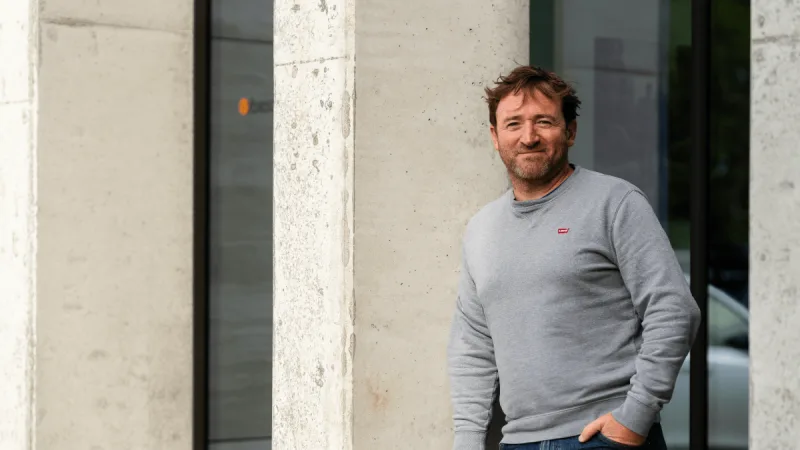
Adlyse, a startup founded by Ukrainians Anna Stepura and Roman Kuzmych alongside Yaozhong Kang, has built a platform designed to help paid media teams operate faster, allocate budgets more effectively, and drive revenue. The trio brings together entrepreneurial, adtech, AI, and engineering backgrounds. Stepura previously co-founded HireGPT, an AI recruitment company later acquired by ApplicantQ, and AiSport, an AI coaching platform. She has served as an Entrepreneur in Residence at Antler and a Menlo Fellow at Menlo Ventures. Kuzmych brings over a decade in advertising technology, optimisation, and AI, including a role as Director of Product at PulsePoint. Kang is a former Meta engineer.
The platform's core premise centres on humans and AI agents functioning as a unified team. Stepura explains the vision: "Paid advertising has changed. Teams need to operate at a speed and scale that manual campaign management alone cannot support," she says. "That requires reliable collaboration between people and AI agents, with shared business context and clear responsibilities. People retain control over strategy, boundaries, and approvals, while agents execute without requiring human involvement at every step. We built Adlyse to give growth and paid media teams the infrastructure to make that operating model reliable and scalable."
As platforms develop their own AI capabilities, companies face a coordination challenge: budgets, customer journeys, and business goals span multiple channels. A win on one platform does not guarantee the strongest overall business outcome. Adlyse provides a shared operating layer across advertising channels, business data, and growth-funnel tools. Its agents continuously track performance, diagnose problems, suggest actions, and execute approved workflows, requesting human sign-off where necessary. Marketing teams set the goals, permissions, rules, and approval thresholds; agents operate within those guardrails with full transparency.
From manual campaign management to agentic advertising
Paid media remains a primary growth lever, particularly for ecommerce and direct-to-consumer businesses. Yet the metric that matters most is not platform-specific performance. "Ultimately, businesses don't care about having the best-performing campaign on Meta or Google. They care about revenue and how much they get back from every dollar they invest," Stepura notes. If one channel underperforms, Adlyse can suggest reallocating budget to a stronger performer elsewhere.
Adlyse agents operate around the clock, monitoring campaigns, diving deep into performance data, and identifying what works and what does not. When a problem surfaces, the system generates more than 100 hypotheses about potential next steps. "We explore different directions and predict the potential outcome of each," Stepura explains. "We then select the most promising action and go back to the human and say: this is what's working, this isn't, this is why, and this is what we recommend doing next." The analysis can proceed autonomously, but humans retain final approval before any changes touch live budgets—often substantial sums. Once approved, agents return to the platforms and implement the modifications, whether adjusting creative, headlines, budgets, or other elements.
How Adlyse's agents decide what to do next
Behind the scenes, Adlyse deploys different large language models for different tasks, selecting whichever performs best for each job. The system also includes reasoning models purpose-built for performance-marketing scenarios. "We believe agents should proactively move entire workflows forward, understand the nuances of paid advertising across channels, and know when to act and when to ask for human approval," Stepura says. "They need to see the full picture because success for a brand means growth and revenue, not simply a campaign performing well in isolation. Agents should work toward those business outcomes, wherever the opportunity exists, across any campaign or platform."
Real-time optimisation catches problems before budgets are wasted
A critical advantage is Adlyse's real-time operation. Traditional campaign management allows money to drain into underperforming assets before anyone notices. By the time a human spots a declining creative, substantial budget may already be lost. "Our agents work proactively, so they can identify that decline as it's happening and recommend an intervention," Stepura explains. "We also analyse historical campaign data and use predictive models to look at what could happen next."
Building an operating layer across thousands of marketing tools
Adlyse targets mid-sized through enterprise customers, typically those managing advertising budgets starting around $100,000 per month and operating across multiple platforms. These accounts contain vast amounts of data; manual analysis demands substantial human effort. These businesses suffer most from delayed decisions and slow optimisation. Previously, no faster path existed because someone still had to spend time in the data. Adlyse currently integrates with six advertising platforms and connects to more than 3,000 tools across the growth funnel, with ambitions to eventually support every advertising platform. "For us, another advertising platform is simply another traffic source where a company can invest money and potentially generate a return," Stepura says.
Why cross-channel advertising matters more than ever
Multi-channel management grows increasingly critical because conversion often requires multiple brand interactions. A prospect might encounter a company on the street, hear about it from a friend, see content on Instagram, and encounter it elsewhere. "That's why we're so focused on being cross-channel rather than optimising one platform in isolation," Stepura explains.
Despite discussion around GEO (Generative Engine Optimisation, or visibility in generative AI platforms), Google continues driving substantial conversions depending on category and business type. LinkedIn carries high costs for B2B brands but can deliver strong results when executed properly. Underestimated channels also merit attention. "One we're starting to implement is connected TV, where the infrastructure increasingly allows advertisers to buy advertising in a similar way to other digital channels," Stepura notes. "It's not suitable for every brand, but we're seeing interest." OpenAI advertising remains nascent. "But if your immediate goal is return on ad spend in terms of revenue, I wouldn't necessarily expect that from OpenAI ads yet," she adds.
What happens to performance-marketing jobs when agents take over?
As automation expands, junior and some mid-level performance-marketing roles will likely disappear. "There isn't a need for humans to continue doing so much of the manual clicking and repetitive work. But we're also seeing new professions emerge," Stepura observes. She points to the emerging role of growth architect—someone combining deep performance-marketing expertise with knowledge of designing systems where AI agents collaborate. "These are people who might have 10 years of performance-marketing experience and deeply understand the field, but they also understand how to design a system in which agents work together," she explains. "They don't necessarily need to build the technical infrastructure themselves. They need to understand how to architect the system." In this model, marketing departments become increasingly agentic, with humans and agents working in tandem without creating bottlenecks.
Closing the loop: measuring what happens after every AI decision
Adlyse does not merely optimise and automate; it also tracks outcomes following each change. "We call this the learning loop. We monitor what happens after an action is applied until the point where that change stops affecting the campaign. That allows us to measure the impact and determine how accurate our prediction was," Stepura explains.
Performance improvements depend heavily on the account's prior management quality. "We've worked with campaigns managed by very established agencies where perhaps 10 people were working on a single account. Even there, we've been able to improve performance by around 10 to 15 per cent," Stepura says. In well-managed accounts, much value derives from eliminating repetitive work rather than dramatic performance leaps. "We've seen reductions in manual work of around 55 to 60 per cent. Our goal is to reach around 90 per cent automation, leaving humans to spend the remaining 10 per cent on strategic work." Poorly managed accounts show larger gains. "We've seen return on ad spend (ROAS) increases of around 150 per cent in those cases."
What comes next for Adlyse
Adlyse operates with an AI-first internal approach, reducing the need for large hiring. The company is currently pursuing SOC 2 compliance, essential for reaching more enterprise customers and already in active discussions with several. The next major product milestone involves integrating as many advertising platforms as possible, enabling humans to orchestrate advertising across all channels without platform-specific constraints. "Longer term, of course, the ambition is to become a unicorn as quickly as possible and bring this way of working to as many advertising accounts as we can," Stepura concludes. The company is backed by ZAS VC, Accel, Boot64, Aperiam VC, New York Angels, and other investors across the United States and Europe.
Source: Tech.eu