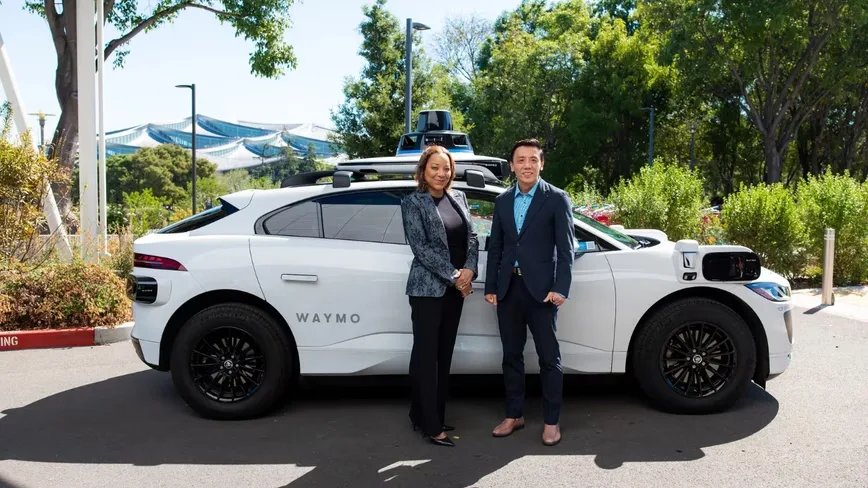
Waymo is preparing to bring its robotaxi service to Southeast Asia, with Singapore chosen as the entry point. The company's commercial launch is scheduled for 2028, though the groundwork begins much sooner, involving an extended period of local testing and system refinement.
The deployment strategy unfolds across three distinct phases. All-electric Jaguar I-PACE vehicles will touch down in Singapore within the coming months, marking the first physical arrival of the fleet.
From now through 2027, Waymo engineers will operate the vehicles manually while calibrating the autonomous system to Singapore's unique driving conditions and tropical climate patterns, particularly the region's monsoon seasons. The transition to passenger rides via the Waymo app is slated to begin in 2028.
A significant portion of this adaptation work centers on enhancing the vehicle's perception capabilities. Waymo's proprietary lidar, radar, and camera systems deliver comprehensive 360-degree coverage, enabling detection of pedestrians, cyclists, and active mobility devices across the entire environment.
The presence of active mobility users carries particular weight on Singapore's streets compared to the American cities where Waymo currently operates its services.
The initiative involves collaboration with Singapore's Ministry of Transport and Land Transport Authority.
Singapore welcomes Waymo's entry as our newest autonomous vehicle operator
Jeffrey Siow, Minister for Transport
Siow highlighted that Waymo brings cutting-edge technology and proven operational know-how to the city-state.
Singapore has built one of the safest, most efficient, and most forward-thinking transportation ecosystems in the world. Their focus on reliability, sustainability, and human-centric progress directly mirrors how we have built Waymo's technology and service
Tekedra Mawakana, Co-CEO of Waymo
Waymo intends to establish a team of trained autonomous specialists within Singapore and generate skilled jobs in operations, though specific headcount figures remain undisclosed.
Rather than positioning itself as a rival to existing transit infrastructure, Waymo envisions its service as a complement to Singapore's rail and bus systems. The focus is on serving first- and last-mile connectivity, a role already demonstrated in San Francisco where over one-third of Waymo passengers combine the robotaxi with mass transit connections.
The entire fleet operates on electric power, which Waymo estimates eliminates approximately 480 tonnes of CO2 weekly at current operational scale.
Waymo brings substantial operational credentials to this expansion. The company has completed more than 20 million fully autonomous rides and logged over 300 million fully autonomous kilometers. Safety metrics from its American markets show a 94% reduction in injury-causing crashes relative to human-driven vehicles.
Several operational specifics remain unconfirmed. Waymo has not revealed the planned fleet size, pricing structure, operating hours, or the geographic coverage area within Singapore at launch. The current commitment consists of a target date, incoming vehicles, and twelve months dedicated to mastering local driving conditions.
Source: The Next Web