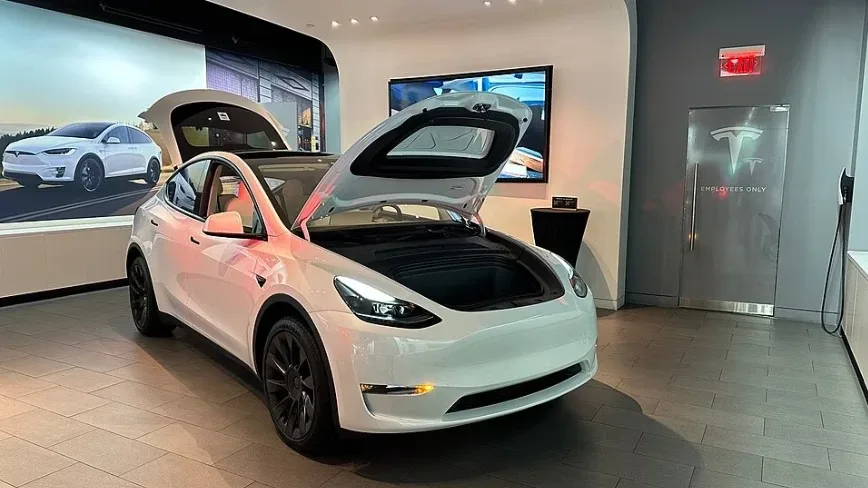
Six member states across the European Union have now authorized Tesla's Full Self-Driving Supervised feature. Five of these nations adopted the system without conducting their own evaluations, instead relying on a Dutch certificate. The safety assessment underpinning this approval has remained confidential since Tesla requested secrecy in 2024.
In the United States, a congressman from Illinois is pressing federal transportation authorities to explain their position on Tesla drivers operating vehicles while asleep with Full Self-Driving engaged. Raja Krishnamoorthi has set a deadline of 30 September for the transportation secretary to respond.
Krishnamoorthi's inquiry centers on whether Tesla's interior camera monitoring system functions properly when drivers wear sunglasses or obstruct the lens. His concerns stem from an NBC News investigation that uncovered 43 recordings showing Tesla owners either sleeping or distracted while behind the wheel, with 17 of these videos uploaded during the current year. The investigation also documented 13 traffic citations issued to California drivers.
One vehicle owner acknowledged to the news outlet that he regularly sleeps while the system operates. "As it's gotten better, the taboo has fallen away," he said.
Tesla's documentation places ongoing responsibility on the driver and states that the vehicle monitors eye movement, head position and wheel inputs. However, owners have found ways to circumvent these safeguards by using sunglasses, artificial heads and printed photographs positioned in front of the camera.
Another concern raised by Krishnamoorthi involves a message rather than the camera itself. When the vehicle detects driver fatigue and prompts the operator to "stay focused with FSD," this creates "a fundamentally different safety question," Krishnamoorthi wrote.
Europe's Approval Process
The Dutch regulatory authority RDW granted approval for Full Self-Driving Supervised in April, following UN Regulation 171 standards. The evaluation took eighteen months and involved 1.6 million kilometres of test driving across Europe, with more than 400 safety criteria assessed.
European drivers must complete a training module and pass a knowledge test before activating the feature.
Four additional EU nations—Lithuania, Estonia, Denmark, Belgium and Slovenia—subsequently approved the system without performing independent testing. These countries invoked the EU's mutual recognition framework to accept the Dutch certificate.
This single approval now covers approximately 42 million residents, representing roughly 9 percent of the European Union's total population.
Transparency and Confidentiality
The detailed safety assessment remains inaccessible to any party outside the RDW. Tesla requested that the regulator maintain confidentiality beginning in late 2024. In April 2025, according to Reuters, a Tesla representative formally asked the RDW to confirm it would never disclose specific documents related to the evaluation.
An EU-wide vote on the system could take place in October. Approval would require support from 55 percent of member states that collectively represent 65 percent of the bloc's population.
US Regulatory Response
The National Highway Traffic Safety Administration (NHTSA) has maintained an ongoing engineering review of 3.2 million Tesla vehicles since March. One regulatory body is investigating whether the safety mechanisms function as intended, while the other has already reached a conclusion based on evidence it declines to make public.
Source: The Next Web