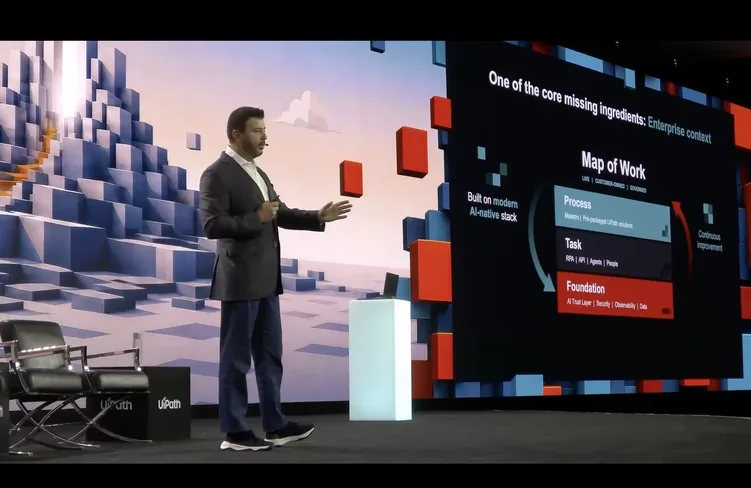
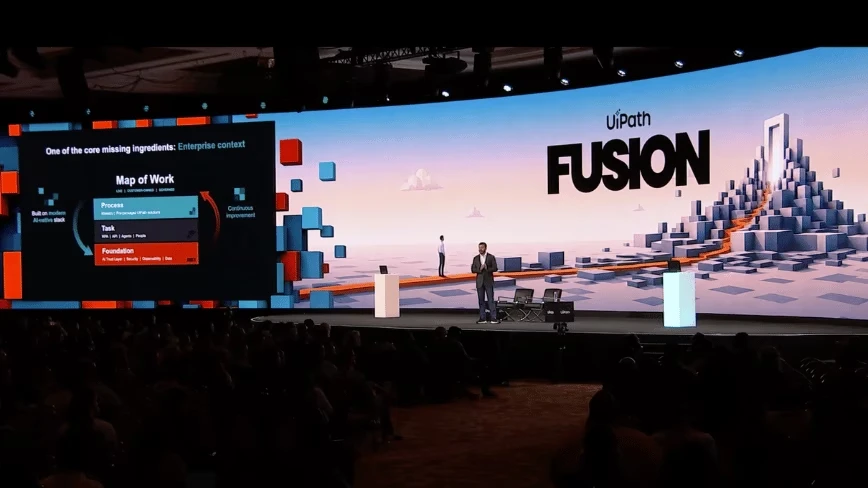
Speaking at UiPath's FUSION conference, founder and CEO Daniel Dines outlined fundamental shortcomings in how large language models operate within business environments. He presented UiPath Cartographer as the company's response: a platform designed to create detailed documentation of organizational workflows. Representatives from SMBC, Medline and Mayo Clinic appeared alongside him to discuss their experiences.
Without this manual, nobody will really succeed in deploying autonomous AI that we can trust to make decisions and understand how we actually work
Daniel Dines, UiPath founder and CEO
Dines used his keynote at FUSION, held at the Wynn Las Vegas, to build the case for comprehensive process documentation. The product he unveiled—UiPath Cartographer—generates what the company terms a "Map of Work". The conference itself marked a decade since UiPath's inaugural event in London in 2016, which drew roughly a hundred attendees. At that time, the company generated between $3 million and $4 million in annual recurring revenue and served a few dozen clients. Today, UiPath is approaching $2 billion in revenue with over 10,000 customers.
Three things LLMs cannot do
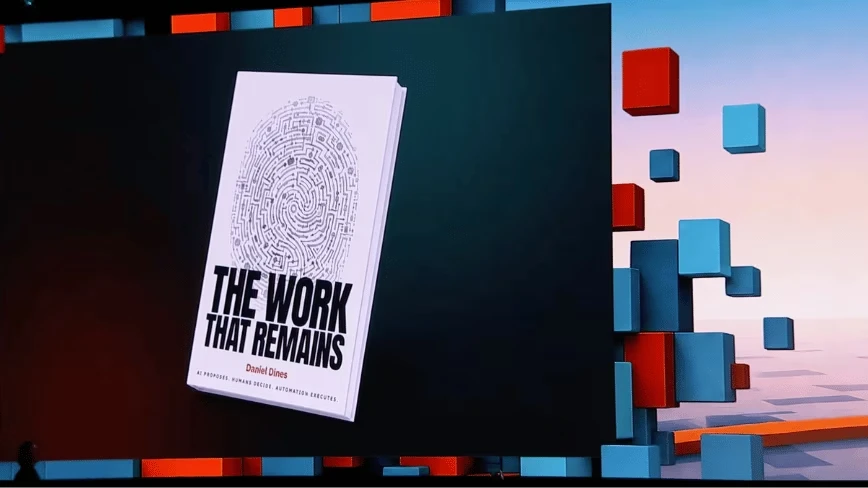
Dines authored a book titled The Work That Remains in collaboration with AI systems, employing Claude as a ghostwriter and sparring partner while using ChatGPT for editorial purposes. Every conference attendee received a copy. Through this writing process, Dines identified three critical limitations of large language models.
The first limitation concerns consequence. Large language models do not experience the repercussions of their decisions, whereas most corporate actions carry real consequences. The second involves learning capacity. Dines distinguished between memory and learning, noting that LLMs possess the former but not the latter.
LLMs don't learn. They have memory, and memory is a very different thing from learning
Daniel Dines
The third limitation is what Dines termed exactness. Because large language models operate probabilistically rather than deterministically, they cannot guarantee the precision required for financial transactions and similar critical processes. Dines stated he sees no emerging technology capable of addressing these three constraints.
For large language models to function effectively within corporate operations, Dines argued, they require exhaustive, granular documentation of organizational processes. Currently, no company maintains such documentation, and consultant-created versions become outdated within weeks.
How Cartographer builds the map
Cartographer ingests process diagrams, process-mining outputs, documentation and standard operating procedures. The tool can also conduct interviews with subject-matter experts, request screen recordings and investigate why individuals selected particular workflow paths. From this input, it generates an initial Map of Work. Dines acknowledged this preliminary map will necessarily be incomplete.
Coding agents then construct automations based on the map. When an agent processes a case, a human evaluates the proposed action and applies corrections. UiPath preserves these corrections in a Decision Ledger and reintroduces new exceptions into the map, according to Dines.
UiPath announced that its coding agents are now generally available. Claude Code, Cursor, Codex and Antigravity can operate natively within its platform. Cartographer is accessible immediately, though the company has not disclosed pricing.
SMBC: 73% is not enough
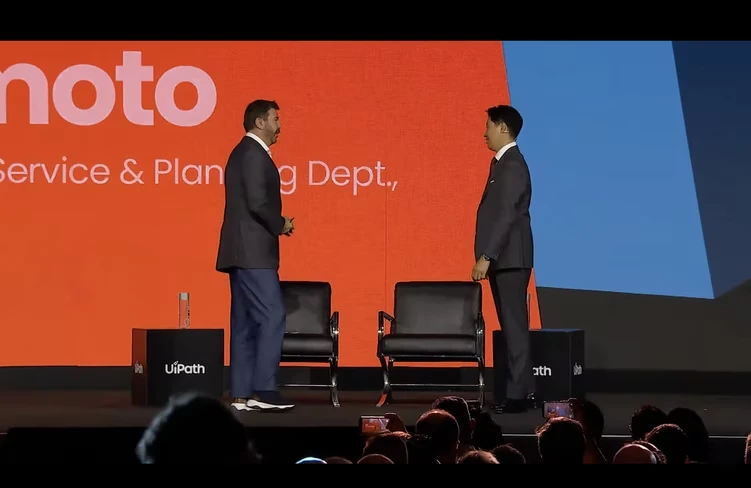
Kei Yamamoto, representing Sumitomo Mitsui Financial Group (SMBC), described the institution as among UiPath's largest clients. Since 2017, SMBC has automated more than six million hours of work, enabling approximately 3,000 employees to transition to different responsibilities. During the current year, an accounting agent created using UiPath processed over 10,000 reimbursement requests within a single month.
If a process has three steps and each is 90% accurate, end-to-end accuracy drops to about 73%, not acceptable for accounting
Kei Yamamoto, SMBC
SMBC now integrates rule-based systems, historical datasets, generative AI and human verification checkpoints, routing exceptions to personnel for review. Yamamoto indicated the bank intends to pilot Cartographer in the near future.
Customers on caution
During a customer discussion panel, Nikki Harper from Mayo Clinic emphasized that teams must first comprehend processes from beginning to end. William Abrams of Medline stated that operating at 73% accuracy would be unacceptable for his organization, given that hospital customers demand 99% precision. Abrams also noted that autonomous agents operating across the enterprise represent a degree of independence that neither Medline nor its customers currently feel comfortable endorsing.
A separate panel addressed UiPath Test Cloud and the company's "dark testing factory," where testing executes without human intervention. Forrester analyst Diego Lo Giudice cautioned that pursuing complete autonomy as an end in itself misses the point.
The dark testing factory has a future if it builds trust
Diego Lo Giudice, Forrester analyst
"Keep hiring juniors"
Dines concluded his remarks by addressing workforce considerations. He asserted that artificial intelligence cannot generate initiative or intent, and that humans establish the objectives AI pursues. He characterized the trend toward reducing junior-level hiring as misguided, reiterating a position he has advocated previously. Dines has also cautioned executives against accelerating job cuts in response to AI capabilities.
Junior employees today must acquire knowledge from experienced colleagues rather than by completing basic programming tasks that AI systems can already handle, Dines explained. Senior professionals, correspondingly, should take on mentoring responsibilities.
Source: The Next Web