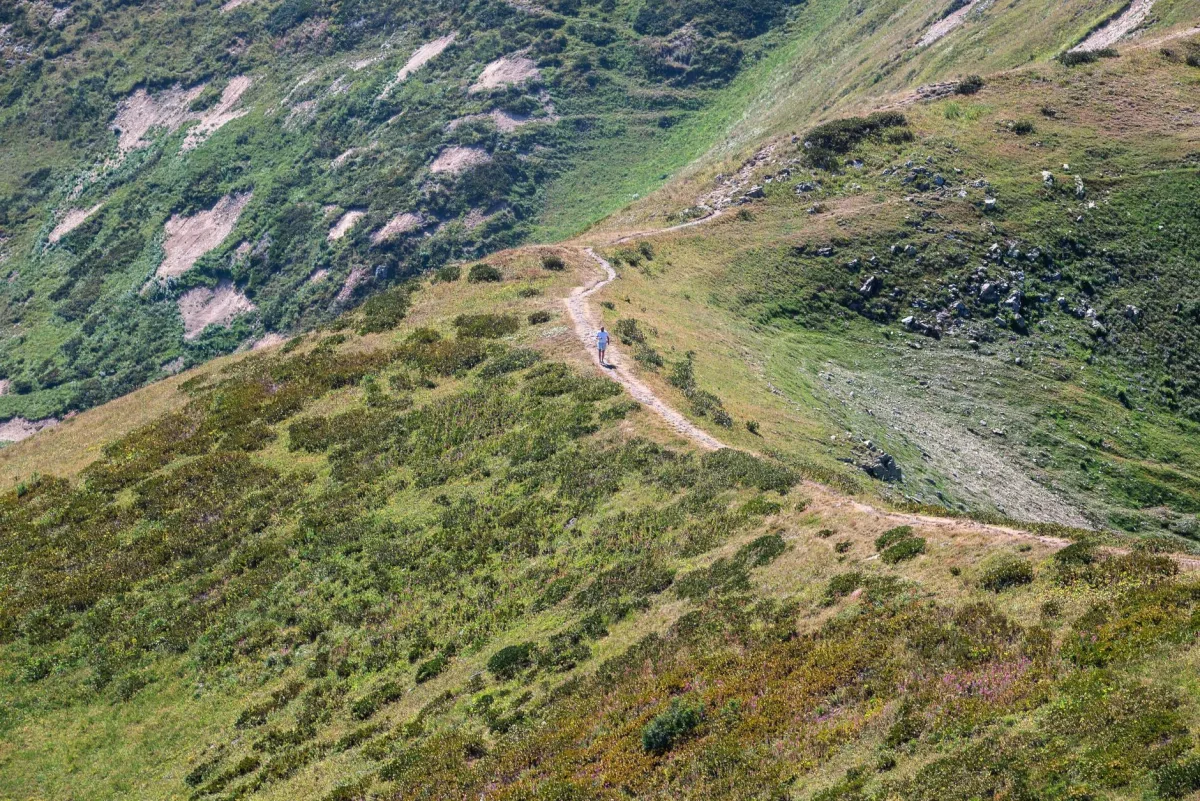
The diversions we overlook as interruptions might actually be where we locate what matters most. Tolkien's observation that not all who wander are lost has become a rallying cry for those who have chosen unconventional routes and faced skeptical questions about when they will finally commit to something stable. The statement appears at first glance to be a romantic rationalization, a way of reframing purposelessness as exploration. Yet the claim runs deeper than that, and this depth is crucial. The line does not assert that wanderers never lose their way. Rather, it maintains that some do not, which acknowledges that some do, while gently challenging our tendency to assume that anyone straying from the conventional path must be failing. Research in psychology offers substantial insight into what separates productive wandering from genuine lostness.
Wandering is often how a real direction is found
The crucial starting point is recognizing that exploration and having direction are not opposing forces; rather, exploration frequently becomes the means through which direction emerges. According to James Marcia's influential framework for understanding identity formation, individuals develop a coherent sense of self through a sequence involving exploration and then commitment. His research distinguishes sharply between those who reach commitment after exploring—whom he terms identity-achieved—and those who commit without any exploratory phase, a condition he labels foreclosure. While foreclosure may appear equally confident from the outside, it tends to be more inflexible and less resilient.
This inverts the conventional ranking where the person with a predetermined path appears to be progressing while the explorer seems to lag behind. Someone who embraced the first available certainty—the predictable profession, the inherited conviction, the predetermined existence—might seem admirably organized, yet a commitment made without exploration proves fragile precisely because it was never tested against other possibilities. The explorer who actively samples different options, by contrast, is performing the essential work that a genuine identity depends on, and frequently discovers a direction that proves more durable because it was actively sought rather than passively inherited. The exploration, therefore, is not a detour from self-discovery. In countless lives it constitutes the discovery itself, and the individual still questioning at thirty may possess a more sustainable sense of direction than someone who stopped questioning at eighteen.
Some wandering is a good life in its own right
A second, more provocative perspective on wandering suggests that a life of continuous movement can be genuinely excellent even without culminating in a fixed endpoint. Psychologists Shigehiro Oishi and Erin Westgate have proposed that beyond the satisfied life, grounded in positive emotion, and the purposeful life, grounded in meaning, exists a third category of flourishing that has been largely overlooked: the psychologically rich life. This form of existence is characterized by diversity, novelty, complexity, and encounters that reshape your perspective—experiences that need not always feel pleasant to possess genuine value.
The wandering existence practically embodies this concept. The unfamiliar locations, the varied employment, the individuals encountered along the journey, the convictions challenged by witnessing how others organize their worlds—these form precisely the substance of psychological richness. Oishi and Westgate observe that individuals genuinely regard such a life as a distinct form of wellbeing, not merely a fallback when other forms of success prove elusive. This distinction matters significantly because conventional measures of life quality emphasize happiness or accomplishment, implicitly penalizing the wanderer on both counts. Yet someone can lack both conventional stability and conventional achievement while inhabiting a life of remarkable depth, filled with the stimulation and perspective-broadening that a more constrained, goal-oriented existence might never provide. Evaluated according to this third dimension, which standard frameworks overlook, the wanderer is not adrift. They are thriving.
The precision of not all
This interpretation does not transform the phrase into universal justification, and the phrasing itself prevents that misreading. Not all who wander are lost necessarily implies that some are, and the genuine challenge involves distinguishing between them—a distinction determined not by the presence or absence of a target but by the nature of the motion itself. Purposeful investigation, marked by curiosity, accumulation, openness, and movement toward engagement with the world, is not lostness even when it appears unfocused to observers. Aimlessness represents something different: wandering that functions as evasion, a postponement of a difficult choice, or retreat rather than advance, can indeed constitute the lostness that optimists wish to dismiss. Furthermore, even authentic exploration carries boundaries; a life devoted exclusively to trying new things without ever committing eventually yields diminishing returns. The seasoned traveler eventually gains more from making a choice than from perpetual searching.
The phrase functions best as a counterbalance rather than a motto. It resists the automatic impulse to treat every unconventional choice as a misstep, and this resistance is warranted because evidence demonstrates that exploration frequently produces genuine direction and occasionally constitutes a fulfilling and valuable life independently. However, it demands something from the wanderer: clarity regarding the nature of their wandering. Are you moving toward the world, accumulating knowledge, testing possibilities, and being transformed by discoveries, or away from it, maneuvering to sidestep an uncomfortable decision? The former is not being lost. The latter sometimes is. Recognizing which applies to you is the discernment the phrase leaves for you to determine.
Source: Silicon Canals