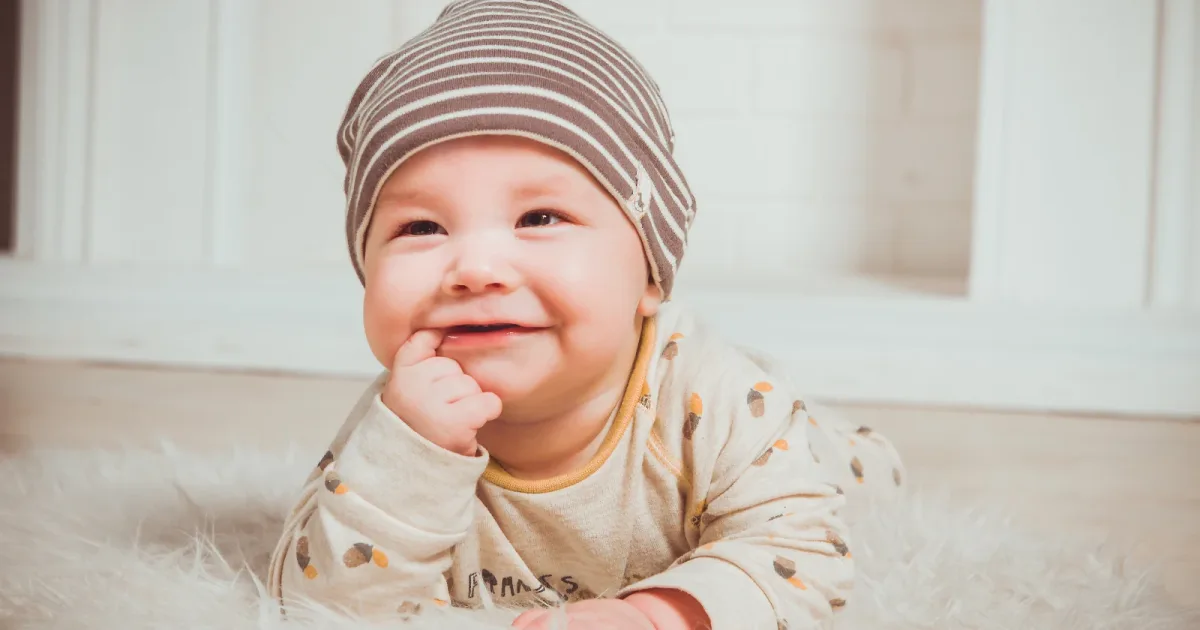
The impulse to pinch, squeeze, or bite something cherished appears to be a universal human experience—yet scientists remain puzzled about the mechanism linking affection to aggressive impulses.
My grandmother greeted me in an identical manner throughout my childhood. She would gaze at me, emit a sound hovering between a growl and a hiss, then press both hands firmly against my cheeks as though assessing a melon's firmness. I was approximately six years old at the time, and I took this to be typical adult conduct.
The gesture resembled a controlled explosion more than an embrace. Her affection ran so deep that her hands required an outlet, and my face happened to be the most convenient target.
In Manila, there existed a specific term for this behaviour. Gigil.
The word English never got round to inventing
Gigil originates from Tagalog and captures the precise moment when something becomes so endearing that your physical body registers a protest. Fists tighten. Jaw muscles tense. An irresistible compulsion emerges to compress whatever is triggering this response.
Throughout most of my life, this vocabulary remained accessible only within Filipino communities. For everyone else, I offered an awkward multi-sentence explanation accompanied by a somewhat anxious expression. Then in March 2025, the Oxford English Dictionary incorporated gigil into its pages, joining over forty other borrowed terms that addressed previously unfilled gaps in English.
I experienced an unexpected sense of possessiveness regarding this development for several days.
Yale needed 109 volunteers and a lot of bubble wrap
Filipino grandmothers had mastered this phenomenon for generations before academic psychology took notice around 2012.
Two Yale graduate students, Rebecca Dyer and Oriana Aragón, presented participants with slideshows featuring cute animals, humorous animals, and unremarkable-looking animals. Each participant received a sheet of bubble wrap under the pretense that the research concerned motor control. They were instructed to pop as many or as few bubbles as they preferred.
The group viewing cute animals popped approximately 120 bubbles on average. The neutral group achieved just over 100. The humorous group managed 80.
The researchers termed this phenomenon cute aggression. When asked by journalists whether English possessed a corresponding term, Aragón replied in the negative and referenced gigil, a response that has brought me disproportionate satisfaction.
Throughout these experiments, no participant harboured any desire to cause harm, and the researchers took pains to emphasise this point.
What your brain is actually up to
The explanation carries an inelegant label attached to a straightforward concept. The Yale researchers designated these as dimorphous expressions: a single emotion manifesting through two opposing behavioural outputs.
To express this plainly, when positive emotions become excessively intense, some of that intensity exits through the alternate route marked negative. Tears flow at weddings. Laughter erupts when receiving distressing news. The desire to bite a puppy surfaces.
Their hypothesis proposes that this aggressive impulse functions as a release mechanism, diminishing the intensity so you can proceed with your day rather than remaining stationary on a street corner admiring a corgi indefinitely.
In 2018, Katherine Stavropoulos at UC Riverside attached electrodes to 54 individuals and presented them with photographs of infants and young animals. Participants who reported the most pronounced cute aggression simultaneously demonstrated the highest activity levels in the brain's reward centres. She has characterised this as the initial direct neurological evidence supporting the phenomenon.
This represents a single study involving 54 subjects, so treat this finding with appropriate caution. Nevertheless, it aligns with the conclusions from behavioural research: this reflects an inherent characteristic of neural organisation rather than a malfunction.
Good news arrives sideways too
This discussion extends beyond the realm of puppies.
On the day I completed the paperwork for selling my restaurants, during the height of the pandemic, I walked into the parking area and laughed. A genuine, unrestrained laugh, solitary, beside a rubbish bin.
I spent subsequent months privately questioning my own mental state. Years of effort had vanished, and my body's reaction was laughter.
Nothing was amiss with me. Intense feelings do not present themselves in orderly fashion or arrive dressed appropriately. They emerge through unconventional channels. Joyful tears. Anxious laughter. The peculiar numbness following news you anticipated would feel momentous.
Much of the internal criticism individuals direct toward their own emotional responses originates from a single flawed premise: that the reaction should correspond to the stimulus. Frequently, this correspondence does not occur.
Why having the word helps
I maintain reservations about the notion that assigning a label to something resolves it. Self-improvement literature frequently conflates these two distinct processes.
However, naming accomplishes something valuable. It eliminates the solitary apprehension that you alone experience this.
Prior to acquiring this vocabulary, my grandmother's greeting represented an individual peculiarity I would have found difficult to justify to others. Once I possessed the word, it transformed into a documented human response supported by scientific investigation and dictionary recognition. The behaviour remained unchanged, yet its significance shifted dramatically.
This principle extends to less appealing emotional states. Should you experience a flash of irritation toward someone you care for, or lose enthusiasm for a project upon its completion, the more productive inquiry concerns what that emotion is managing.
Three things I do with it now
First, I discontinued evaluating my responses for appropriateness. When a reaction seems unusual yet poses no harm, I permit it to proceed. My beagle Hugo receives commentary in a tone I would disavow if questioned.
Second, I interpret other people's unconventional reactions with greater compassion. The person who delivers a joke at a funeral is not demonstrating insensitivity. The individual who becomes silent following praise is not showing ingratitude. The underlying signal is emotional intensity, and intensity does not organise itself neatly during its expression.
Third, I remain alert when this release mechanism operates excessively. An occasional impulse to squeeze a puppy constitutes normal experience. Experiencing persistent overwhelm to the degree that your own responses cause concern warrants consultation with a medical professional or trusted person.
My grandmother passed away before gigil entered the dictionary. She would have shown little interest. She possessed the word already, and she deployed it on my face repeatedly throughout a decade.
Source: Silicon Canals