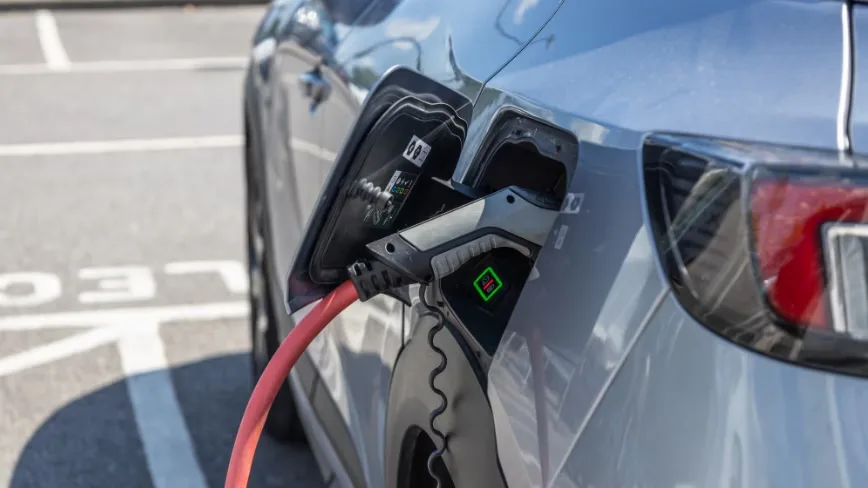
By the close of 2025, Oslo's roads carried 120,469 battery-powered vehicles, representing nearly half of the city's 246,809 passenger cars. Yet the infrastructure supporting this fleet tells an unexpected story: roughly 78% of the 4,519 public charging stations operate at modest power levels between 3.6 and 43 kilowatts, delivering energy at a leisurely pace rather than the rapid top-ups that dominate industry conversation.
The remaining charging capacity splits into two smaller categories. Some 611 stations provide intermediate charging between 50 and 250 kilowatts, while 376 exceed 300 kilowatts—sufficient for commercial vehicles and occasional urgent situations. This distribution reflects a deliberate choice about where and how power reaches vehicles.
The Mathematics of Overnight Charging
A six-kilowatt outlet delivers approximately 36 kilowatt-hours over six hours of charging, translating to roughly 100 miles of driving range for many vehicles. This modest arithmetic proves sufficient for daily commuting when charging occurs during extended parking periods.
Oslo's success rests on two policy foundations rather than technological innovation. Since 2020, apartment dwellers have possessed a legal entitlement to install charging equipment at their assigned parking spaces. Simultaneously, the municipality waives public charger parking fees during overnight hours, making slow charging economically sensible for drivers who park for extended periods.
Europe's Delayed Response
The European Union has pursued a markedly different trajectory. In 2021, analysis revealed that merely three member states controlled 70% of the continent's charging infrastructure. Meanwhile, the automotive industry argued in 2022 that the bloc required 6.8 million charging points by 2030, substantially exceeding official targets at that time.
Brussels has now adopted its own version of Oslo's installation rights, embedding the requirement within the recast buildings directive rather than transport legislation—a placement that reveals how policymakers conceptualized the issue. Article 14(8) instructs member states to facilitate installation for both tenants and property owners, with implementation required by May 2026. However, Transport and Environment has characterized this language as insufficiently precise.
The contrast underscores a significant gap. Norway established its charging rights and parking incentive framework six years before the European Union began formally requesting member states to consider comparable measures.
Source: The Next Web