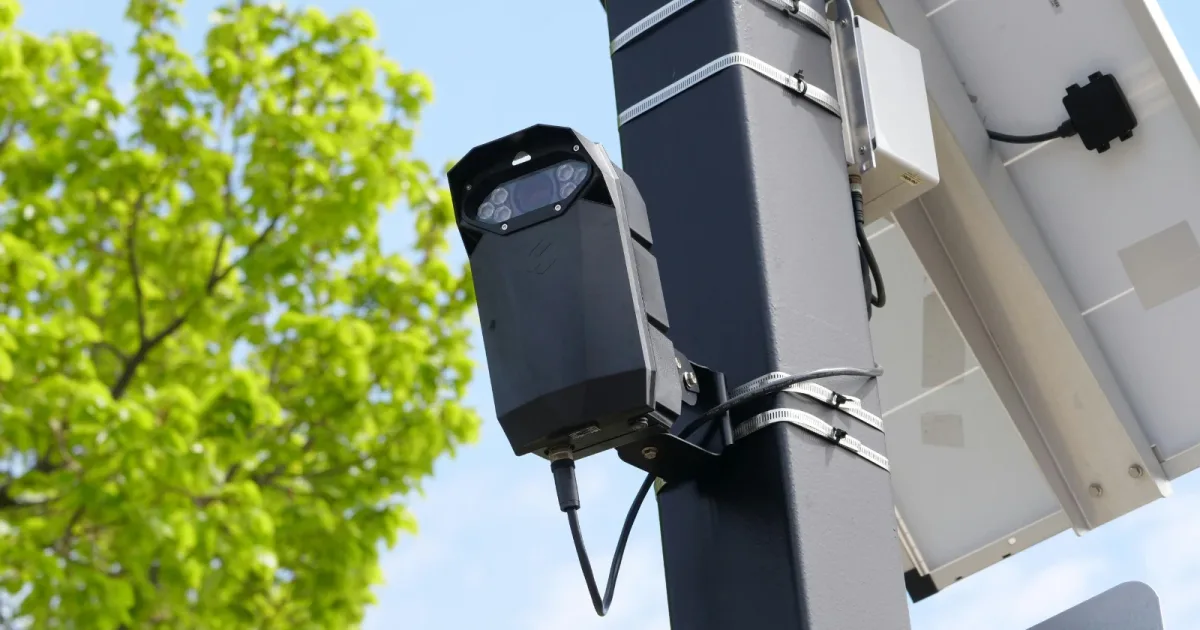
The city's automated noise-enforcement system is technically functional but financially hamstrung, capturing thousands of offenders while struggling to collect fines and operating far below its statutory capacity. Despite detecting nearly 16,000 loud-vehicle incidents last year, New York City's noise camera initiative remains underfunded and undersized, with only twelve units deployed instead of the twenty-five required by law.
Detection and enforcement outcomes
Data from the New York City Department of Environmental Protection's 2025 annual report on its Noise Camera Enforcement Program reveals the scale of violations being detected. The twelve microphone-equipped cameras identified 15,994 loud-vehicle events throughout the city in 2025. From these detections, 1,691 summonses were filed with the Office of Administrative Trials and Hearings, representing approximately 11 percent of all logged incidents. This translates to roughly 4.6 summonses daily, or about 141 per month.
The enforcement mechanism pairs sound level measurement with automated photography. When a vehicle exceeds the decibel threshold established under the city's Noise Code, the system captures the license plate and records the reading. A human reviewer examines the evidence before issuing a summons. This civil penalty approach differs from traditional police enforcement, offering an alternative method for addressing illegally modified exhausts that have long frustrated residents.
The 1,691 summonses generated $1,472,265 in total penalties. However, only $308,229 was actually collected—roughly 21 percent of assessed fines. The collection shortfall stems partly from the default rate: 965 of the 1,691 cases, or well over half, ended in default when vehicle owners failed to respond or appear. These defaults occur frequently because registration addresses are outdated or plates are registered out of state. Meanwhile, just 1.2 percent of summonses were dismissed at hearings.
Comparing 2025 to the previous year shows significant growth. In 2024, the programme issued 849 summonses and collected approximately $462,000, meaning both enforcement volume and dollar collections increased substantially in 2025 despite the penalty collection rate remaining low.
The mandate versus the reality
The camera requirement originates from the "Stop Spreading the Noise" Act, a legislative package introduced by City Council Majority Leader Keith Powers that became Local Law 7 of 2024. This law mandates that the Department of Environmental Protection install a minimum of five noise cameras in each of New York City's five boroughs, totaling twenty-five units, by September 2025.
The technology evolved from an earlier pilot programme that DEP conducted before the 2024 law made citywide deployment mandatory. Complaints about illegally modified exhausts had long been a persistent issue for the department, and the pilot's success informed the Council's decision to establish a specific camera count in law rather than leaving deployment decisions to agency discretion.
However, the law contains a critical limitation: the requirement applies "subject to appropriations." DEP's annual report explicitly states that the agency "has not received appropriations to expand the program." The City Council mandated twenty-five units but never allocated funding for the additional thirteen cameras beyond the initial twelve, and the mayor's office has not provided the capital since. This leaves the noise camera fleet at less than half its legal target more than a year past the law's deadline.
The situation highlights a peculiar contradiction: a programme that appears self-sustaining through fine revenue still awaits city funding to reach its statutory size, even as police continue fielding high volumes of noise complaints. New York Police Department figures show officers received 46,913 vehicle noise complaints in 2024 but issued only 568 summonses—a fraction of what the automated cameras achieved with coverage of just one-fifth of the boroughs the law envisions.
What the data reveals
The evidence demonstrates that the technology itself functions as intended. The cameras reliably detect loud vehicles and generate more summonses per unit than officers handling ground-level complaints. The underlying problem lies in the budget process that should fund the remaining thirteen units mandated by law.
The low collection rate compounds the camera shortage's impact. Operating at less than half its mandated capacity already leaves significant geographic gaps in coverage. When combined with a collection rate of approximately one in five dollars assessed, the deterrent effect depends on whether drivers believe they will face actual consequences. DEP's report does not elaborate on collection challenges beyond publishing default figures, and the agency did not address questions about follow-up enforcement against defaulters.
For residents along routes covered by these cameras, this is not a minor quality-of-life matter. Modified exhausts produce noise levels far exceeding the thresholds the city's Noise Code establishes for normal traffic. Complaint volumes to 311 and the NYPD have remained elevated for years because a single vehicle can disturb an entire neighborhood in a single pass. The cameras were designed to provide automated, consistent detection to replace the limited coverage that a finite number of patrol officers can offer. On that technical measure alone, the 2025 data confirms the substitution works.
Whether the city deems this programme worth fully funding remains a separate policy question that data cannot answer. For a municipal government that frequently promotes automated enforcement as a model for extending limited staff capacity, the noise camera initiative serves as an instructive case study. The technology has advanced faster than the appropriations process supporting it. The thirteen-camera gap between current deployment and legal requirement represents a budget failure, not a technical shortcoming—a line item that has gone unfunded for more than a year beyond its statutory deadline.
Source: Silicon Canals