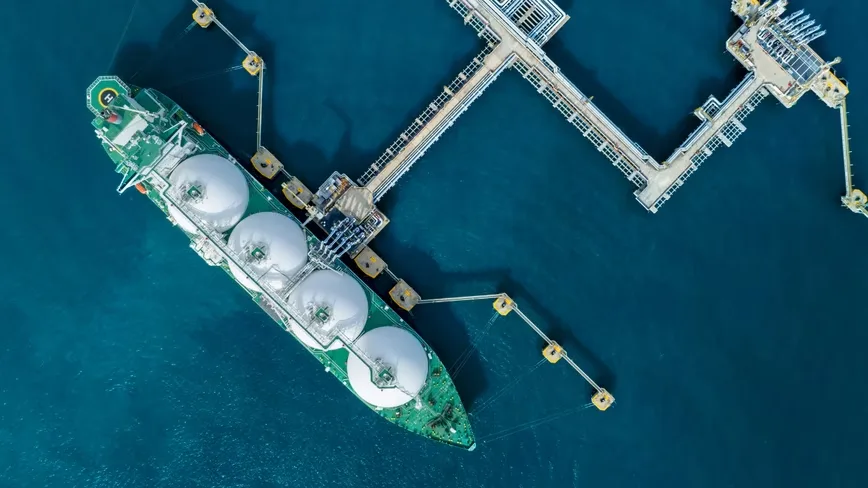
Early September brought an unexpected disruption to energy supplies bound for Europe when an LNG carrier en route to Italy experienced a breakdown in its internal control systems. The Vivit Africa LNG, operated by South Korea's H-Line Shipping and chartered long-term by Vitol, was navigating through the Mediterranean toward the Adriatic when crew members discovered they could no longer access certain shipboard systems. While those aboard suspected a cyberattack, investigators have yet to confirm the actual cause.
The vessel, which had loaded its cargo at the Cameron LNG terminal in Louisiana, was bound for the Adriatic LNG terminal near Rovigo when the malfunction occurred. Rather than proceed to its intended destination, the ship anchored off the Italian coast without releasing any cargo. By Wednesday of that week, it abandoned its original course entirely and began sailing westward toward Algeciras, positioned at the Mediterranean's western entrance. Shipping tracking data now shows the tanker near Tunisia.
The incident was reported to Korean Register, the classification society responsible for advising the vessel on technical and safety matters, during the early part of the following week. The investigation into what transpired continues without resolution. Neither H-Line Shipping nor Korean Register has publicly addressed inquiries about the situation.
Italian authorities offered a more measured account of events. According to Captain Roberto D'Arrigo of the Coast Guard, assistance was provided after the master reported "a malfunction in the systems used to monitor cargo parameters" and requested involvement from company technicians. The underlying cause could not be determined. The Chioggia Coast Guard confirmed that its involvement was limited to navigation safety, issuing an urgent notice directing other vessels to maintain distance from the affected ship.
The Vivit Africa LNG relies on positioning, navigation, and propulsion equipment manufactured by Kongsberg Maritime, a Norwegian supplier of maritime systems. When contacted about the incident, a company representative named Jon Berge acknowledged awareness of the reports but cautioned that "it was too early to draw conclusions as to the cause or any possible security implications".
This diversion represents the third maritime incident in approximately one month. In late August, the US Coast Guard and FBI boarded two tankers off the American coast in response to suspected cyberattacks. American authorities are currently monitoring approximately 20 vessels worldwide for comparable threats.
Maritime vessels have long presented vulnerabilities to cyber incidents, a condition stemming primarily from aging onboard systems rather than recent geopolitical developments. What distinguishes the current situation is the nature of the cargo involved: an American gas shipment destined for a European terminal as winter approaches has instead reversed direction, and no party involved has yet provided a satisfactory explanation for the change in course.
Source: The Next Web