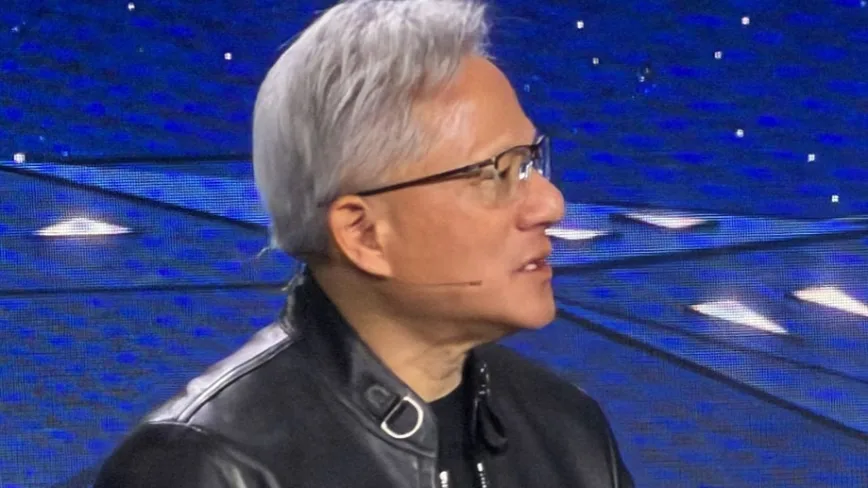
In remarks to CBS News, Jensen Huang presented two positions that sit uneasily together: the industry should accelerate development regardless of external concerns, yet companies will never release products that are unsafe or unready. These claims pull in opposite directions.
Jensen Huang told CBS News there is a 0% chance AI ends the world by 2030, and that the industry should go as fast as it can irrespective of anyone else.
CBS News
The full interview airs on Sunday, making the current assessment based on an excerpt reported by Ian King for Bloomberg. Just weeks prior, when Donald Trump called AI fears a hoax at the All-In Summit, Huang declined to use that language. Instead, he characterized apocalyptic predictions as lacking scientific grounding—a claim about evidence rather than probability. He also suggested that companies should pause or adjust their pace if they sensed losing control of their operations.
A narrower earlier position
Huang's August framing was more measured. He rejected the term "hoax" while dismissing doomsday scenarios as unscientific. He additionally advocated for companies to moderate their work if internal control became questionable—a stance that echoes the substance of pacing proposals circulating in policy discussions.
His latest formulation—pushing forward at maximum speed regardless of external input—represents the inverse of that earlier position.
The weight of absolute numbers
Leading AI laboratories do not themselves deploy such certainty. They develop safety frameworks, capability thresholds and risk estimates—tools designed for decision-making amid uncertainty rather than declarations of confidence.
Serious voices on the opposing side similarly avoid claiming absolute knowledge. The pacing argument rests on acknowledging unknown probabilities, which is precisely why it calls for independent evaluators and predetermined tripwires rather than a complete halt.
A flat zero therefore operates in a different register than the proposition it contests. It functions as a rhetorical stance delivered in a television setting rather than a forecast backed by analysis or evidence.
Tension between two claims
Huang's assertion that products will never reach users before meeting safety and readiness standards creates friction with his call to accelerate irrespective of external pressure. The tension hinges on a single question: who determines readiness?
When the releasing company alone judges whether its own products are ready, and speed is pursued without regard to outside input, the only constraint on deployment becomes the manufacturer's internal judgment. This arrangement is precisely what pacing advocates sought to modify through their proposals.
Both statements can coexist in someone's mind. They cannot both serve as load-bearing supports for a coherent position.
The commercial interest at stake
Nvidia manufactures the computing infrastructure whose value would diminish if development slowed. Among all participants in the pace debate, Huang carries the most direct financial stake in the outcome.
This context does not invalidate his argument—interested parties can be correct. However, naming the incentive matters more than ignoring it. His certainty carries less evidential weight than identical certainty from someone without financial exposure to the answer. He is offering a number rather than data.
Skepticism without the hardware angle
The position questioning near-term extinction scenarios extends beyond those with inventory to move. Andrew Ng has dismissed extinction warnings as science fiction without any chip business to protect.
This represents a stronger version of Huang's case. Specific near-term extinction timelines rest on weak evidence, and articulating that distinction differs fundamentally from claiming zero probability.
The distinction carries weight because the weaker claim—not grounded in science—travels less effectively through media channels. Zero is inherently quotable in ways that nuanced scientific critique is not.
The warnings originate from inside the industry
Recent safety concerns have emerged from within the laboratories themselves. A researcher from DeepMind focused on artificial general intelligence safety departed and published warnings, joining a pattern of similar exits.
Huang dismisses a perspective held by the people who construct the models rather than the accelerators that power them. Their estimates remain open to challenge, but they are not uninformed.
Political alignment and policy interests
Trump has spent recent weeks directly attacking AI safety warnings, repeatedly labeling them a hoax. CBS promoted the interview by highlighting Huang's apparent agreement with this framing.
Alignment with the current administration carries immediate practical value for Nvidia. Huang has been publicly opposing proposals to restrict Chinese AI development, and his company requires favorable shifts in export policy.
Huang is also scheduled to attend a state dinner for Xi Jinping the following week. A chief executive advocating for accelerated development and fewer restrictions finds receptive audiences for both messages in the same venue.
What comes next
The complete interview airs Sunday. Drawing conclusions from an excerpt alone risks misreading the actual shift, and the unreleased portions may include the qualifications Huang employed in August.
Watch whether he reiterates the zero percent figure. The claim that predictions lack scientific grounding represents a defensible position; zero percent is one he will face pressure to substantiate.
Source: The Next Web