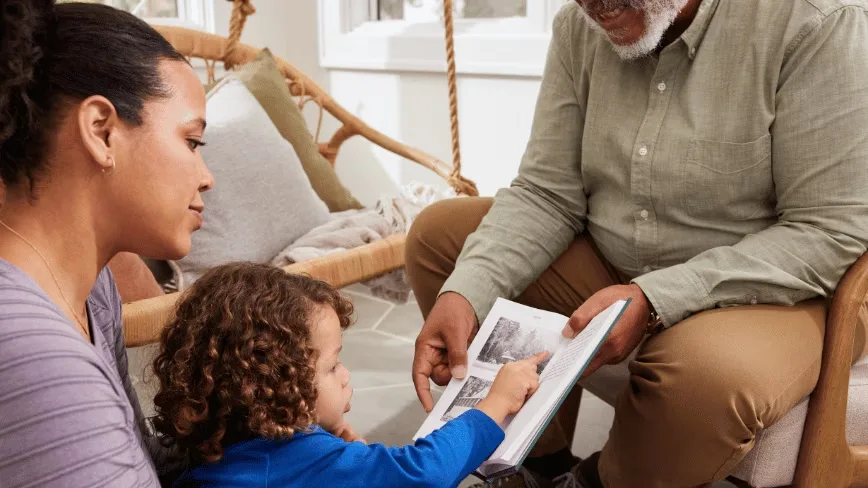
When families sit down to record their histories, they often face an overwhelming question: Tell me about your life. The sheer scale of such an inquiry can push even eager storytellers toward vague summaries—a childhood described as "happy", a marriage as "good". The barrier is rarely a failure of memory; more often, it is the absence of a workable structure.
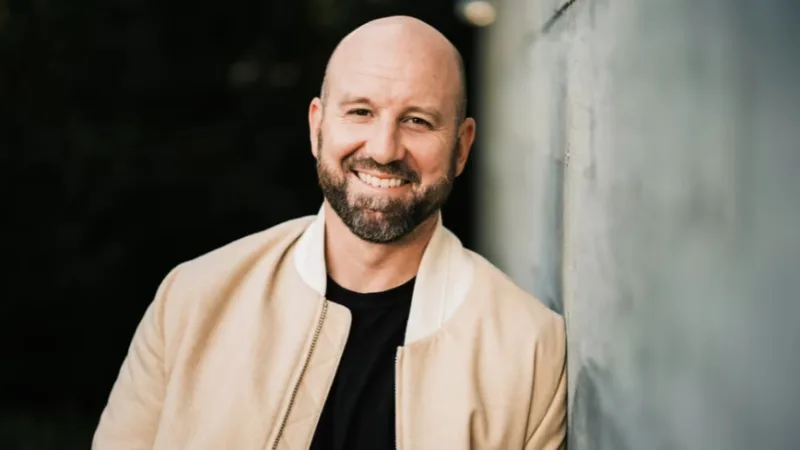
Storyworth emerged from a personal need. Nick Baum recorded his 82-year-old father's recollections, and in 2013, he and Krista Baum launched their family-owned venture. The company's original approach was deliberately modest: storytellers received regular questions, answered them incrementally, and eventually compiled their responses and photographs into a bound volume. Rather than demanding a complete autobiography at once, the service broke a life into manageable episodes.
From written prompts to spoken conversation
For years, Storyworth relied on written responses. Participants could reply to weekly prompts via email or through their account. That option persists, but the company has introduced a technological layer between lived experience and finished memoir: software now records, transcribes, prompts and helps organize recollections before they reach the printed page.
Three new formats for capturing voice
The transformation began in 2024 with Story Calls. Though Storyworth had offered phone recording since 2013 using human transcription, the 2024 version introduced automated transcription. Now, participants can answer by phone—including on a landline—and receive a word-for-word transcript.
This distinction carries weight. A verbatim transcript captures the hesitations, tangents and distinctive speech patterns of conversation, even if the result reads less polished than conventional writing. Storytellers retain the option to edit text or add images later, but the initial record begins with the spoken answer itself.
Early 2026 brought two additional conversational modes. Magic Interviews guides a participant through a phone exchange, with the software posing follow-up questions. Once the call concludes, the dialogue is refined into a written narrative and incorporated into the memoir.
Family Calls invites a second participant—a relative or friend—into the conversation. That person can pose questions, share their own memories and help shape the narrative. Both voices are preserved in the recording, while Storyworth produces a polished transcript for the memoir.
These may seem like minor product variations, yet they generate fundamentally different documents. Story Calls prioritizes fidelity to the spoken word. Magic Interviews emphasizes narrative structure. Family Calls treats the relationship itself as a source of meaning. A daughter might recall a neighbor's name her father forgot. A grandchild might ask why something mattered, not merely what occurred. One person's recollection gains specificity when another presence identifies the gaps.
The frame that every question creates
Guided conversation does not necessarily yield deeper or more authentic memory. Interviews are never neutral vessels. Each question establishes a frame around the past, and each follow-up illuminates one path while obscuring others.
A polished narrative differs fundamentally from a verbatim transcript. The former may be clearer and more accessible; the latter may retain more of the speaker's distinctive voice and manner.
Storyworth's expanded toolkit is valuable partly because it renders these choices explicit. Families are not simply deciding what to preserve. They are deciding how much transformation should occur between speech and the printed page.
The more significant development is that Storyworth has moved beyond merely storing finished recollections. In Story Calls, software performs transcription; in Magic Interviews, it poses follow-up questions and shapes conversation into polished narrative; in Family Calls, it preserves a two-person exchange as a cleaned-up transcript. The product now mediates the act of remembering itself, rather than simply archiving its outcome.
Remembering is inherently messy. People contradict themselves, circle back, lose track of dates and discover meaning mid-sentence. A useful family archive cannot erase that instability; it can only choose what to do with it.
A book with recordings layered beneath
Storyworth's answer is preservation in layers. Stories can be edited and supplemented with photographs after recording. Those with project access can listen through a private podcast feed.
The finished hardcover includes a QR code directing authorized readers to the Memoir project page, where stories and available recordings live. A downloadable audiobook comes included. The result is neither purely a book nor purely an audio archive. It is a printed narrative with another record underneath: the actual sound of someone speaking.
This hybrid model introduces a distinctly digital dependency: the book is tangible, but access to linked recordings flows through Storyworth's platform.
Voice conveys information that transcription alone cannot capture. It carries rhythm, accent, hesitation and stress. It shows where someone laughs before finishing a sentence, where certainty falters, where a familiar story still catches in the throat.
None of this guarantees emotional closeness. A recording can be formal, guarded or repetitive. Yet it preserves the physical act of telling: breath moving through a particular body at a particular moment.
Why the telephone is the right tool
This quality makes the telephone a surprisingly fitting instrument for family history. It is ordinary enough to feel natural, not ceremonial. It demands no studio, specialized gear or even a smartphone.
The same device used for routine calls can become the site where a memory is prompted, questioned, recorded and transformed into something more lasting.
The inherent limits of designed remembrance
A tension exists that Storyworth cannot fully resolve. The service converts private recollection into a designed process, and design always shapes what emerges.
Weekly prompts foster continuity, but they also segment a life according to the questions chosen. Guided interviews can elicit detail, but they may also smooth away the disorder that reveals how someone actually remembers.
A family memoir is not a complete life. It is a series of deliberate entry points.
Yet every archive carries this limitation. Photographs exclude what lay outside the frame. Letters preserve only what someone was willing to write. Home videos appear only when a camera was running. Storyworth's voice tools contribute another form of partial evidence: not just what a person remembered, but how the memory took shape in conversation.
The term "family legacy" is often used as if inheritance were a finished object passed unchanged from one generation to the next. In reality, it is usually assembled from scraps: a name written on the back of a photograph, an anecdote repeated at dinner, a voicemail no one meant to keep.
Software as an active participant in memory
Storyworth's recent additions demonstrate how consumer software can shift from storing memory to taking part in how it is drawn out and organized. A question is posed, a voice is captured, a transcript is generated, and a conversation can be reshaped into narrative form. Each step adds convenience, but each also introduces another layer of design between the lived event and the archive that survives it.
This makes Storyworth significant beyond the family-memoir niche. It raises a broader question for consumer technology: what unfolds when software becomes an active intermediary in human activities that once seemed too intimate to systematize? In this instance, the activity is remembering.
The inheritance remains human. The system producing it increasingly is not.
Source: The Next Web