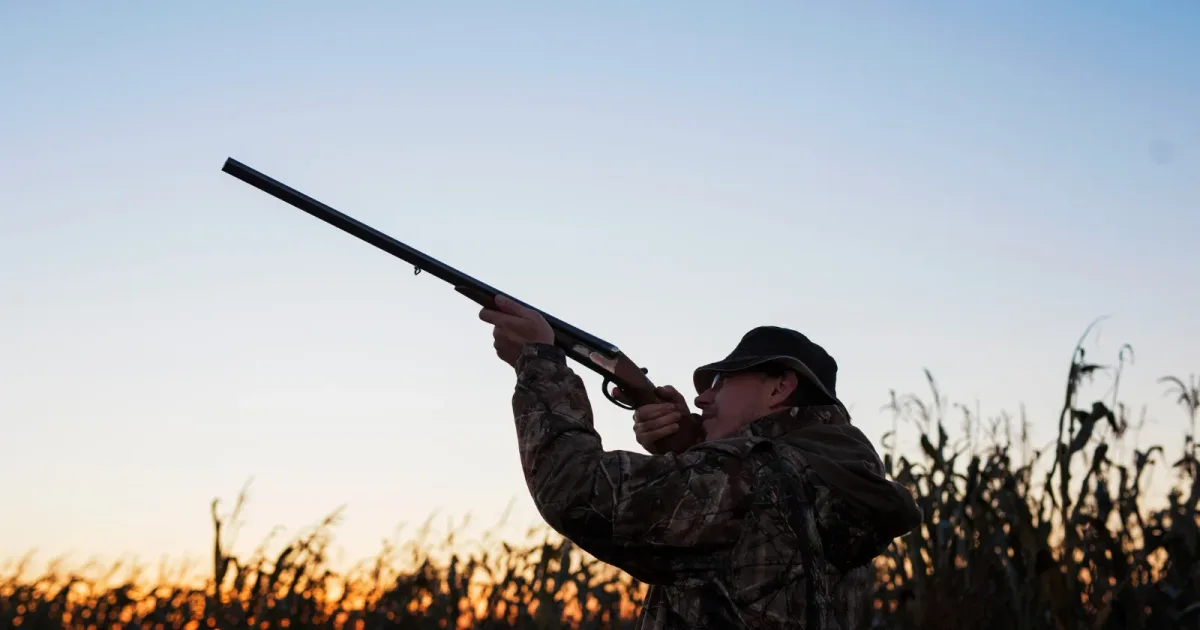
During the early 1930s, the Kittatinny Ridge near Kempton, Pennsylvania hosted a brutal autumn spectacle. Thousands of broad-winged hawks, sharp-shinned hawks, ospreys and eagles traveling south for winter became targets for hunters who lined the rocks and fired at them indiscriminately, often purely for entertainment. Historical photographs documented hunters standing beside enormous piles of dead raptors, evidence of the scale of the slaughter.
Rosalie Edge, a New York widow and conservation advocate, encountered these images and resolved to end the killing. Already established as a critic of the National Audubon Society's connections to hunting and taxidermy interests, Edge took action at age 57. In June 1934, she leased approximately 1,400 acres of the ridge, employed a warden to exclude hunters, and established what became recognized as the planet's first refuge dedicated exclusively to raptors: Hawk Mountain Sanctuary.
Edge lacked sufficient personal funds for the lease payment. She turned to Willard Van Name, a conservationist and scientist at the American Museum of Natural History who had long opposed the hawk shoots, and borrowed $500 from him. This loan enabled her to pay the initial lease fee and compensate Maurice Broun, the sanctuary's first warden, who arrived with his wife Irma that year and began documenting every bird sighting.
From temporary lease to permanent protection
The 1934 arrangement provided a two-year lease with purchase rights. Edge exercised this option in 1938 when the Hawk Mountain Sanctuary Association was formally established as a Pennsylvania non-profit. The sanctuary's published 1938 records indicate the purchase encompassed 1,398 acres at $2.50 per acre, totaling approximately $3,500. Edge contributed $2,500 of her own money, with the Emergency Conservation Committee—the advocacy organization she directed—raising additional funds to complete the transaction.
Edge transferred ownership to the newly incorporated association permanently, ensuring that no future proprietor could reopen the land to hunting. The sanctuary has expanded substantially since its founding. Current records show the property now spans 2,600 acres, enlarged through additional acquisitions and conservation easements. Between 1990 and 2004, during Cynthia Lenhart's presidency, the sanctuary added more than 200 acres.
Nearly a century of systematic bird counts
Maurice Broun's initial handwritten records from 1934 evolved into one of the world's most extensive raptor migration datasets. Every autumn since that inaugural season, volunteers and staff have documented birds at the sanctuary's observation points. This information feeds into HawkCount.org, operated by the Hawk Migration Association of North America, which consolidates data from monitoring stations throughout North America, including Hawk Mountain listed as site 616.
The accumulated records have become invaluable for scientific research. David Barber, senior biologist on Hawk Mountain's conservation science team, and colleagues have analyzed the long-term counts to monitor population dynamics for species difficult to track through other methods. The data particularly documents the dramatic recovery of bald eagle populations. During the sanctuary's 90th anniversary season, running from mid-August through mid-December, counters recorded 668 bald eagles—a seasonal record—compared to merely 13 observed in autumn 1974. That same season tallied 12,546 raptors overall and surpassed 63,000 non-raptor birds representing 146 species, though total raptor numbers fell approximately 21 percent below the ten-year average.
Understanding full-season totals provides perspective for interpreting early-season counts. The 2026 autumn watch commenced on August 15, with peak activity typically occurring in mid-to-late September when broad-winged hawks migrate in large formations rather than during the season's opening weeks. Early-season performance tracked normally: between August 15 and September 5, counters recorded 1,029 raptors, consistent with typical early-season figures before the broad-winged hawk kettles arrive in force later in September.
A conservation strategy that influenced the movement
Edge's Hawk Mountain approach established a blueprint for conservation strategy. Rather than seeking government intervention, she deployed private capital to acquire land permanently and remove it from the commercial hunting market—a tactic that conservation historians identify as influential in shaping subsequent private land trusts and Audubon sanctuaries. Edge subsequently championed the establishment of Kings Canyon National Park and Olympic National Park until her death in 1962, yet Hawk Mountain remained her signature achievement.
Today, Hawk Mountain operates as a membership-supported non-profit organization, positioning itself as the world's largest member-supported raptor conservation group. The sanctuary attracts more than 60,000 visitors and maintains over 9,000 members annually. Its operations encompass research initiatives, a graduate-level raptor conservation training program—recently awarding Diego Gallego the 2026 James A. Kushlan Graduate Student Award—and public hawk-watching activities throughout the autumn migration period.
The hunters have departed from the ridge. The observers who succeeded them continue the work Maurice Broun initiated in autumn 1934: standing on the rocks, scanning the sky, and recording what passes overhead.
Source: Silicon Canals