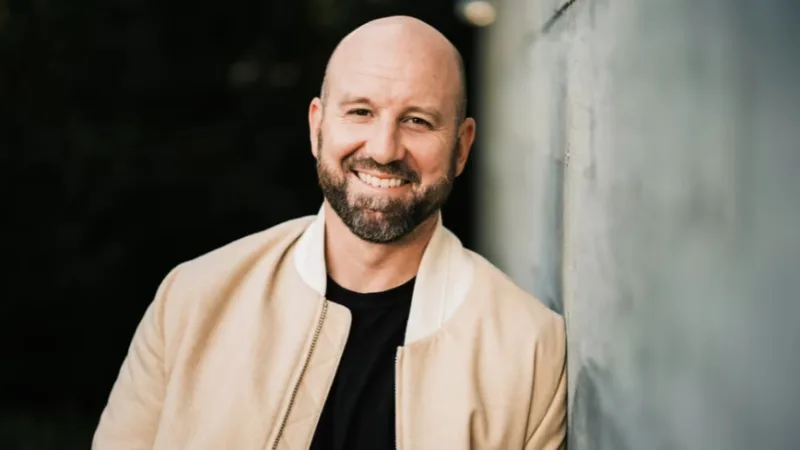
The timing carries weight. Chughtai's departure from Google DeepMind occurred in July, yet his public statement arrived this week, coinciding with an intensifying debate about the pace of AI development that erupted a fortnight ago. His intervention marks the first such warning to emerge from within Google's prominent research division.
During his tenure at Google DeepMind, Chughtai focused on AGI safety and alignment research. On X, he articulated his concerns with stark language:
I recently resigned from Google DeepMind, where I worked on AGI safety and alignment research. At Google, I witnessed AI development first hand. I too am extremely concerned by the default trajectory of this technology. I earnestly believe that AI has the potential to kill us all, and that we might be running out of time to avoid this outcome.
Bilal Chughtai
Yet Chughtai's remedy differs from his diagnosis. While he frames the danger in existential terms, his proposed solution centers on industry coordination and deliberate pacing. He contends that managing this risk remains possible, provided the sector abandons its competitive sprint and adopts development speeds aligned with societal readiness.
Google declined to offer comment when approached outside regular business hours.
The two-month interval between his exit and his disclosure deserves scrutiny. Chughtai remained silent through July and August, only speaking out as the conversation about development velocity reached peak intensity. This positions his statement less as a personal reckoning and more as participation in an already-heated debate.
His emergence from DeepMind extends a pattern established elsewhere in the sector. Jacob Coxon departed Anthropic on 9 September, following three years at OpenAI before that, and warned publicly that AI labs were hurtling toward self-improving superintelligence while gambling with human survival. Researchers at competing organizations amplified these concerns: Anthropic's Evan Hubinger disclosed internal estimates placing extinction risk this decade above 10 percent, while Geoffrey Hinton deemed that assessment reasonable.
Chughtai's call for pacing development to match society's capacity to adapt mirrors arguments advanced three days earlier by Dario Amodei, who urged the industry to decelerate capability improvements. The distinction lies in the messenger: Chughtai speaks as a researcher at a rival firm, whereas Amodei holds the authority of a chief executive with institutional interests to defend.
An unavoidable awkwardness clouds the moment. Coxon's resignation post circulated so widely that its phrasing became a template for internet mockery, with users announcing departures over self-closing books and self-painting tunnels. Chughtai's post adopts nearly identical structure, lending it an unintended resemblance to satire despite his evident sincerity.
The weight these warnings carry hinges on their audience. Emil Michael, the Pentagon's chief technology officer, characterized the earlier warnings as a doom loop, contending that market forces and government oversight could manage the risks without requiring any slowdown. Donald Trump dismissed the argument outright last week and reiterated his position during a phone conversation with Jensen Huang on Monday.
Legislative efforts are advancing on another track. Senators Thune, Cruz and Klobuchar are drafting legislation that would establish a duty of care requirement for developers to safeguard against catastrophic outcomes.
Chughtai occupies neither a policymaking nor executive position, and his statement carries no formal institutional authority. What distinguishes it is his direct experience: he spent his DeepMind tenure investigating the very hazard he now publicly raises, then waited sixty days before breaking his silence.
Source: The Next Web