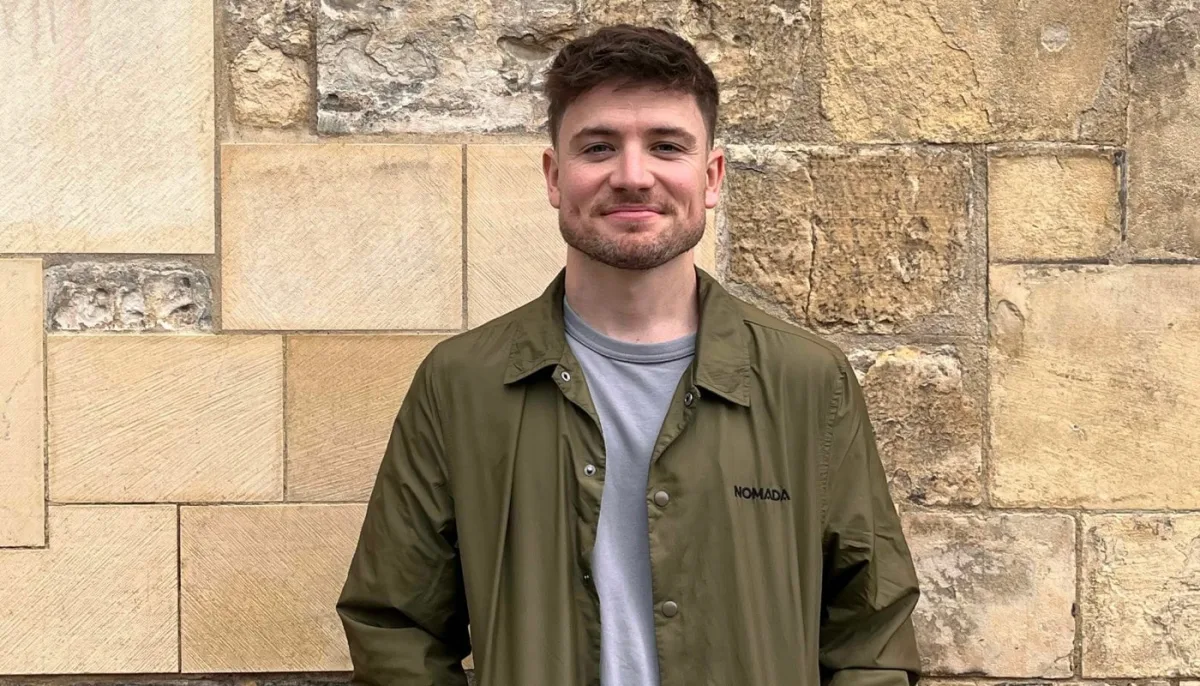
Danny Sullivan runs Nomada Digital, a B2B visibility firm that handles search engine optimisation, AI optimisation, conversion rate work, paid campaigns and PR across multiple continents. His path into the field was unconventional: a mathematics degree led to a digital marketing role at a travel company when a hiring manager assumed his calculus background meant problem-solving ability.
Sullivan founded Nomada in York in 2020, starting as a lean SEO shop and expanding into an integrated operation designed to stay agile. The agency now specialises in helping UK businesses run campaigns across the Atlantic, and Sullivan has become a judge for PR54 this year. He spoke with us about how AI is reshaping what PR actually does, where the boundary lies between meaningful coverage and noise, and what he looks for in award submissions.
The Origins of Nomada Digital
Years working inside digital agencies showed Sullivan what he wanted to change. He observed junior staff handling work while clients paid senior rates, and channels operating in isolation despite costing more than they delivered—not because of poor execution, but because the setup made it almost inevitable.
He built the agency he would have wanted as a client: lean, led by senior people, with no fixed office and no unnecessary overhead. The gamble was that a small specialist team could match much larger competitors through better structure. Six years later, the firm works with clients on both sides of the Atlantic.
Cross-Platform Visibility as a Framework
Nomada describes itself as a cross-platform visibility agency rather than a traditional PR or SEO shop. Sullivan explains that SEO remains the foundation, but the traditional label no longer fits because buyers no longer look in just one place.
In practice, the agency sequences channels rather than running them separately. A single B2B purchase decision now touches at least 10 touchpoints across four or more platforms—Google, ChatGPT, Bing, LinkedIn and press coverage. Visibility in only one means invisibility across most of the journey, and budget alone cannot fix that gap.
The firm uses a five-tier Cross-Platform Visibility Framework where each layer builds on the previous one. SEO and AEO form the base, content clusters and conversion rate optimisation multiply the effect, and Bing and LinkedIn provide efficient paid support. Brand PR acts as the authority layer that reduces costs everywhere else, with Google Ads scaling only when the foundation can support it.
This approach matters now because brand authority and search visibility have become the same thing. They remain different disciplines requiring different skills, but they drive identical outcomes, making separation increasingly pointless.
How AI Search Changed PR's Role
Sullivan approaches this question as a search strategist rather than a PR specialist, because the two roles have merged in his view. The buyer journey has shifted: instead of searching, clicking and deciding, buyers now receive answers before visiting any website. Search engines rank pages; language models do not rank anything—they cite sources they trust enough to repeat.
Muck Rack's 'What is AI Reading?' report from May 2026 found that around 84% of links AI models cite come from earned media, compared to under 14% from owned channels. This means the trust PR builds in the real world is what these systems end up reflecting.
Coverage lifts branded search, builds the authority that non-brand organic traffic depends on, and feeds the citations that determine whether a brand appears in AI answers at all. None of this emerges from search work alone. PR was once judged on whether people saw the coverage; now it also decides whether a machine has reason to mention a brand.
This becomes most visible when UK brands expand into the US, a core part of Nomada's work. A company with years of strong UK coverage can still be nearly invisible to a US buyer asking ChatGPT for options. The answers draw on publications and sources that market already trusts, and search authority does not transfer cleanly across borders.
Visibility must be rebuilt market by market. PR in the publications US buyers actually read is usually where that rebuilding starts, because it is the fastest way to give Google and language models reason to take a new entrant seriously.
Separating Real Impact From Empty Activity
The PR industry has struggled to quantify impact in terms the C-suite understands, but that never meant the work was ineffective—just that the connection between coverage and commercial outcome was harder to draw.
Some of those connections are now visible. If coverage influences what AI tools say about a brand, that is trackable through mentions and citations, alongside traditional metrics like branded search and referral traffic. PR teams can now evidence something they have always known was happening, just through a new lens.
Sullivan adds a caveat: AI visibility is one measure, not the only one. Coverage still builds trust and credibility, shapes how a brand is understood and shortens the sales conversation. Judging PR solely on whether a language model picked it up would be a mistake; it is a new way of seeing and measuring value, not a replacement for existing ones.
What Excites Him About Judging
Sullivan brought brand PR in-house earlier this year, which changed how he thinks about brand discovery online. That shift is a big part of what appeals about judging—seeing how an entire industry thinks at once is rare from outside.
Coming from the search side, he is interested in work that shows how the pieces connect: coverage that clearly serves the wider visibility picture rather than standing alone. He is equally interested in being shown things he had not considered.
What He Looks For in Entries
Sullivan wants to see evidence of what the business needed, what the agency did and what changed as a result—all connected to business objectives. Creativity matters, but creativity in service of a commercial goal is what stands out.
He is drawn to entries showing where the work fit in the wider picture. Campaigns do not happen in isolation, and ones that point to what the coverage fed will stand out.
Advice for Entrants
Answer the question that was asked, and do not assume a judge knows the business or campaign inside out. Many entries describe activity rather than results, leaving the judge to connect the dots. The ones that do that work will be easier to champion.
Be specific and honest about constraints. A sharp result on a modest budget is more impressive than a big campaign with vague outcomes. If something did not go to plan, say so and explain what changed—that reads as more credible than a campaign where everything went perfectly.
The Future of PR Agencies
Sullivan believes PR agencies should claim ground that is already theirs. AI systems reward credible third-party validation, which is exactly what PR has always produced. PR agencies are well positioned to own that conversation.
Practically, it starts with reporting. A report that stops at reach and sentiment describes the work rather than its effect. Branded search, citations across language models, referral traffic and links earned through coverage are all trackable, and this is the kind of evidence boards respond to.
The most successful PR agencies in coming years will see search and PR as one strategy, not two that occasionally overlap. Buyers do not distinguish between finding a brand through a news story, a search result or an AI answer. Agencies that stop drawing those lines internally will produce work that compounds.
In practice, this means people who can sit with search and paid teams and discuss a shared outcome instead of defending their channel. It does not require technical depth, just enough common ground to have the conversation.
Finally, agencies need a willingness to keep testing tools. AI will not make strategic decisions, but it will change how fast work can be done. The field is moving quickly enough that teams can fall behind without doing anything wrong.
Source: TechRound