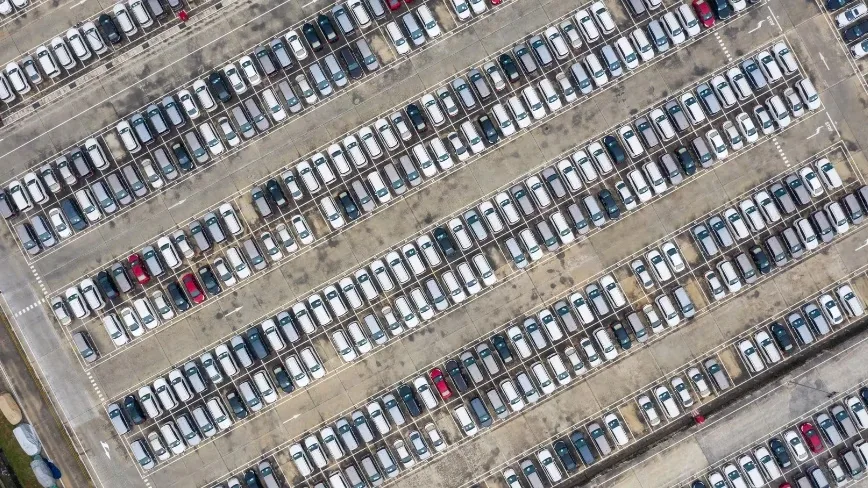
During the opening eight months of 2024, Chinese manufacturers shipped over 6.2 million passenger vehicles internationally, eclipsing the nation's full-year export forecast for 2025 ahead of schedule. August witnessed particularly robust outbound shipments of roughly 890,000 units, representing a 67.1% increase from the same month last year, according to reporting by the Associated Press. Meanwhile, the domestic market contracted sharply, with fewer than 1.5 million vehicles sold within China in August alone—a 25.6% decline year-over-year.
This divergence between foreign and home market performance reflects a broader trend. TNW documented in July that Chinese automotive sales had contracted 20% during the first half of the year, marking the weakest performance since 2021. However, the magnitude of export compensation is unprecedented. S&P Global Ratings projects full-year passenger vehicle exports will expand between 50% and 70%, with Stephen Chan of S&P Global stating that "Strong export growth will largely mitigate the domestic weakness."
The European market has become the primary destination for this export surge. According to Dataforce, Chinese brands captured a record 10.9% share of European registrations in June, equivalent to 150,272 vehicles, reflecting a 118% year-on-year increase.
Tariff gaps and production workarounds
The European Union introduced tariffs on Chinese battery electric vehicles in October 2024, imposing duties reaching 35% above the standard 10% baseline. These levies are determined individually by manufacturer and applied based on manufacturing location rather than brand identity—meaning European marques produced in Chinese facilities also face the charges.
Plug-in hybrids, however, remain untouched by these duties. Chinese manufacturers have capitalized on this regulatory gap. During the first half of the year, Chinese brands commanded 28% of Europe's plug-in hybrid market, with the BYD Seal U displacing Volkswagen's Tiguan from third place to fourth. The Commission has been developing potential duties on plug-in hybrids since June, according to Handelsblatt, though no measures have been implemented to date.
Any future tariffs on plug-in hybrids would likely be less stringent than those applied to fully electric models. Since plug-in hybrids incorporate smaller battery packs, a proportionally smaller share of their total value derives from battery components—the basis for the EU's subsidy justification.
Meanwhile, the largest Chinese exporter is establishing a manufacturing foothold within the EU itself. BYD's facility in Szeged, Hungary is scheduled to commence mass production this quarter, initially producing the Dolphin Surf model. Once operational, vehicles assembled in Hungary qualify as European-manufactured goods, potentially circumventing any future tariff framework before it takes effect.
Source: The Next Web