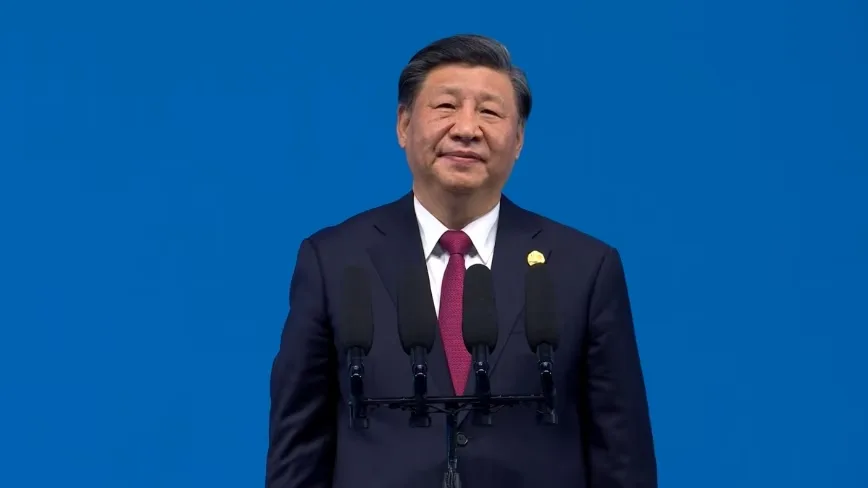
At the BRICS summit in New Delhi, Chinese leader Xi Jinping unveiled plans for a China-backed open-source artificial intelligence community and urged member nations to participate in the World AI Cooperation Organization, according to Bloomberg. The initiative would "support the cooperation in developing and applying large language models", alongside workshops and educational programs, Xi stated.
The World AI Cooperation Organization, established by Beijing in July, already counts 29 signatory nations as of 16 July, with its headquarters in Shanghai. Among the members are Russia, Pakistan, Kazakhstan, Indonesia and Brazil. Notably absent from the roster is any European Union member state.
The proposal, however, failed to gain traction among BRICS participants. The joint declaration released on Saturday made no reference to the initiative, instead calling for international cooperation on AI resource access "while ensuring its safety, security, inclusiveness and reliability".
Europe's enforceable framework
The European Union has already established clear boundaries around open-source AI through its AI Act. According to Commission guidelines, providers offering genuinely free and open-source general-purpose models receive exemptions from maintaining technical documentation for regulators, sharing it with downstream users, and designating an EU representative. Such models must make their weights, parameters and architecture publicly available, with licensing that permits use and modification without commercial restrictions.
The exemption framework contains an important caveat: models classified as carrying systemic risk must comply with all requirements regardless of their open-source status. All providers in this category must disclose training data summaries and copyright policies.
These regulations became enforceable on 2 August, when the European Commission acquired authority to demand model evaluations, restrict market access, and impose fines of up to 3% of global turnover.
China's undeclared approach
Beijing has not published comparable guardrails. At China's own AI summit in July, Xi stated that development and security must achieve balance, while policy signals from official social media accounts have suggested that the most advanced model capabilities should face restrictions.
State security minister Chen Yixin, writing in an article published on Saturday, condemned unspecified countries for employing blacklists and proprietary systems to "sever global AI industrial chains and supply chains".
Meanwhile, China's commerce ministry spent a month during summer evaluating potential curbs on international access to models including Qwen, Doubao and GLM. Unlike Europe's transparent regulatory approach, which can be challenged in court, Beijing continues to deliberate its regulatory boundaries without public disclosure.
Source: The Next Web