Renewable energy curtailment is becoming an increasingly expensive problem for Britain's grid. In 2025 alone, the country paid wind and solar producers roughly £1.5 billion to reduce their output, a figure the grid operator projects could balloon to £8 billion annually by 2030. Certain Energy, a battery technology company spun out of Imperial College London, is now positioned to address this challenge after securing £10 million in Series A funding.
The British Business Bank led the investment round with a £3.5 million commitment, joined by energy infrastructure firm Centrica, fuel-cell specialist Ceres Power Holdings, and Catalytic Capital for Climate and Health, part of Singapore's Temasek Trust. The capital will support a grid-connected demonstration project in India and expand research capabilities in the United Kingdom.
Mark Selby, executive chair of Certain Energy, framed the opportunity in terms of market fundamentals: "The renewable power market is held back by its vulnerability to external factors. The answer is long-duration energy storage, and Certain Energy has the technology and now the funding to deliver highly efficient, affordable batteries, based on abundant materials, to make this a reality."
The long-duration energy storage sector is experiencing rapid expansion. The global market reached $3.6 billion in 2025 and analysts expect it to grow to $9.5 billion by 2035, representing a compound annual growth rate of 10.5%. However, funding has concentrated heavily on American competitors, particularly iron-air and mechanical storage companies that have attracted substantially larger investment rounds.
From Imperial College lab to independent company
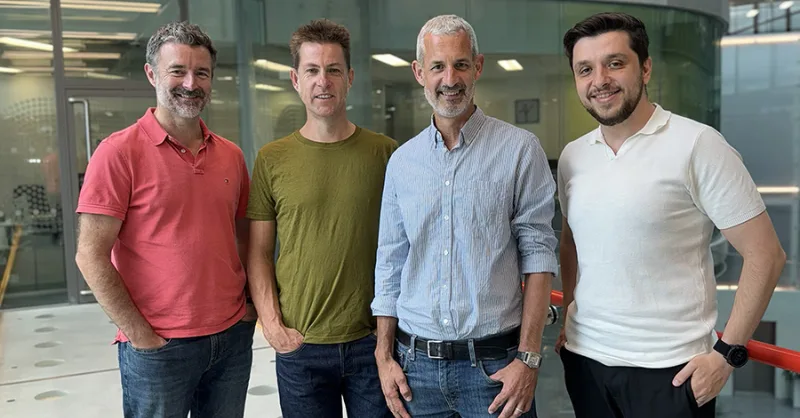
Certain Energy traces its origins to 2017, when Imperial College professors Anthony Kucernak and Nigel Brandon established the company as an academic spin-off. The team spent eight years refining its core technology before the company was acquired as a fully owned subsidiary of Ceres Power in September 2025. The latest funding round has restored its independence, though Ceres retains approximately 37% ownership and will receive a portion of future product revenue in exchange for ongoing engineering assistance.
Stuart Paynter, Ceres' chief financial officer, emphasized the strategic value of the partnership: "Certain Energy has a combination that is rare in this sector: a low-cost, abundant chemistry and a credible, capital-efficient route to manufacturing. We're glad to back a fellow UK innovator with global ambitions."
The company's technology diverges from mainstream battery approaches by using manganese, the twelfth most abundant element in Earth's crust, as its electrolyte rather than lithium or vanadium. To extend storage duration, Certain Energy increases the size of electrolyte tanks instead of multiplying the number of cells. This design allows grid operators to scale storage capacity by expanding tank dimensions without deploying entirely new infrastructure. The system achieves round-trip efficiency exceeding 75%, and the company claims the electrolyte can function for two decades with minimal performance loss.
How manganese compares to other battery technologies
The competitive landscape for long-duration storage includes several well-funded alternatives. In Britain, Ore Energy has raised $43 million for iron-air technology, claiming a tenfold cost advantage over lithium-ion systems. Across the Atlantic, Form Energy has secured more than $1.2 billion for comparable iron-air solutions and has already signed commercial grid contracts. Vanadium flow batteries remain the incumbent technology in some markets, but high costs and geographically concentrated supply chains limit their appeal. EnerVenue has raised $300 million for a metal-hydrogen alternative.
Certain Energy argues that manganese offers superior economics. The company contends its storage costs run approximately one-tenth those of vanadium flow systems and undercut all competing chemistries. A significant caveat remains: unlike Form Energy, Certain Energy has not yet demonstrated its technology operating at grid scale.
Michael Shanks, minister of state at the Department for Energy Security and Net Zero, characterized the investment as infrastructure development rather than conventional venture funding. He stated: "Homegrown clean energy is our route to more affordable bills and energy security, and storing it for when we need it most is critical. By investing £3.5 million in Certain Energy, the British Business Bank is backing British innovation and helping develop the long-duration energy storage we need to store clean power for days, not hours, and deliver a more secure energy system."
Certain Energy's funding structure distinguishes it from recent competitors like Suena Energy and The Storage, which relied exclusively on private and corporate venture capital. The combination of government backing through the British Business Bank, private sector participation from Centrica, and impact capital from Temasek's climate and health fund reflects a different investor coalition.
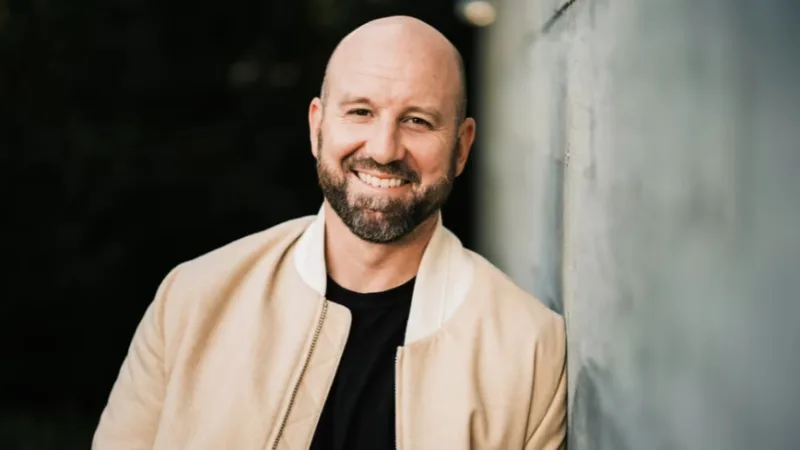
Tim von Werne, chief executive, articulated the company's ambitions: "Long-duration storage is the missing piece of the clean energy system, and manganese flow is the technology that should win. With the British Business Bank behind us, we have the capital and the mandate to build a global champion here, turning world-class UK science into the industry the energy transition needs."
The £10 million Series A will fund three priorities: a megawatt-hour-scale grid-connected demonstration facility in India, expansion of the research operation in the United Kingdom, and development of the supply chain infrastructure necessary to support commercial scaling.
Source: Tech Funding News