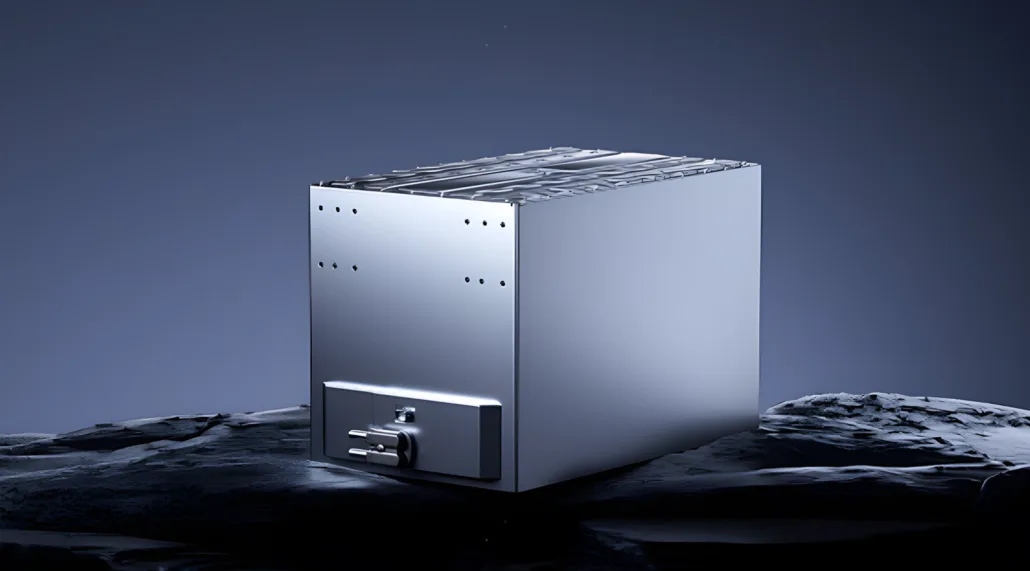
CATL presented the TECTRANS II battery platform for commercial vehicles at IAA Transportation 2026 in Hanover, Germany. The architecture employs modular design principles to accommodate various vehicle classes and powertrain setups. The company projects a maximum range of 1,000 kilometers and anticipates a service life reaching 1.5 million kilometers for heavy-duty applications.
The system architecture relies on interchangeable standardized battery packs. Operators can scale the number of packs based on the vehicle's energy needs and cargo capacity. TECTRANS II works with both e-axle and central-drive configurations, and supports conventional charging infrastructure alongside battery-swapping operations.
Standardization Enables Future Technology Integration
CATL has standardized the physical dimensions, electrical connectors, and data communication standards across the platform. This approach allows the manufacturer to incorporate emerging battery technologies without requiring substantial redesigns to vehicle platforms.
The current generation achieves a gravimetric energy density of 170 Wh/kg. In its largest configuration, the platform delivers the claimed 1,000-kilometer range. Megawatt-level charging technology can bring the battery to 80% charge in approximately 25 minutes. The overall round-trip efficiency reaches 96%.
For commercial trucks, CATL specifies a design life of 12 years or 1.5 million kilometers, whichever comes first. Following this period, the battery should maintain 70% of its original capacity.
Safety Architecture and Protection Standards
The safety design incorporates mechanical safeguards and redundant control systems. CATL cites specific performance metrics: underbody impact resistance of 1,000 joules and lateral crush resistance rated at up to 250 kN. The battery management system isolates individual circuit branches when faults occur, preventing cascade failures.
Source: Battery-News