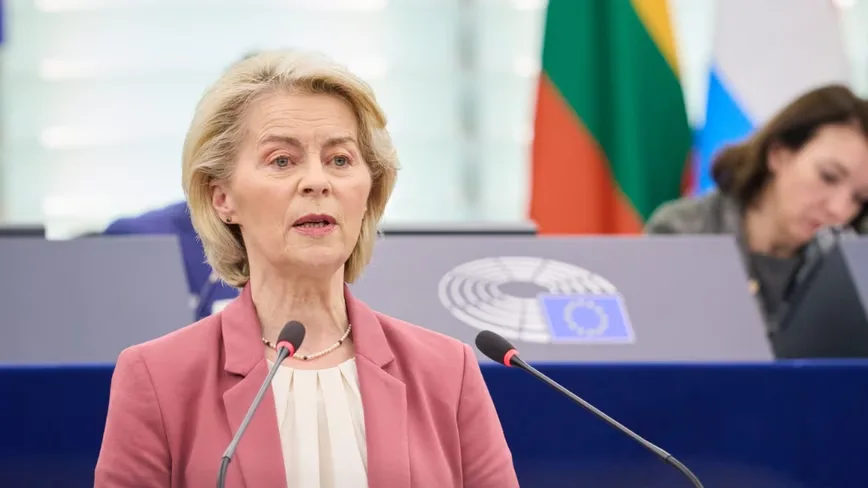
The EU Kids Act is set to arrive in Brussels on Thursday as the Commission's formal answer to sustained pressure from national governments and parents regarding social media's effects on young users. Ursula von der Leyen and Henna Virkkunen, the bloc's technology chief, will unveil the proposal, with the announcement timed to follow von der Leyen's parliamentary address in Strasbourg the previous day.
At the heart of the initiative lies a "safe by design" approach. Rather than concentrating solely on content moderation, the Commission intends to address platform mechanics that promote compulsive engagement—algorithmic features and design patterns engineered to retain user attention.
The proposal's most contentious element remains unresolved: which age threshold should apply. The Commission's expert panel has recommended 13, aligning roughly with age verification policies already in place across major platforms. France, however, backs a threshold of 15. These two positions represent a narrowing of earlier proposals, when Spain advocated for 16, France initially suggested 15 or lower, and the European Parliament called for a uniform age of 16.
Not all member states embrace an age-based framework. Estonia and Belgium have resisted outright bans, contending that regulatory oversight of platforms themselves offers a preferable alternative to restrictions placed on children.
Several nations have already begun implementing their own restrictions without awaiting the EU framework. Norway is moving toward legislation banning users under 16, with platforms facing potential fines reaching 20 million kroner. France has already prohibited social media access for those under 15. Spain is pursuing a 16-year threshold, while Austria, Denmark, and Slovenia are developing separate measures with proposed limits of 14, 15, and 15 respectively. Australia implemented a nationwide under-16 ban in late 2025 and remains the sole country to have done so at the national level.
The Privacy Paradox
A fundamental tension complicates the legislation's implementation. Enforcing age limits requires platforms to first identify whether a user is a child, necessitating the collection or inference of personal data—precisely what the EU's privacy regulations are designed to prevent.
The Commission has proposed an age verification system built on zero-knowledge proofs, a cryptographic method intended to confirm age without disclosing identity. Research has demonstrated, however, that the system can be circumvented in under two minutes.
Four Critical Questions
The Act's actual impact will hinge on four key decisions:
- The age threshold itself, contingent on the Commission establishing one at all
- Whether the legislation mandates a straightforward prohibition or adopts a broader, risk-focused framework centered on platform design—signals from July pointed toward the latter approach
- Assignment of responsibility for age verification: platforms or operating system providers
- How the new rules will extend beyond what the Digital Services Act already enables
This final question may prove decisive. The Commission has already invoked the DSA to pursue enforcement actions against Meta and TikTok regarding child safety concerns. The new legislation must articulate why an additional regulatory framework is required.
As of now, these answers remain absent. The legislative text has not been released, its legal foundation has not been established, and no penalty structure has been proposed. Thursday's presentation marks the transition from political deliberation to a proposal open to substantive scrutiny.
Source: The Next Web