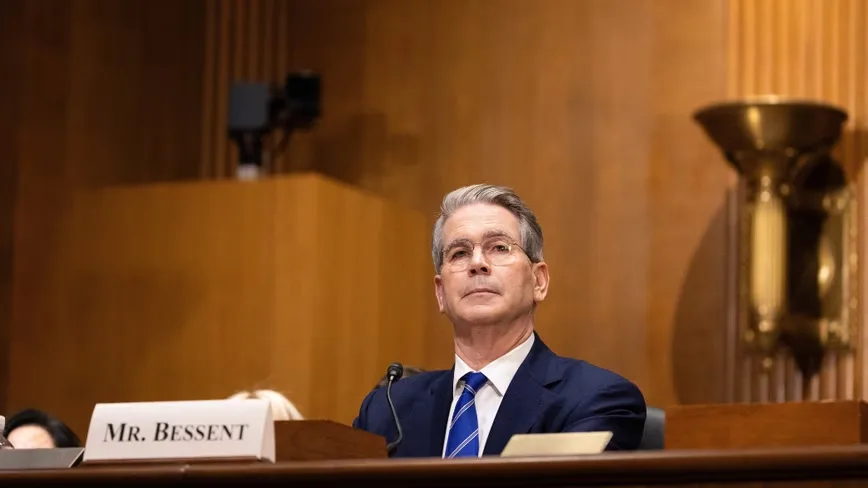
US Treasury Secretary Scott Bessent has taken aim at artificial intelligence executives who raise alarms about potential catastrophes yet fail to propose remedies. Speaking to Axios in an interview released Saturday, Bessent expressed frustration with what he sees as performative concern from parts of the AI sector.
This alarmism without solutions by some of the AI community, that's not leadership
Scott Bessent
His comments arrive as several prominent figures in the field have recently advocated for restraint. In September, Anthropic's Dario Amodei, OpenAI's Sam Altman and xAI's Elon Musk collectively urged the sector to pump the brakes on development of their most cutting-edge systems. Separately, Bill Gates cautioned that artificial intelligence posed risks of catastrophic scale, potentially resulting in a billion deaths.
According to Bessent, responsibility for managing these dangers rests squarely with the organizations building the technology itself.
It is the people at the labs who have to accept responsibility, and I agree with that
Scott Bessent
When pressed on industry calls for government intervention, Bessent offered a pointed response: "Well, then they should slow down."
Racing China, but talking too
Bessent's stance mirrors positions taken by Donald Trump, who has dismissed warnings about AI dangers as exaggerated and resisted imposing fresh regulatory frameworks at the federal level.
We cannot lose our lead to the Chinese
Scott Bessent
The Treasury chief flagged concerns about Chinese AI capabilities, noting that models developed there can match American systems at "80%, 90% as powerful" while lacking equivalent safety protections.
Yet despite competitive anxieties, the administration is preparing to propose a framework with China for sharing alerts about major artificial intelligence incidents, according to Axios. Such a system would enable both nations to respond swiftly should serious problems emerge.
Bessent held discussions on AI matters with Chinese Vice Premier He Lifeng during a September meeting in New York. The conversation touched on hazards including autonomous AI systems operating without proper oversight and scenarios where artificial intelligence could be weaponized by non-governmental actors to conduct cyber operations or biological attacks.
This collaborative approach has boundaries, however. Trump indicated last week that he opposes negotiating a dedicated AI safety agreement with China.
Source: The Next Web