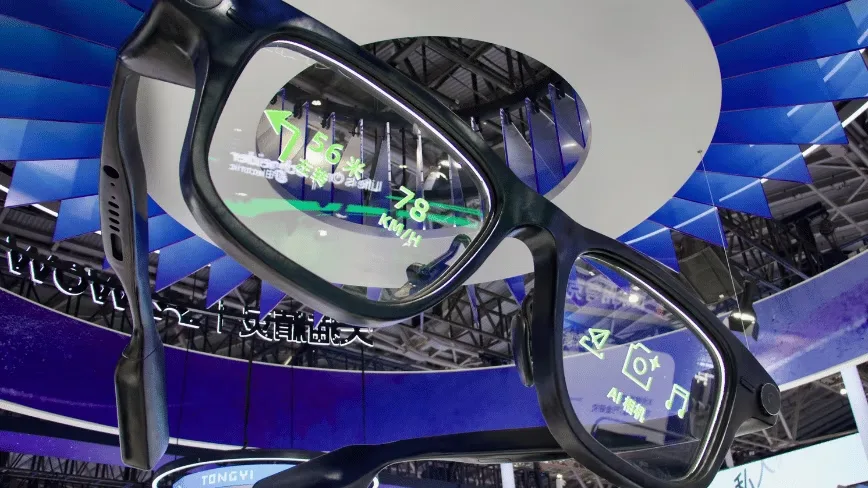
From 12 October, students and staff in Western Australia's public schools will be prohibited from wearing, using, charging or storing smart glasses on campus, following a formal instruction issued by the state's education department. The ban extends to school-organised events and activities, and applies equally to parents, visitors and contractors attempting to bring the devices onto school grounds. Meanwhile, councils in Sydney, Brisbane and Melbourne have already moved to restrict smart glasses in their public pools and leisure facilities, with employment lawyers flagging the workplace as the next battleground.
Education Minister Sabine Winton announced the measure on Tuesday, declaring that "Smart glasses may look cool but there's absolutely no place in our schools or classrooms for them." The directive carries legal force: it was issued by the department's director general Jay Peckitt under section 233 of the School Education Act 1999, binding on all public school principals through regulations 69 and 70.
What the directive covers
The instruction is notably detailed in its scope. It prohibits wearing, using, charging and storing the glasses anywhere on school premises. The charging restriction is significant, as it prevents students from storing devices in lockers. The ban also reaches government residential colleges through separate mechanisms.
Principals retain discretion to approve smart glasses for medical, accessibility or assistive technology purposes, as well as for educational programmes they specifically authorise. The definition of prohibited devices extends beyond simple cameras to encompass audio recording, video, photography, artificial intelligence functionality, live streaming, internet connectivity, facial recognition, information retrieval and communication capabilities.
Students who violate the ban face consequences under the student behaviour policy, while staff members fall under conduct and discipline procedures. Principals can direct visitors and contractors to remove the glasses and leave school grounds if they refuse.
The risks identified
The instruction identifies six specific concerns. Privacy, child safety and wellbeing, unauthorised recording and cyber security represent the anticipated hazards. Less obvious are disruption to teaching and examination and assessment integrity—the latter suggesting that smart glasses pose a threat to the validity of academic assessments.
Winton acknowledged that the education department has recorded no documented instances of smart glasses being misused in Western Australian schools. The preventive approach reflects growing community concern about careless, criminal and malicious use rather than any classroom incidents. Kya Graves, head of the WA Principals Federation, told the ABC that principals had been developing their own school-level policies in the absence of departmental guidance, with some schools implementing measures after experiencing problems on their sites.
Tama Leaver, an internet studies lecturer at Curtin University, identified indecent recording of children as the worst potential outcome. He also raised deepfakes as a significant risk, noting that rudimentary tools require only about 30 seconds of footage to create them.
Federal government declines import ban
Attorney-General Michelle Rowland ruled out an import ban on 31 August, stating the government was not consulting on such a measure, though it was not ruling out other options. Instead, she proposed a privacy overhaul featuring a right to erasure from large platforms and search engines, a fair and reasonable standard for data collection, and meaningful consent requirements. An identity document service called IDLock is scheduled for 2027.
Rowland encouraged councils to restrict smart glasses in their own facilities and suggested retailers could monitor change rooms. The eSafety commissioner offered a counterpoint, highlighting that the devices assist people with disabilities through features such as speech-to-text for deaf users and scene descriptions for those with low vision.
Councils act on the invitation
The City of Sydney and Canterbury-Bankstown have now barred smart glasses from their pools and fitness facilities, joining Brisbane and Yarra. Councillor Matthew Thompson brought the motion to Sydney on Monday, directing the chief executive to review and update entry conditions across leisure centres, libraries, council childcare centres and community centres.
Canterbury-Bankstown went further by including enforcement mechanisms. Council staff can order patrons to remove the eyewear, confiscate it, and exclude anyone who refuses. The restrictions emerged from concerns raised by women and parents. Brisbane's approach covers non-consensual use of camera-enabled devices at its 21 public pools, a category encompassing phones and conventional cameras. Gold Coast is considering the Brisbane model, Adelaide is evaluating its own approach, and the City of Vincent in Perth ordered a report last week.
Thompson has called for the import ban that Rowland declined, telling TechRadar that the federal government has left the problem with councils. Federal crossbenchers made the same request in late August.
Workplace restrictions on the horizon
Employment lawyers are now advising Australian employers to establish their own policies. Paul O'Halloran, a partner at Dentons, told Lawyers Weekly that the technology exists in public and workplace settings primarily to record people without their knowledge or consent, and should be banned outright. He characterised the technology as insidious because, unlike phones or cameras, there is no obvious moment of recording—a feature rather than a flaw, he argued.
O'Halloran contends that employers already face the risk. Privacy law and work health and safety codes require them to protect staff from harm, including covert surveillance. An employee could be recorded throughout the day—in meetings, break rooms, bathrooms and change facilities—without either the employer or the person being filmed knowing it occurred.
Michael Byrnes, a workplace relations partner at Swaab, was more direct: "Employers should have no hesitation in banning the glasses, he said, and telling staff not to wear them is a reasonable and lawful direction." His particular concern is audio recording, which could breach surveillance devices legislation if it captures private conversations.
Byrnes identified two exceptions. Employees with visual impairments should be able to use them as required for their work. Where the glasses mitigate a genuine safety hazard, they may also be justified, provided rules govern the retention and use of any recording. Three existing statutes already address this ground: the NSW Workplace Surveillance Act 2005, the Privacy Act 1988 and the Fair Work Act 2009.
What research reveals
A University of Sydney study examined 350 public Instagram videos shot on smart glasses and found that approximately 60% could potentially constitute harassment of a person or people. Independent testing released this week uncovered a second concern: hackers can access some ultra-cheap smart glasses without a password.
Users have begun developing their own countermeasures. A Polish developer released an app capable of detecting the glasses over Bluetooth.
International precedent
Courts in England and Wales barred smart glasses in August, with New York state courts following suit in July. Across the United States, cinemas, schools and Immigration and Customs Enforcement have all imposed restrictions. Australia has already banned social media for under-16s, and Victoria will bar wearables in schools from January 2027. South Australia's attorney-general, Kyam Maher, is seeking legal advice on whether state law is adequate and has been consulting with Rowland about nationally consistent rules.
Source: The Next Web