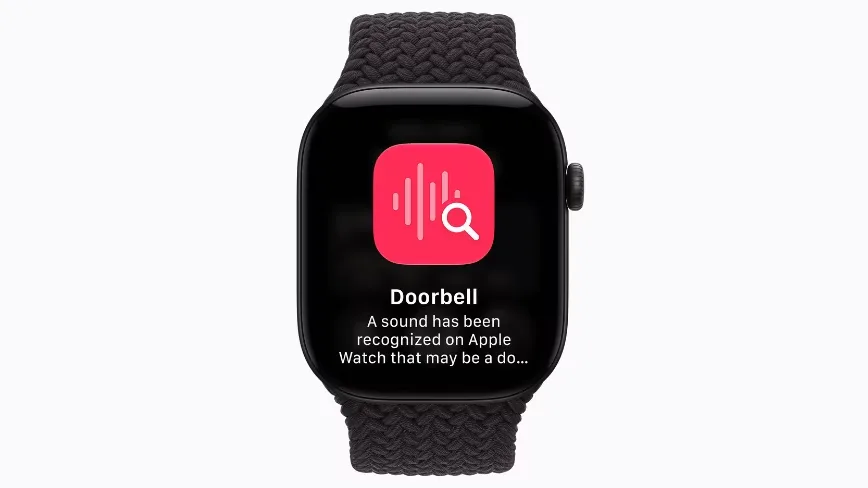
On 9 September, Apple unveiled Siri Recap and Live Rewind for its latest smartwatches. The former generates summaries of conversations throughout a user's day, while the latter displays the preceding 15 seconds of speech as text on the device screen. Legal experts in California, Massachusetts, Pennsylvania and Washington have since raised concerns that these capabilities may conflict with state laws governing audio interception and recording consent.
Eavesdropping statutes in these four states—along with roughly half a dozen others including Illinois and Florida—mandate that every participant in a conversation must agree before any recording occurs. Bloomberg spoke with attorneys in all four jurisdictions on 11 September to assess whether Apple's technical safeguards would satisfy these legal requirements. None of the lawyers consulted expressed confidence in Apple's protections.
Both features arrive as opt-in beta offerings later this year. Users can enable them during watch setup or afterwards through Siri Settings. Siri Recap can be restricted to specific times or locations, or activated manually from Control Center. The announcement coincided with the iPhone 18 Pro launch, which notably ships without Siri AI capabilities in Europe.
Processing versus recording: a legal grey area
Apple maintains that neither feature generates an audio file. However, attorneys posed a more nuanced question: does continuous speech processing, even without a conventional recording artifact, constitute interception under state law? Joe Simons, a criminal defence attorney based in Boston, noted that Massachusetts courts have not yet litigated these specific details. He anticipates the issue will arrive as a case of first impression.
Phil Lauer, a defence attorney in Pennsylvania, offered a more cautious assessment. The technology sits "very close to being legal, because it's not an individual who is actually receiving and using this data," he explained. Yet he acknowledged the opposing argument carries equal weight: since the device captures audio and processes it, courts may view this as interception. Whether judges ultimately agree remains an open question, Lauer said.
Mark Blair, principal at the Seattle firm Blair Kim Moeller, took a stricter position. Interception liability extends beyond those who retain recordings for later use, he argued. A wearer could face criminal charges even after content disappears from the watch. According to Blair, "Absent that, it is a criminal violation," referring to the requirement that a wearer announce the presence and recording status of an Apple Watch.
How Apple's architecture handles audio
Apple detailed both processing flows in an Audio Intelligence privacy overview. For Live Rewind, microphone audio enters a buffer within the Secure Exclave on the S11 chip, where fresh audio continuously replaces older content. When a user double-presses the Digital Crown, the preceding 15 seconds transfer to the paired iPhone. On-device speech recognition converts this to text, after which the raw audio is deleted.
Siri Recap operates through a different pathway. A lightweight model running on the S11 chip identifies whether conversation is occurring nearby. Apple states this model does not transcribe or record. Upon detecting speech, audio enters the protected buffer, gets encrypted, and travels to the Secure Exclave on the paired iPhone—the only device holding the decryption key. The watch removes its own copy immediately after transfer completes.
According to Max Weinbach's post on X, Apple has integrated a Secure Exclave into iPhones since the iPhone 16. The phone transcribes the audio, then an on-device model condenses the transcript to under half its original length, removing filler words and tonal indicators. A safety model reviews the output before encryption. Apple then sends the condensed text to Private Cloud Compute alongside calendar data, Now Playing information and broad location labels such as home, work or school. The text excludes precise coordinates and specific points of interest, though categories like "grocery store" may appear. Recaps disappear after seven days unless manually saved.
Apple's position: no recording, no violation
Apple contests the characterization of these features as recording mechanisms. The company argues that people have long used tools for note-taking, including phones and wearables, and these features represent no departure from that tradition. Audio processes on secure hardware that the operating system, Apple itself and external parties cannot access. Since no recording exists, nothing can be shared, forwarded or compelled.
During launch week, Business Insider reported an exchange between Tom's Guide editor in chief Mark Spoonauer and Apple chief executive John Ternus. When asked about backlash against smart glasses, Ternus emphasised that Apple wanted people around a user to feel comfortable with the feature. Greg Joswiak, Apple's marketing chief, added that since Apple never possesses the audio, no authority can compel the company to produce a file. The resulting notes remain high-level summaries that omit material other products routinely collect, he said.
Notification differences between the two features
Live Rewind signals its activation visibly. The watch emits a chime regardless of silent mode or connected headphones, displays a full-screen animation and shows a microphone indicator. Siri Recap provides no equivalent alert while monitoring throughout the day. Apple's documentation explains the reasoning: no audible signal occurs because the watch retains no raw audio.
Adam Schwartz, privacy litigation director at the Electronic Frontier Foundation, challenged this distinction. People lack practical means to consent to or decline recording, he argued, and should consider the conversational privacy of those around them. Continuous monitoring of discussions imposes an unacceptable burden on that privacy, Schwartz said.
Colin Zick, who leads the privacy and data security practice at Foley Hoag, drew a parallel with Zoom. That platform discontinued allowing users to save or download meeting closed captions. "What does that suggest? That they're worried about this very issue," Zick observed. His counsel is to treat the watch features as wiretapping interception and obtain permission beforehand.
Comparison with existing recording devices
Purpose-built recording devices operate under different constraints. Plaud and Pocket begin capturing audio only after a user presses a button. TNW covered Plaud's $250 recording earbuds in August and reported in July that people record every conversation with AI note-taking tools while the other party remains unaware.
Sarah Perez wrote for TechCrunch that Plaud instructs customers to obtain legally required consent before recording, and that Amazon's Bee terms place sole responsibility on users for compliance with minors' data privacy law. Photography and videography demand obvious physical gestures, she noted. A double-press on a crown does not.
Unresolved legal questions
Since Apple preserves no audio, courts would have no recording to examine. Perez noted that the legal treatment of text-only transcripts remains unknown. The absence of audio could complicate authentication, she wrote, and evidentiary rules differ across states. Todd Dailey, who spent 22 years at Apple, posted on LinkedIn that lawyers face long nights ahead.
Two additional matters linger beyond the immediate question. Apple continues evaluating camera options for smart glasses planned for next year and is developing camera-equipped AirPods. Meta's glasses include a recording indicator light, and TNW reported in July that a $2 sticker can disable it.
Source: The Next Web