Ore Energy, based in Amsterdam, has closed a $43 million Series A funding round led by Plural and HV, with participation from returning investor Positron Ventures. The round brings the battery technology company's total capital raised to $61 million.
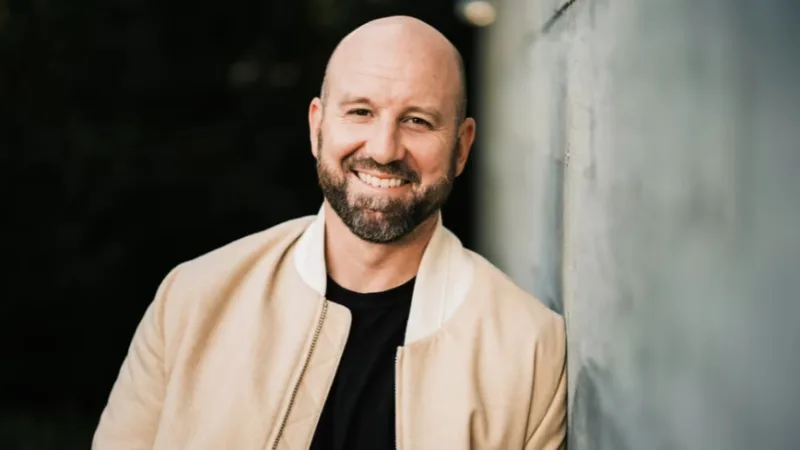
The startup's iron-air batteries can hold renewable electricity for periods stretching up to 100 hours before releasing it back into the grid. The cost per unit of capacity runs roughly one-tenth that of lithium-ion storage systems. Co-founder and Chief Executive Aytac Yilmaz emphasized the company's focus on the levelized cost of electricity.
When you look at the renewables, they are actually the cheapest source of electricity that humankind has ever faced. Why we are not having renewables everywhere, even with a fossil-based system, is actually the intermittency of renewables. You don't know when the sun is going to be there, and you don't know when the wind is going to be there.
Aytac Yilmaz, Ore Energy co-founder and CEO
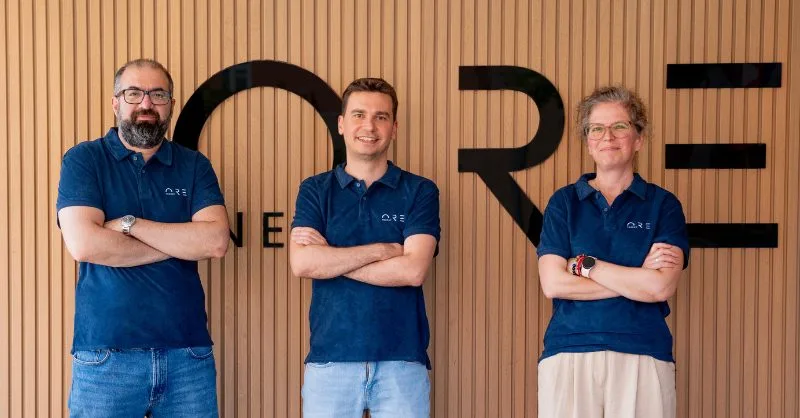
Yilmaz spent three years as a PhD and postdoctoral researcher at TU Delft studying this technology before launching the company in 2023 alongside Rutil Özdemir and Yaiza Gonzalez Garcia.
Challenging natural gas's grip on grid gaps
When renewable generation falls short of demand across multiple days or regions, natural gas currently fills the void, according to Yilmaz. Ore is targeting exactly this market.
Our actual direct competition is natural gas, because on current electricity grids, when there are multi-day regional gaps, gas fills that gap and holds a monopoly. That is the monopoly we are challenging.
Aytac Yilmaz
Global data centre electricity consumption is projected to more than double to approximately 945 terawatt-hours by 2030, with AI data centres expected to grow more than fourfold during the same period. As artificial intelligence infrastructure pushes electricity needs upward, Yilmaz stated that renewables must power these facilities. He added: "the way to energise them is through renewables. To make renewables a base load, reliable, dispatchable energy source, you need multi-day energy storage."
Across Europe, data centre electricity consumption is forecast to climb by 45 TWh through 2030. Meanwhile, the continent's electrical grid currently wastes roughly 72 TWh of renewable electricity each year because of transmission constraints. This wasted energy equals Austria's total annual electricity consumption and carries a value near €7 billion, or about $8 billion, at current wholesale rates, per the European Commission's Joint Research Centre. Since 2011, the United Kingdom has spent nearly £6 billion to curtail wind turbine generation when the grid lacked capacity to use it.
A battery that 'breathes'
Ore's approach exposes iron electrodes to oxygen, triggering rust formation, then applies electricity to reverse the process and restore iron. The system relies on iron, water, and air—avoiding lithium and cobalt entirely. This eliminates expensive materials and reduces dependence on imported minerals while allowing production entirely within European borders.
Ore has inked a 1 gigawatt-hour supply agreement with Dutch energy and telecommunications provider Budget Thuis and is running pilot projects with French utility EDF. The company targets gigawatt-hour-scale production by 2028 and aims to establish iron-air batteries as standard grid infrastructure across Europe by 2035.
The new capital will primarily fund manufacturing expansion and subsequent market deployments. The company currently employs approximately 50 people.
Long-duration energy storage is one of the biggest unsolved challenges in the energy transition, and unlocking it will transform how we power industry, scale AI data centres and drive economic growth. Aytac, Rutil and the team have combined world-class science with exceptional execution to make iron-air batteries commercially viable, whilst providing a critical technology, not just for Europe but as an important export technology too.
Ian Hogarth, partner at Plural
If we want to meet the future energy demands of AI data centres while providing European industry with affordable, reliable baseload power, then we need long-duration storage. Only then will Europe have the means to compete in the complex, energy-intensive sectors that will define the continent's future.
Maxi Pethö-Schramm, principal at HV
An emerging and unproven category
Most lithium-ion grid-scale batteries discharge over four to twelve hours, whereas Ore's systems are engineered for up to 100 hours of discharge.
Form Energy stands as the only other iron-air competitor cited by Ore's founder. The company has raised over $1.2 billion and reached a $3.42 billion valuation as of October 2024, with a factory in West Virginia targeting 500 megawatts of annual capacity by 2028. Dutch startup iwell and Swiss platform terralayr also address Europe's grid-storage requirements, though neither employs iron-air chemistry and both provide shorter storage windows.
Larger funding rounds have grown more frequent as the sector develops. Redwood Materials raised $350 million at a $6 billion valuation in October 2025, and Base Power secured $1 billion the same month for distributed home battery storage in the United States. Ore's $43 million round appears modest by comparison.
Iron-air technology has yet to prove itself at commercial scale. Form Energy's first American facility began operations in 2025, and Ore's battery has been connected to the grid for less than a year. The next five years will reveal whether this technology can dependably and economically displace natural gas or whether it will remain dependent on financial support.
Source: Tech Funding News